
 Tiếng Việt
 English
 中文
OOH/DOOH Industry Perspective
Advertising in Apartment Buildings: How to Choose a Location That Suits Your Target Audience
Last updated: 21 Feb 2026A densely populated project, located in a central location or belonging to the high-end segment, often stands out and is attractive to those considering investing in elevator advertising. However, the project's attractiveness doesn't necessarily indicate whether residents have the need, ability to purchase, or convenience to use the brand's products.
Therefore, this article will help businesses assess the suitability of advertising in apartment buildings, recognize the value of each information source, and prepare necessary questions before choosing a location.
Before choosing an apartment, it's necessary to determine if this type of environment is suitable for the client.
When is advertising in an apartment building appropriate?
Businesses may consider advertising elevators in apartment buildings if their products or services have a clear connection to:
- Products or services that meet the needs of daily life at home.
- Purchasing decisions are typically made by individuals or family members.
- The need for a product or service typically arises in the local area or nearby.
- Businesses can deliver goods or provide services directly within the apartment complex area.
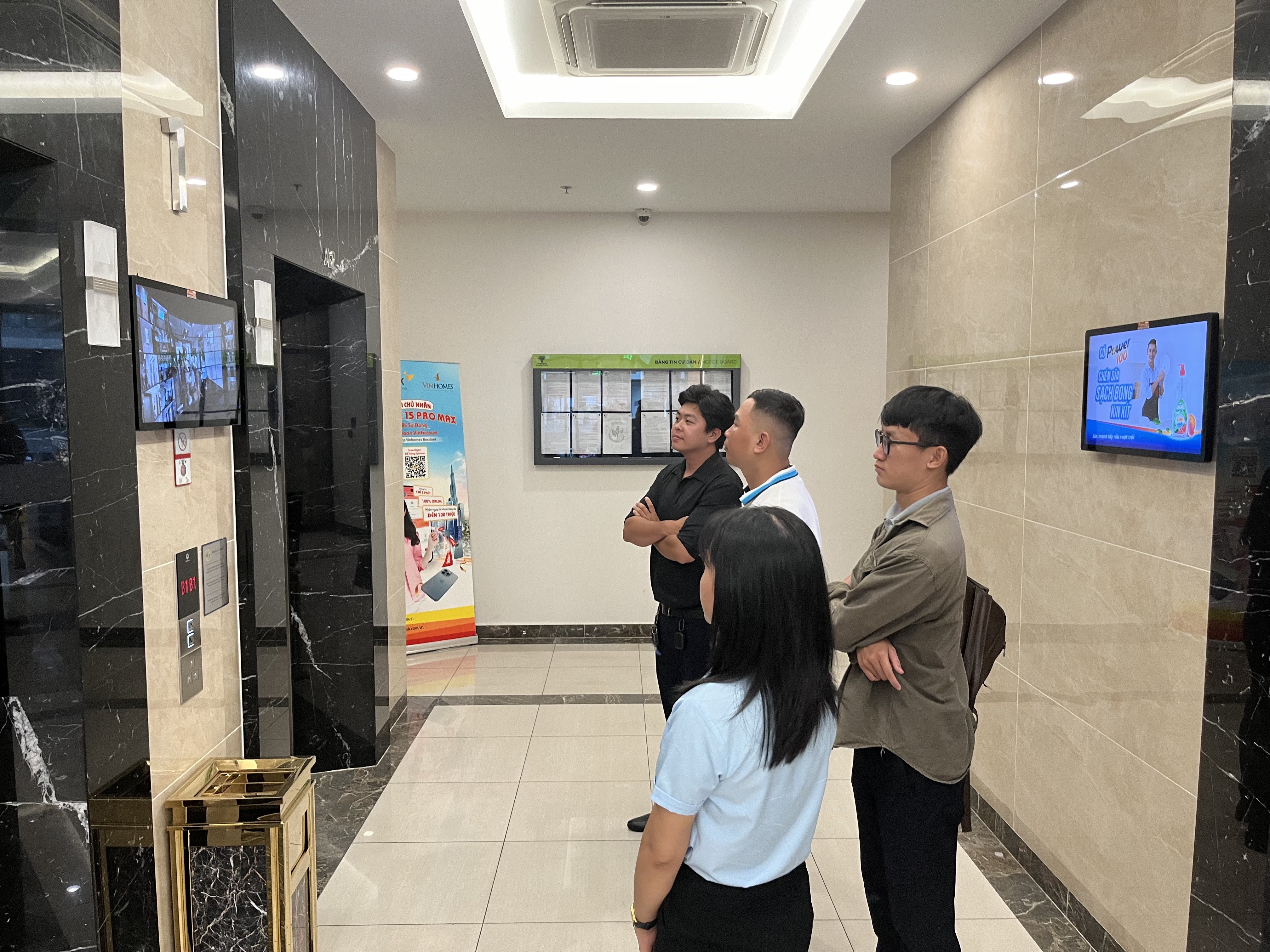
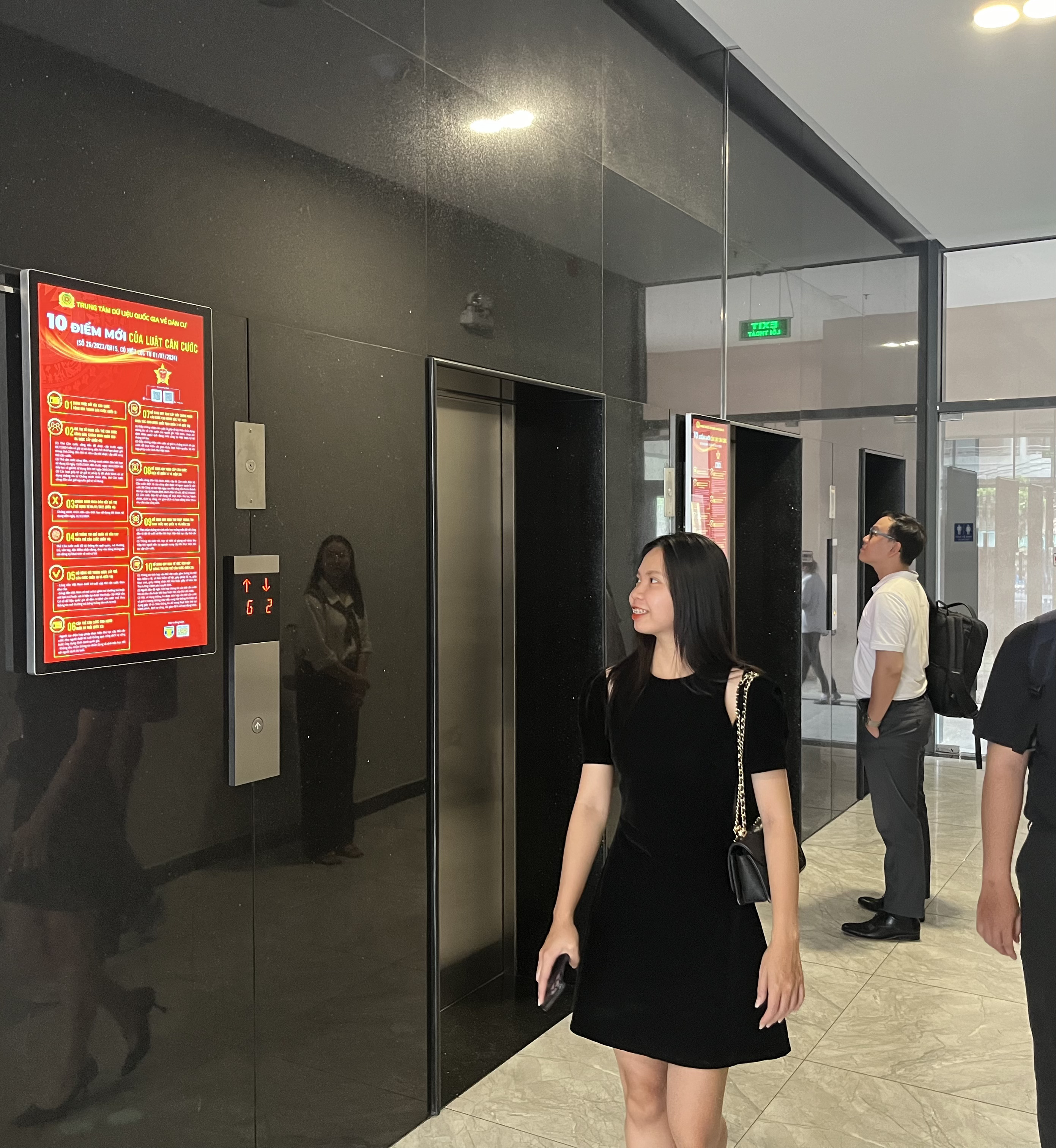
Elevator advertising in apartment buildings creates opportunities for residents to see the brand multiple times during their daily routines. This increases the chances of the brand being remembered by consumers and being considered when they have shopping needs.
When is an apartment not the right choice?
If the product is primarily used in the workplace, an office building would be a worthwhile option. In this environment, advertising makes it easier for users to connect with problems they need to solve or emerging work-related needs. Therefore, business management software has a clearer connection to office operations, while food delivery, house cleaning, or home repair services are closer to needs in residential settings.
However, this is only a basic step in determining the environment relevant to the product. A product intended for businesses is not automatically suitable for every office building, just as a consumer product is not necessarily suitable for every apartment building. Therefore, businesses still need to consider the context of product use and the degree of compatibility between the advertising location and where the customer's need arises.
Transform customer descriptions into location selection criteria.
Some demographic descriptions, such as "young people," "mid-income earners," or "modern families," are still too broad and insufficient to help businesses narrow down the list of apartment buildings suitable for elevator advertising.
Therefore, businesses need to translate customer profiles into verifiable or comparable elements: where customers are currently concentrated; where the business provides services; and which areas the business intends to expand into. This is the kind of information that can be used to narrow down the list of locations.
| The company information is currently available. | What does this information help to determine? |
| Areas with a high volume of orders or existing customers. | Identify the locations where the brand already has customers and actual demand. |
| Stores, branches, points of sale | Prioritize areas where, after seeing the advertisement, customers are likely to find and purchase the product or use the service. |
| Delivery and service area | Exclude areas outside the company's ability to provide products or services. |
| Area to be expanded | Select a few apartment complexes for testing before implementing the program on a larger scale. |
| Access or search data by region | Identify areas that are seeing a high volume of brand-related searches or visits, thereby gathering more data to consider during testing. |
3 steps to choosing the right apartment for advertising.
To select a suitable apartment building for an elevator advertising campaign, businesses can follow these steps in order.
Step 1. Identify the area the business can serve.
For restaurants, clinics, educational centers, or services that require customers to visit in person, businesses can start by considering delivery areas, travel times, or the distance customers can travel to the service location.
With products that have a wide distribution network, the range of options can be larger. Businesses can then narrow down their targeting based on existing sales points or the markets they want to prioritize in their campaigns.
Step 2. Eliminate locations that do not meet the minimum requirements.
After identifying the area, businesses can further narrow down the list. An apartment building might not be suitable if:
- This is outside the scope of the business's ability to deliver goods or provide services.
- The number of occupied apartments is still low compared to the scale of the project.
- The ad schedule or duration did not align with the campaign plan.
Step 3. Compare the remaining locations.
For apartment buildings that have passed the screening process, businesses can answer the following questions in order:
- How far is the apartment building from a point of sale, shop, or service provider?
- Is there any data indicating that this area currently has customers for the business or falls within the market the business wants to reach?
- How many apartments are currently occupied?
- Where are the screens placed: in the lobby, the elevator area, or inside the elevators?
- On what days, at what times, and with what frequency are the advertisements broadcast?
- After implementation, what kind of data or evidence of advertising can businesses receive?
- What is the cost at this location compared to other options within the same campaign?
Not all questions are equally important to every business. A restaurant might need to consider delivery distance first, while a brand with a wide distribution network might be more concerned with the number of locations it can cover.
When should you consider an office building?
After narrowing down the area, businesses may realize their customers aren't just concentrated around residential areas. If orders, website visits, points of sale, or existing customers are significantly concentrated around areas with office buildings, this is a sign to consider adding office buildings to your list of potential locations.
Another indicator lies in the timing of customer demand. For example, if the majority of orders or service uses occur on weekdays and during business hours, businesses have more information to consider where to reach customers during these times.
From here, the challenge is no longer finding the most suitable apartment, but rather identifying which office building best suits the area and the target group of corporate clients we want to reach.
Conclusion
Instead of starting with the question "Which apartment building is best for elevator advertising?", businesses should begin with their own business data to narrow down their options, eliminate unsuitable locations, and compare the remaining choices. Businesses don't need to know every detail about every resident, but they need to clearly distinguish between verified data and indicators that are only for reference.
When there isn't enough data to make a decision, businesses can still start small, monitor results, and use the data from the initial rollout to decide on the next step.


Comment (0)
Related News





 CONTACT
CONNECT WITH FOCUS MEDIA VIETNAM
Share your campaign goals. Focus Media Vietnam will advise on how your brand can appear at the right touchpoints within the building and connect viewers to your landing page, e-commerce platform, app, or digital content.

No comments yet. Be the first to share your thoughts.