
 Tiếng Việt
 English
 中文
Elevator Advertising Options: Comparison & How to Choose
Last updated: 03 Nov 2026Elevator Advertising Options: Comparison & How to Choose
Elevator advertising is becoming a popular communication channel for many businesses due to its ability to reach consumers in office buildings, apartment complexes, and commercial areas. With diverse formats ranging from LCD screens and digital frames to static advertising, each form offers unique advantages in conveying brand messages. So, what are the differences between current elevator advertising formats , and which is the right choice for your business's communication goals? Let's explore this in detail in the article below from Focus Media.
1. What is elevator advertising?
Elevator advertising is a form of media communication that promotes brands, products, or services through images, videos, and advertising materials placed inside elevator cabins or in the lobby areas of apartment buildings, office buildings, and shopping malls. This is an indoor advertising format belonging to the outdoor advertising (OOH) group, where formats using digital screens are classified as DOOH (Digital Out-of-Home) .
The key advantage of elevator advertising is its ability to reach customers at close range and create opportunities for message repetition as residents and office workers use the elevator daily. This allows businesses to increase brand presence, enhance message recall, and reach target customer groups in selected areas.
2. Popular forms of elevator advertising today
Currently, elevator advertising is divided into two main groups: digital advertising (DOOH) using LCD screens and digital frames, and traditional advertising (OOH) such as posters and decals on elevator doors. Each form has its own advantages, disadvantages, and applications.
2.1. Elevator LCD screen advertising
Elevator LCD screen advertising utilizes digital screens to display TV commercials, animated images, and advertising messages in the waiting area or inside the elevator cabin. The content is played sequentially according to the system's schedule, providing opportunities to reach elevator users while they wait and travel.
Advantage:
- Using videos and moving images helps convey messages in a vivid and visual way.
- Create opportunities for repeated exposure when ads are played periodically.
- Content can be updated flexibly through a digital management system.
- Suitable for brand awareness campaigns and new product launches.
Limitations: Short exposure time per ad, requiring concise and memorable content. Ads are often shown alternately with other brands.
Applications: Suitable for FMCG, F&B, real estate, banking, automotive, and consumer electronics.
2.2. Digital Frame Elevator Advertising
Digital Frame elevator advertising utilizes digital screens, typically installed inside the elevator cabin, to display static images or rotating advertising slides. Unlike LCD screens, which focus on video, Digital Frame prioritizes product images, logos, and concise messages to enhance brand recognition.
Advantage:
- Reaching the audience up close in the cabin space.
- Focus on the main image and message, making it easier for viewers to understand.
- Easily update content without printing.
- It's possible to integrate a QR code that leads to a website or landing page.
Limitations: The ability to convey a story through motion is more limited compared to LCD video. Content needs to be designed simply, avoiding too much text.
Applications: Suitable for banking, insurance, education, cosmetics, retail, and brand presence maintenance campaigns.
2.3. Traditional Poster Frame Advertising
Traditional poster frame advertising uses printed posters placed in fixed frames or light boxes in elevator cabins or waiting areas. The advertising content is displayed continuously for the duration of the display and requires replacement when the business wants to update the design.
Advantage:
- The advertising images are continuously present at the installation location.
- It is not dependent on a digital content streaming system.
- Suitable for conveying a concise and consistent message over a long period.
- No video advertising production is required.
Limitations: No animation effects; changes to content require reprinting and reinstallation, potentially incurring additional construction costs.
Suitable applications: Education, healthcare, real estate, retail, and local services.
2.4. Elevator Door Decal Advertising
Utilizing the elevator door surface as a communication space, decal advertising allows brands to showcase product images and messages over a large area. The design can exploit the opening and closing motion of the two doors to create a visual effect, attracting the attention of people waiting for the elevator.
Advantage:
- The large display area is ideal for creative advertising design.
- It can attract the attention of people waiting for the elevator.
- Utilize the opening and closing motion of the door to create a visual effect.
- Suitable for campaigns that need to highlight the product image.
Limitations: Requires approval from building management and assurance of operational safety. Changes to content require dismantling, reprinting, and redoing.
Suitable applications: Product launches, grand openings, film, automotive, fashion, and real estate.
2.5. Interactive Screen Advertising
With interactive advertising displays , users can not only view content but also directly interact with the device to learn about products, select information, or participate in interactive activities. This solution requires specialized screens and software, suitable for building areas with appropriate installation conditions and interaction times.
Advantage:
- Create a two-way interactive experience between the brand and the user.
- It's possible to integrate features such as registration, receiving offers, or learning about products.
- It supports recording user interactions and actions if the system has a measurement function.
Limitations: Requires specialized equipment, software, and maintenance costs. Not all elevator locations are suitable for deploying interactive displays.
Suitable applications: Technology, digital applications, automotive, retail, and product experience campaigns.
2.6. Elevator audio advertising
Instead of conveying messages through images, elevator audio advertising uses a speaker system to broadcast product introductions, promotional announcements, or brand identity messages. Implementation depends on the sound infrastructure and operating regulations of each building, and must ensure that it does not affect the user experience or safety.
Advantage:
- Enhance the accessibility of messages through auditory means.
- Support brand recognition through distinctive voiceovers or sounds.
- It can be combined with advertising images to create a multi-sensory media experience.
Limitations: Dependent on loudspeaker infrastructure and building regulations. Repeated sound can be irritating and must not interfere with operational or safety announcements.
Suitable applications: Service introduction campaigns, digital application promotions, or short-term special offers in locations where deployment is permitted.
3. Comparing different forms of elevator advertising
LCDs excel at video storytelling, Digital Frames are strong at close-range reminders, while posters and decals are suitable for fixed displays. The table below compares the six formats based on location, strengths, limitations, cost calculation, and appropriate goals.
Advertising format | Deployment location | Key features | Advantage | Limit | Appropriate goals |
LCD screen | Elevator cabin, elevator lobby | Showing TV commercials and moving images. | The content is engaging, easy to update, and supports visual message delivery. | Short exposure time, advertisements are played on a rotating basis. | Increase brand awareness, launch the product. |
Digital Frame | Mostly in the cabin | Display static images, digital slides | Close-range approach, focused messaging, easily changeable content. | Limits the ability to convey a long story. | Maintaining brand presence and reminders. |
Poster Frame | Cabin, waiting area | Printed posters placed in a fixed frame. | Continuous display, independent of the electronic system. | Reprinting and reinstallation are required when the content changes. | Maintaining brand image in the long term. |
Elevator door decal | Elevator door surface | Large-format advertising image | Create visual focal points, offer creative design flexibility. | Construction approval is required; changes to the content are difficult. | Launching a product and creating a brand impression. |
Interactive screen | Lobby or suitable location | Allows users to interact directly. | Increase engagement, support registration, and collect data when a measurement system is in place. | Requires specialized equipment, software, and maintenance. | Experience the product, generate leads. |
Audio advertising | The area has a suitable speaker system. | Conveying messages through sound. | Supporting brand recognition through auditory means. | Dependence on infrastructure can affect user experience. | Brand reminders, promotional campaigns. |
4. Which elevator advertising method should businesses choose?
To choose the right elevator advertising format, businesses need to consider their communication goals, target customer characteristics, budget, and implementation time. Instead of focusing solely on the number of screens or advertising locations, selecting the right format and reach will help businesses allocate resources more effectively.
4.1. Selection based on communication objectives
Depending on campaign goals, businesses can prioritize different ad formats:
- Increase brand awareness: Prioritize LCD screens with dynamic video or Digital Frames to maintain brand presence and recall.
- New product launch: LCD screens are suitable for showcasing product features and images; elevator door decals can create a visual focal point in the lobby.
- Maintaining long-term presence: Digital frames or poster frames help convey a consistent brand message.
- Drive engagement and conversions: Combine advertising with QR codes or NFC to direct customers to your website, landing page, or registration page.
4.2. Selection based on target customer segment
The location of a building directly impacts its ability to reach the right customer group. Businesses should choose locations based on the characteristics and behavior of their target audience:
- Office workers: Priority given to LCD and Digital Frame systems in office buildings and commercial areas.
- Apartment residents: Consider a Digital Frame in your cabin or an LCD screen in the lobby for convenience in daily life.
- High-end customers: Select buildings that align with the product positioning, combined with high-quality advertising content.
- Customers by area: Prioritize buildings near the point of sale or located within the brand's business area.
4.3. Selection based on budget and implementation time
The budget for elevator advertising depends on the format, location, number of screens, frequency of display, and deployment time. Businesses can consider:
- Limited budget: Focus on a few buildings with a clear target customer base, choosing LCD or Digital Frame based on actual quotes.
- Mid-range budget: Combine LCD and Digital Frame displays in key areas to diversify message delivery methods.
- Large budget: Expand the network across multiple buildings, combining formats to increase reach.
5. Elevator advertising solutions at Focus Media Vietnam
Focus Media Vietnam is an elevator media company providing digital advertising (DOOH) solutions combining interactive and measurement technology, helping businesses connect with consumers in office buildings, apartments, and shopping malls.
With a network of 19,279 screens across 1,712 locations nationwide , Focus Media Vietnam records an estimated media reach of 463.6 million impressions and 22 million impressions per month , according to data published on its website on October 1, 2026. This provides a foundation for brands to expand their reach, increase brand awareness, and connect with customers throughout their daily lives and work.
Why choose Focus Media Vietnam?
- Large-scale network: 19,279 screens at 1,712 locations, facilitating campaign deployment across multiple building clusters and urban areas.
- Digital advertising formats: LCD screens in the lobby and digital frames in the lobby or inside elevators, supporting the delivery of brand content.
- Data-driven targeting: Screen IQ tools support planning based on region, building type, access point characteristics, and campaign goals.
- NFC Interaction: Connect the advertising display to your website, landing page, or NFC MiniApp, allowing customers to continue learning about and interacting with your brand.
- Track and optimize effectiveness: Supports broadcast monitoring, records interaction signals, and provides reports to help businesses evaluate and adjust campaigns.
Advertising implementation process at Focus Media Vietnam
- Step 1. Understanding the Needs: Identify communication objectives, target audience, budget, and projected timeline.
- Step 2. Planning and Quotation: Propose LCD or Digital Frame format, select the area, building cluster, and suitable broadcast schedule.
- Step 3. Prepare advertising content: Receive TV commercials, images, or brand messages, check and adjust them according to the system's technical requirements.
- Step 4. Campaign Implementation: Establish a broadcast schedule, distribute content, and monitor advertising activity at the agreed-upon locations.
- Step 5. Reporting and Optimization: Verify broadcast results, synthesize interaction data when integrating measurement technology, and propose adjustments for subsequent phases.
Contact Focus Media Vietnam for elevator advertising consultation.
With its elevator media network combining targeting technology, NFC interaction, and measurement, Focus Media Vietnam partners with businesses in building advertising campaigns that align with brand objectives.
Access Visit focusmedia.vn to learn more about solutions and receive advice on a suitable elevator advertising plan.
6. Frequently Asked Questions about Elevator Advertising
6.1. What are the differences between LCD and Digital Frame elevator advertising?
LCD elevators are primarily used to display videos and TV commercials in the lobby, suitable for product launch campaigns. Digital frames are usually placed inside the elevator cabin, focusing on displaying images and short messages to increase brand recognition and recall.
6.2. How much does elevator advertising cost?
The cost of elevator advertising is not fixed and depends on the type of screen, building location, number of exposure points, frequency, and duration of deployment. Businesses should request a quote based on their campaign goals and scope.
6.3. Is elevator advertising effective?
Elevator advertising can help increase brand awareness and recall by reaching viewers at close range and creating opportunities for message repetition. The actual effectiveness depends on location, target audience, content, and frequency of display.
6.4. Should elevator advertising be done in apartment buildings or office buildings?
Apartments are suitable for campaigns targeting residents and family consumption needs. Office buildings are suitable for reaching office workers and commuters. Businesses should choose based on the characteristics of their target customers and data for each building.
Each form of elevator advertising has its own advantages, suitable for different communication goals and budgets of businesses. With a wide network of advertising screens and modern DOOH solutions, Focus Media Vietnam helps brands increase their reach, connect with target customers, and improve communication effectiveness. Contact Focus Media Vietnam for advice on the most suitable elevator advertising solution.


Comment (0)
Related News

Do Elevator Media Bother Residents?
26/09/2026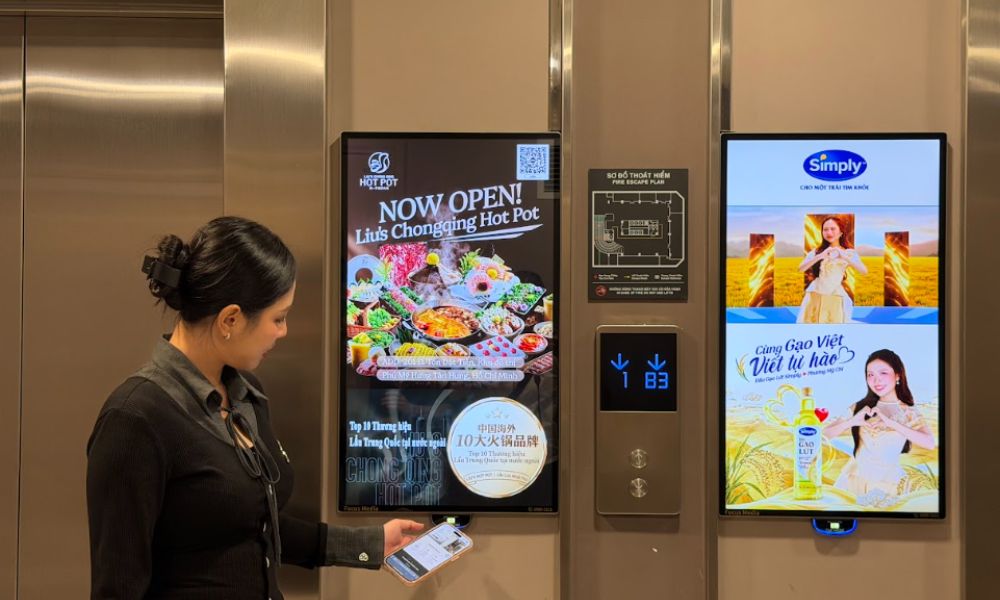

 Contact
Let Focus Media Vietnam
Bring your brand into urban life
Share your campaign objectives. Focus Media Vietnam will advise on how your brand can appear at relevant touchpoints within the building and connect viewers to landing pages, e-commerce platforms, apps, or digital content.

No comments yet. Be the first to share your thoughts.