
 Tiếng Việt
 English
 中文
Comparing LCD and Elevator Poster Advertising: Which Should You Choose?
Last updated: 18 Nov 2026LCD and poster advertising are two popular forms of advertising in elevator areas, but each has different message delivery methods and deployment characteristics. While LCDs use digital screens to display video, posters maintain a fixed advertising image. So, when comparing LCD and poster advertising , which is the right choice for a business's communication goals and budget?
1. What are the differences between LCD and poster advertising in elevators?
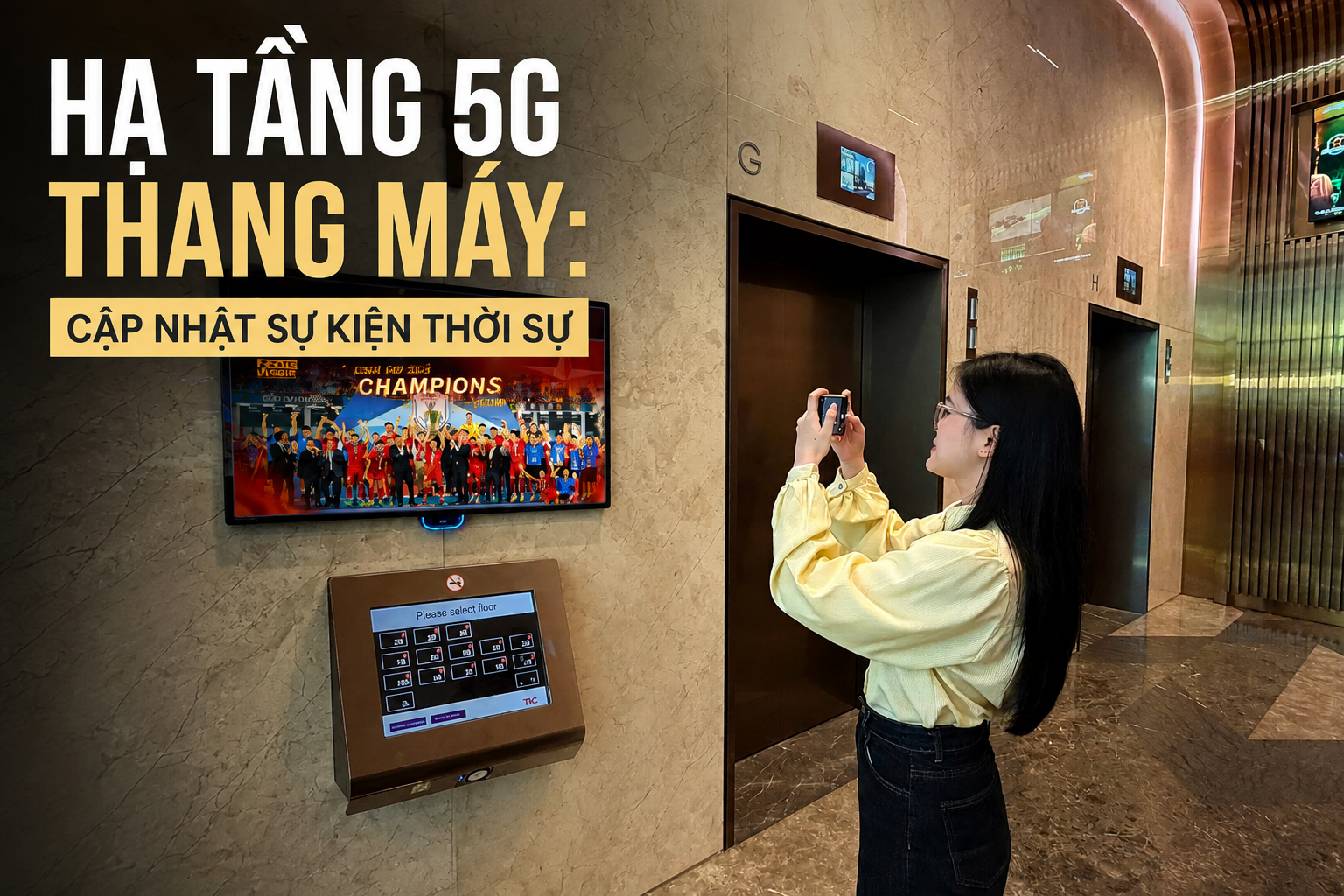
Elevator LCD advertising is a form of advertising that uses digital screens to display videos, TV commercials, or images. These screens are typically installed in elevator lobbies of apartment buildings, office buildings, and shopping malls. Advertising content is displayed according to a schedule and can be updated remotely through a management system.
Elevator poster advertising is a form of advertising that uses printed images placed in fixed frames inside the elevator cabin or lobby area. The content remains unchanged during the display period and needs to be replaced when the business wants to change the message.
The main difference is that LCDs can display moving and dynamic content, while posters only display static images. Both are outdoor advertising (OOH), but LCDs are classified as digital advertising (DOOH), while posters belong to traditional print advertising.
2. Comparison table of LCD and Poster advertising based on 9 criteria
Both LCD and poster advertising appear in elevator areas, but they differ in display methods, exposure time, and operation. The table below compares nine criteria to help businesses easily choose the most suitable format.
Criteria | LCD advertising | Poster advertising |
Display format | Digital display | Fixed print image |
Content | TV commercial, video, animated or static image | Static images, text, and messages |
Popular locations | Elevator waiting area | Cabin or waiting area |
Appearance time | Played according to a schedule, and may alternate with other advertisements. | Displays continuously during installation. |
Change content | Remote updates are possible depending on the system. | Printing and replacement of publications are required. |
Content production | The correct format, duration, and aspect ratio need to be designed. | It is necessary to design and print to the correct size. |
Expense | Depends on the number of screens, duration, frequency, and deployment package. | Depending on location, deadline, printing and installation. |
Deployment verification | Broadcast schedule, broadcast log, and device status (if supported by the system). | Acceptance photos, list of installation points, and on-site inspection. |
Interact | QR code and NFC integration may be possible depending on the device and location. | QR codes can be integrated into printed materials. |
The biggest difference lies in how content is displayed and managed. LCDs are suitable for campaigns that require video playback or changing messaging during deployment. Conversely, posters are suitable for fixed content that doesn't need frequent updates.
However, LCDs are not inherently more effective than posters. Advertising effectiveness depends on placement, content quality, target audience, and the goals of each campaign.
3. Should you choose LCD or poster advertising for each objective?
The choice between LCD and poster depends on the communication goals, advertising content, and implementation time. Each format suits different needs, and not every industry necessarily prioritizes a single format.
3.1. Choose LCD when you need to showcase products via video.
LCD advertising is suitable for product launch campaigns, feature introductions, or when conveying a message through moving images. For example, an electronics brand might use a TV commercial to demonstrate how to operate a device, while a food and beverage business could introduce a new product through a short video.
LCDs are also suitable for campaigns with multiple content versions or those requiring message adjustments during implementation. However, TV commercials should be concise, featuring product images and brand names early on, as viewers may not watch the entire advertisement.
3.2. Choose a poster when the message is simple and doesn't change often.
Poster advertising is suitable for campaigns that focus on a fixed image or message, such as introducing a store location, announcing a grand opening, or maintaining brand recognition.
With this format, businesses should prioritize easy-to-read design, minimize text, and place important information in a prominent position. If the campaign frequently changes promotional offers or product information, factor in the time and cost of replacing printed materials.
3.3. Should LCD and poster advertising be combined?
Businesses can combine both if budget and scope allow. For example, LCD screens in the lobby can be used to showcase products via TV commercials, while posters in the cabins maintain brand imagery or store information.
However, combining them is only necessary when the two forms complement each other in terms of reach or communication role. Businesses should not use both simply to increase the number of advertising placements without clearly defining objectives and methods for evaluating effectiveness.
See also: Types of elevator advertising: Comparison & How to choose
4. LCD and Poster Advertising Costs: Which is More Cost-Effective?
The cost of LCD and poster advertising in elevators differs in how prices are calculated. LCDs are typically priced per screen/week, TVC duration, and broadcast frequency. Meanwhile, static printed posters are usually priced based on location or the number of elevators rented per month.
Below are the average prices for reference, based on price lists published by advertising agencies:
Form | Reference average price | Condition |
LCD – 5-second TV commercial | 800,000 – 1,500,000 VND/monitor/week | 60-72 broadcasts/day |
LCD – 15-second TV commercial | 1,200,000 – 2,500,000 VND/monitor/week | 60-72 broadcasts/day |
Static print posters | 400,000 – 800,000 VND/month | Simple average from 3 groups of order sizes |
In terms of budget, posters are suitable for campaigns using a fixed message , especially for long-term deployments where frequent content changes are not necessary. LCDs have an advantage when businesses want to broadcast TV commercials or update content remotely without replacing printed materials.
However, since the two methods have different units of measurement, businesses should compare the total costs over the same time period, region, and scale of implementation to choose the most suitable option, rather than relying solely on unit price.
5. Measuring LCD and Poster Advertising Results: What Metrics Should You Look For?
LCD and poster advertising have different measurement methods , primarily in their ability to verify ad playback and collect exposure data. LCDs can record the number of plays, playback schedule, and screen status. Posters, on the other hand, are assessed through installation location, display time, and acceptance images.
Businesses should monitor the following three groups of indicators:
Index group | LCD advertising | Poster advertising |
Deployment verification | Number of plays, playback schedule, screen status | Number of installation locations, display time, and acceptance photos. |
Advertising approach | Estimate the number of exposures (OTS), reach, and frequency if relevant data is available. | Estimates of OTS and Reach are based on traffic volume, location, and visibility. |
Interact | QR code scanning, NFC interaction if supported. | QR code scan or landing page visit |
According to Geopath , OTS (Opportunity to See) reflects the chance of seeing an advertisement, not the number of people who actually pay attention. For LCDs, the estimate must also consider the time the content is displayed and the amount of time viewers are present in the screen's viewing area.
Therefore, businesses need to differentiate between the number of times an advertisement is shown, the estimated exposure, and the actual customer action . This forms the basis for a more accurate assessment of the effectiveness of LCD and poster advertising, rather than relying solely on the number of screens or locations rented.
See also: Measuring DOOH advertising: Metrics and evaluation methods
6. What should businesses consider before choosing between LCD or Poster displays?
Before deploying LCD or poster advertising, businesses need to assess the actual conditions at the buildings, rather than relying solely on the number of locations or quoted prices. Some important factors include:
- Advertising placement: Check if the screen or poster frame located in the lobby or cabin is easily visible and suitable for the target customer group.
- Content display: TV commercials on LCD need to convey a clear message in a short time, while posters should prioritize striking images, minimal text, and easy readability.
- Deployment requirements: Confirm the run time, LCD display schedule, poster installation time, and the ability to change content.
- Campaign acceptance: Agree on how to check the broadcast schedule, screen status, or actual installation images before signing the contract.
Businesses should also request a list of the planned locations to assess their suitability for their target customers. A location that targets the right audience can provide more tangible value than expanding the number of locations without proper selection.
7. LCD advertising solutions at Focus Media Vietnam
Focus Media Vietnam provides digital elevator advertising solutions with two main formats: LCD Elevator TV in the lobby and Digital Frame inside the cabin. The LCD Elevator TV uses a 32-inch screen, supports TVC playback and remote content management, and is suitable for campaigns requiring video messaging.
According to data released in October 2026, Focus Media's network in Vietnam has over 19,000 screens in more than 2,000 locations , with approximately 463.6 million impressions and 22.08 million reach per month . These are estimated figures for the entire digital screen network, not just LCDs.
Businesses can choose the area, building group, and deployment time according to their communication goals. Focus Media provides consultation on location selection, broadcast planning, TVC implementation, and campaign reporting based on the agreed-upon plan.
View now: Elevator Advertising Price List 2026: LCD & Digital Frame
8. Frequently Asked Questions about LCD and Poster Advertising
8.1. Are LCD advertising more effective than posters?
Not sure. LCDs are suitable for video advertising, while posters maintain a fixed image. Effectiveness depends on the goals, content, and deployment location.
8.2. With a low budget, should I choose an LCD or a Poster?
Posters are a worthwhile option when budgets are limited and content changes infrequently. However, businesses can still choose LCDs if there is an advertising package that fits their budget and scope of implementation.
8.3. Do elevator LCD advertisements need a TV commercial?
Optional. LCDs can display video or still images depending on the system, but the content must meet the technical requirements of the supplier.
8.4. Are elevator posters the same as digital frames?
No. Posters use fixed printed images, while Digital Frame advertising is a digital screen that can update content remotely.
8.5. Is it possible to measure the effectiveness of LCD and poster advertising?
Yes. LCDs can verify the number of plays, while posters are tested based on installation location. Both can estimate exposure if suitable data is available, but it's impossible to determine the exact number of viewers based solely on this information.
Thus, both LCD and poster advertising have their own advantages, depending on the company's communication goals and budget. Choosing the right format should be based on the advertising content, location, and target audience. If you are interested in elevator advertising solutions, please contact Focus Media or call 1900 5111 for detailed advice.


Comment (0)
Related News


 Contact
Let Focus Media Vietnam
Bring your brand into urban life
Share your campaign objectives. Focus Media Vietnam will advise on how your brand can appear at relevant touchpoints within the building and connect viewers to landing pages, e-commerce platforms, apps, or digital content.

No comments yet. Be the first to share your thoughts.