
 Tiếng Việt
 English
 中文
中文

FROM STATIC POSTERS TO SMART SCREENS – FOCUS MEDIA’S PIONEERING JOURNEY IN ELEVATOR MEDIA ADVERTISING
Last updated: 16 Dec 2025In the early 2000s, China’s advertising industry was growing rapidly, but there was still a lack of touchpoints capable of reaching audiences in static, concentrated environments. Information overload across mass-media channels made it increasingly difficult for brands to create genuine recall, opening up demand for a new media environment that was more stable and less cluttered.
From this gap, Focus Media recognized the potential of elevator spaces — a recurring daily moment that is enclosed and rich in attention — and developed the Elevator Media Advertising model as a solution suited to modern urban lifestyles. With more than two decades of operating and developing display technology solutions in building environments, Focus Media Group has become a pioneer in driving the evolution of advertising in elevator spaces.
Starting with simple poster frames, Focus Media gradually built a complete digital screen ecosystem characterized by stability, flexibility, and a high degree of standardization. These sustained efforts have helped Focus Media progressively establish a new display standard aligned with the development of modern media and advertising.
2003–2010: Laying the Foundation for the First Elevator Media Advertising Model
In 2003, when “Elevator Media Advertising” was still an unfamiliar term in Vietnam, the world’s first digital elevator advertising screen was introduced to the market by the company through a Liquid Crystal Display system, commonly known as LCD. This was considered a breakthrough in the advertising industry at a time when information was increasingly fragmented across social digital channels, while traditional channels such as television and print media were becoming saturated and costly. By 2007, Focus Media officially launched its first Digital Frame (DF), marking the transition from static, monotonous paper posters to a more dynamic display environment. This innovation not only created a more modern visual experience, but also enabled brands to tell multiple stories within a single display format.
By 2010, display quality had entered a period of significant improvement. HD-standard LCD screens were widely deployed, laying the foundation for higher display quality and video playback capabilities within elevator environments.

Image 1: In 2003, Focus Media became the first company in China to operate elevator advertising screens inside buildings.
2011–2017: Completing the Digital System and Enhancing the Viewer Experience
By 2011, the widespread adoption of smart devices had raised user expectations for more “personalized” content tailored to individual needs and context. This became the foundation for the launch of the interactive LCD 3.0, enabling viewers to receive more information within just a few seconds and opening up an entirely new advertising experience.
With a two-layer display design — a top screen and a set of three lower screens, allowing brands to present multiple pieces of content simultaneously in different formats — this format was widely adopted by brands during sales-driven campaigns because it allowed communications objectives and promotional content to be separated more clearly.
At the same time, both DF 3.0 and LCD 4.0 underwent improvements in design and display quality. Most notably, “smart” capabilities were introduced into the display system for the first time, including data synchronization, remote management, and real-time effectiveness measurement. These capabilities enabled centralized content management, flexible scheduling, and display optimization based on the surrounding environment. This marked a strategic transformation that positioned Focus Media as a smart urban media platform.
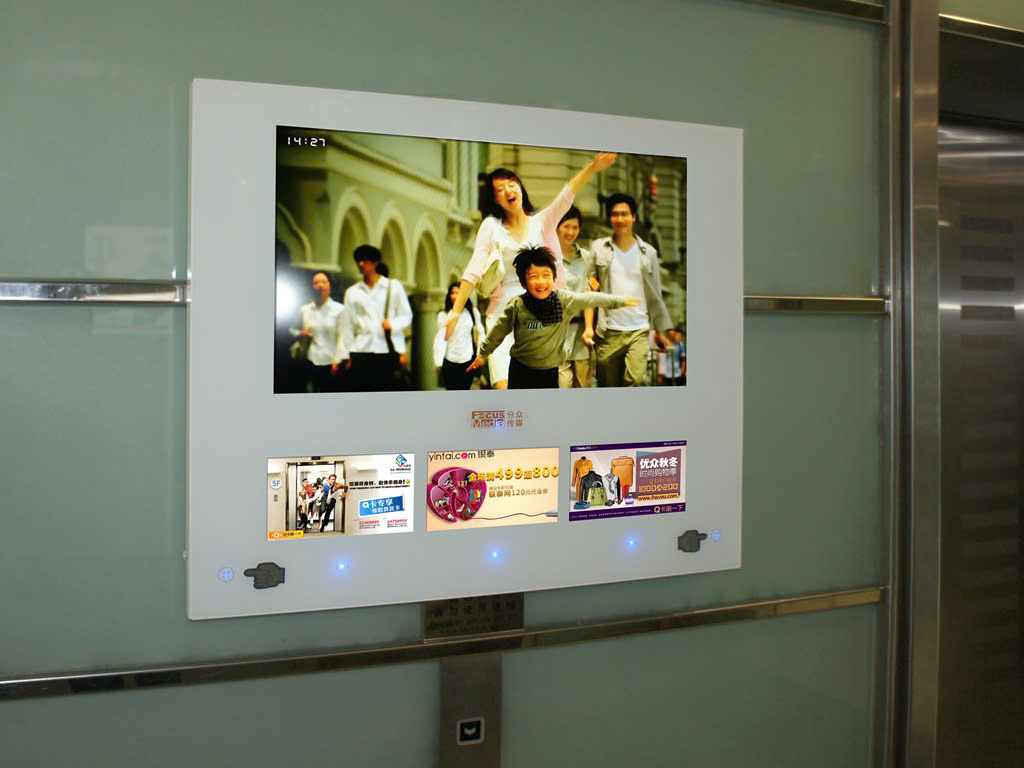
Image 2: Interactive LCD screens with multi-content display, enabling brands to communicate multiple layers of information and create a new viewing experience.
2023–2025: The Era of Smart Screens and Premium Display Standards
This period marked Focus Media’s most significant transformation with the introduction of LCD 5.0 and Digital Frame 4.0, against the backdrop of accelerating urbanization and rapidly advancing telecommunications infrastructure. During this stage, Focus Media focused on upgrading both external design and internal structure: devices adopted a seamless unibody design, screen bezels were minimized, and display areas were expanded to create a more uninterrupted viewing experience. In particular, the new system moved toward optimizing a single-screen format, replacing the previous dual-screen model that could fragment content, thereby improving communications effectiveness for brands.
In 2025, Focus Media launched Digital Frame 5.0 together with its most advanced thin-bezel LCD generation, appearing in Vietnam for the first time. The new devices feature superior display quality, exceptionally thin bezels, and high-definition visuals within the Elevator Media Advertising market, delivering premium aesthetics and greater visual consistency across building environments. The operating and display interfaces were also streamlined to better suit the Vietnamese market, creating a more seamless, natural, and modern viewing experience. 
Image 3: The first Digital Frame screen introduced to the Vietnamese market, featuring a slim design and sharp display quality suited to the aesthetic standards of many premium buildings.
Looking ahead, Focus Media will continue to focus on design innovation and the integration of breakthrough technologies, contributing to the standardization of operational, aesthetic, and technological standards across Vietnam’s Elevator Media Advertising industry.


Comment (0)
Related News


 Contact
Let Focus Media Vietnam
Bring your brand into urban life
Share your campaign objectives. Focus Media Vietnam will advise on how your brand can appear at relevant touchpoints within the building and connect viewers to landing pages, e-commerce platforms, apps, or digital content.

No comments yet. Be the first to share your thoughts.