
 Tiếng Việt
 English
 中文
中文
Over $23 Billion Exits Mid-Range Market: What Should Brands Do in 2027?
Last updated: 12 Oct 2026
With 43% of global fast-moving consumer goods (FMCG) sales value, the mid-range segment remains the largest product group in the market (compared to 40% and 17% for premium and budget products, respectively). However, it is also the only group experiencing contraction, as the NIQ's Consumer Outlook: Guide to 2027 report, published at the end of September 2026, indicates that over $23 billion in sales have shifted away from mid-range products in the 26 countries surveyed. This shift is one of five major changes in consumer behavior in 2027 identified in the NIQ report, and it raises the question for businesses: Which customer group should each product line target to best meet their needs and spending power?
Why are consumers becoming increasingly different in their spending habits?
One of the reasons for the change in shopping behavior is the widening financial gap between households. Compared to July 2022, the percentage of consumers who have accumulated savings and feel more financially secure increased from 9% to 14%, while the percentage of those who have experienced financial difficulties and have not yet recovered remained at 19% at both times.
The widening gap in financial conditions is contributing to two distinct shopping trends. Therefore, consumers are increasingly weighing the value they receive against the price they pay. Sixty-seven percent of globally surveyed consumers said they would rather save money if a product doesn't offer a clear improvement over other options. Conversely, 56 percent indicated that if they were to spend more, they would prefer a truly premium product with significant improvements in quality, efficiency, experience, status, or functionality.
The common thread between these two groups is that they both seek justification for each expenditure. If choosing a low-priced product, buyers want to save a significant amount, while if they are willing to pay more, they expect to receive value commensurate with the money spent.
Why are mid-range products becoming increasingly difficult to convince buyers?
Because they lack the clear price advantage of the first group, and are unlikely to offer a significant enough difference in quality or experience as the second group, these products need a more compelling reason for consumers to consider and choose them.
A survey by NIQ shows that 55% of consumers believe that mid-range products must have a clear reason for them to choose them. This partly explains why the mid-range segment is under pressure in terms of market share, even though it still accounts for the largest proportion of sales among the three groups.
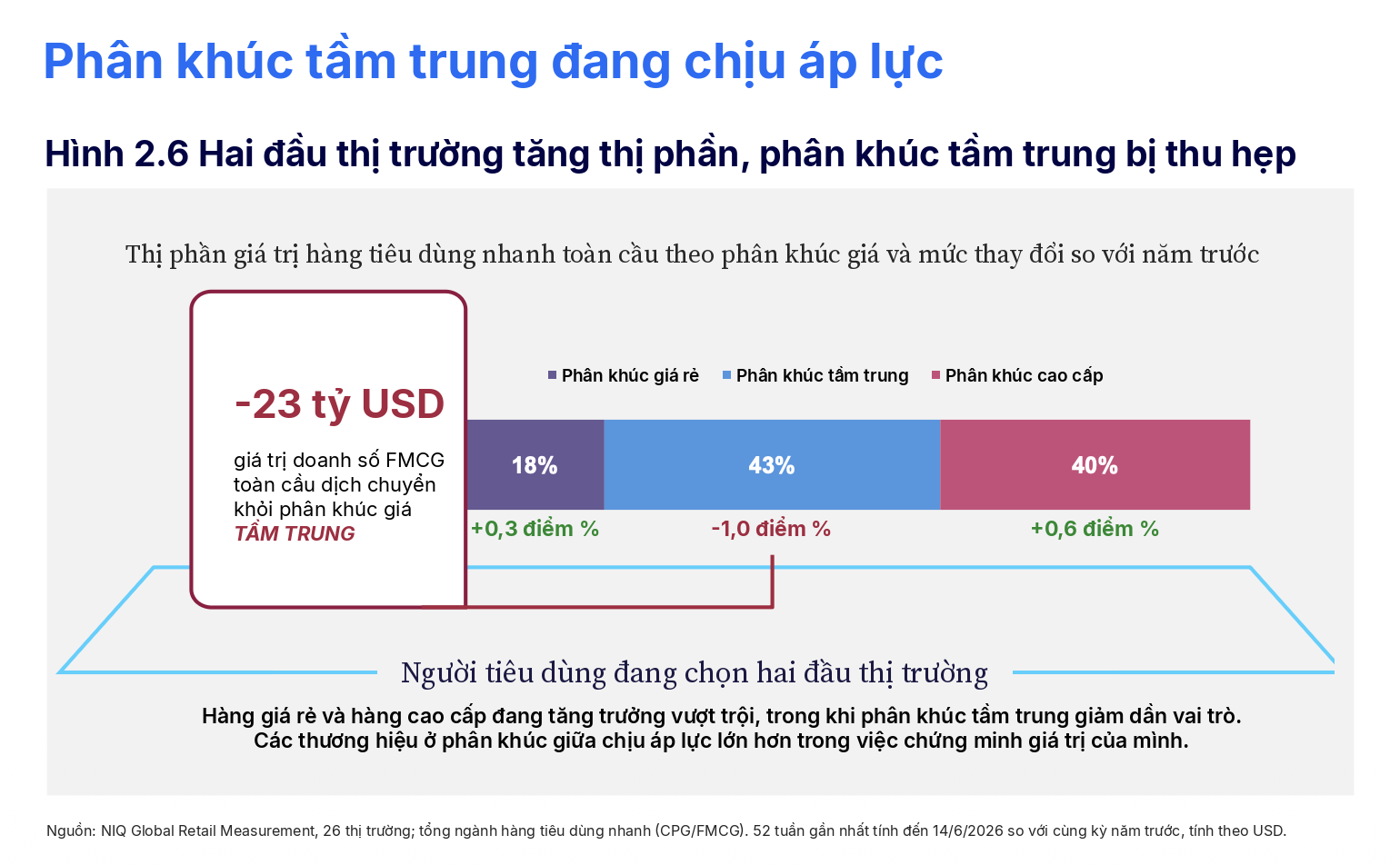
In the 26 markets measured by NIQ, the mid-range segment still accounts for 43% of the value of fast-moving consumer goods sales, the largest of the three segments. However, it is the only segment that lost market share compared to the previous year, down 1 percentage point. At the same time, the premium segment increased by 0.6 percentage points to 40%, while the low-cost segment increased by 0.3 percentage points to 18%.
A polarization in spending has emerged in many regions around the world. NIQ reports that the US, UK, Indonesia, Chile, Saudi Arabia, and South Africa are typical markets where mid-range goods continue to lose market share while both low-priced and high-end goods are increasing. Notably, Indonesia is the only Southeast Asian country in this group, indicating that polarization has also appeared within the region. Although corresponding data for Vietnam is not yet available, the developments in Indonesia are still a noteworthy signal, as a similar trend may appear in the domestic market in the coming years, creating additional competitive pressure for brands focusing on the mid-range segment.
Each product line needs a clear reason to be chosen.
For polarized markets, NIQ recommends that businesses proactively develop both low-priced and high-end product portfolios simultaneously, while reducing reliance on the mid-range segment to capitalize on growth opportunities at both ends of the market.
However, to convince buyers, each product line must demonstrate advantages commensurate with its price. For budget-friendly lines, that advantage lies in significant savings compared to other options; while for premium lines, the higher price needs to be accompanied by noticeable improvements in quality, efficiency, experience, prestige, or functionality.
Therefore, correctly identifying the target customer group becomes even more crucial in every business's communication plan, because each person has different financial conditions, spending habits, and product quality requirements. The same price might be considered reasonable by one person, while another might find it too expensive for their needs or not worth the value received. For example, a high-end product might not convince those primarily interested in meeting basic needs at a low cost, while a message emphasizing low prices may not appeal to customers willing to pay more for better quality or experience. Therefore, depending on the positioning of each product line, businesses need to identify the customer group's purchasing power, needs, and selection criteria, thereby building a persuasive message and choosing communication channels that can reach them.
Elevator advertising in the challenge of reaching the right customers.
So how can each product line reach the right target customer group? With a network of over 18,000 screens in more than 1,600 buildings, Focus Media Vietnam's elevator advertising allows businesses to select buildings for deployment based on demographic characteristics and foot traffic at each location. This enables brands to prioritize buildings that match the target customer group for each product line, while also tailoring communication content to the factors they consider when making a purchase.
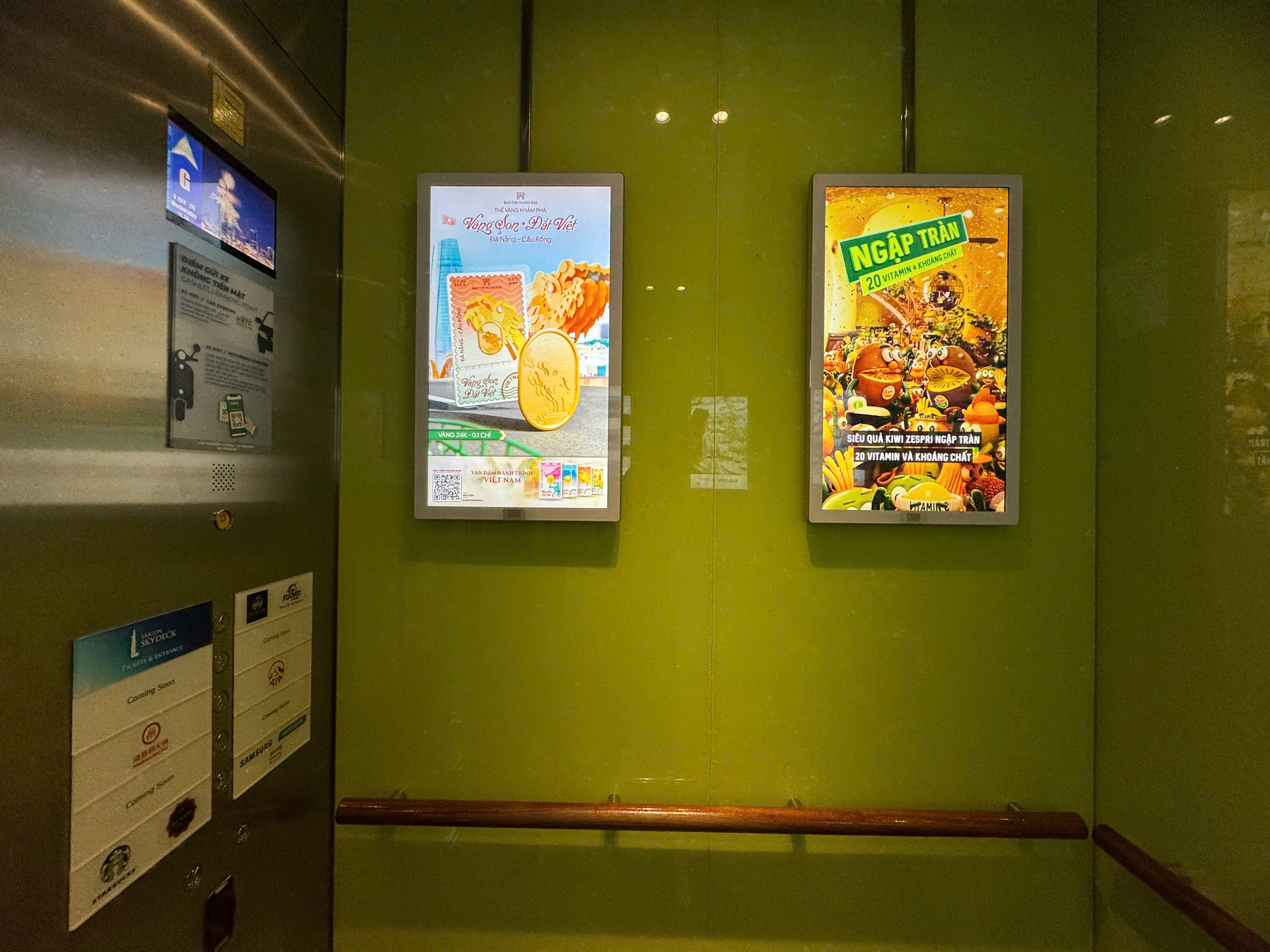
For high-end products, businesses can consider advertising in Class A office buildings or luxury apartments, where they can reach a target customer group with appropriate spending power and needs. In this case, the advertising message should clearly highlight the benefits that make buyers willing to pay a higher price, such as quality, efficiency, or the experience the product offers. Meanwhile, apartments in the mainstream segment may be more suitable for products with a price advantage. Instead of simply emphasizing savings, businesses can offer specific pricing, bundled deals, or per-use costs to make it easier for customers to consider. However, location selection should still be based on the actual characteristics of the people living and working in each building, rather than just the building's classification.
Businesses don't necessarily need to deploy advertising across their entire network from the start. Instead, they can select a few buildings that suit specific customer groups for testing. The results of this phase will provide a basis for evaluating the effectiveness of each deployment option, allowing them to consider adjusting the message, changing locations, or expanding the campaign. Implementing in stages also helps businesses limit their initial budget before deciding to invest on a larger scale.
With consumer spending concentrated at both ends of the market, the mid-range segment is no longer a safe haven for brands to wait for customers. Brands that clearly define their target customer group and are present where they are present every day will have a much greater chance of being chosen.


Comment (0)
Related News



TỪ "GIÁ TRỊ ĐỒNG TIỀN" ĐẾN "GIÁ TRỊ CẢM XÚC"
09/03/2026
 Contact
Let Focus Media Vietnam
Bring your brand into urban life
Share your campaign objectives. Focus Media Vietnam will advise on how your brand can appear at relevant touchpoints within the building and connect viewers to landing pages, e-commerce platforms, apps, or digital content.

No comments yet. Be the first to share your thoughts.