
 Tiếng Việt
 English
 中文
中文
O2O2A: Focus Media Việt Nam Đưa Quảng Cáo Thang Máy Vào Kỷ Nguyên AI
Last updated: 30 Sep 2026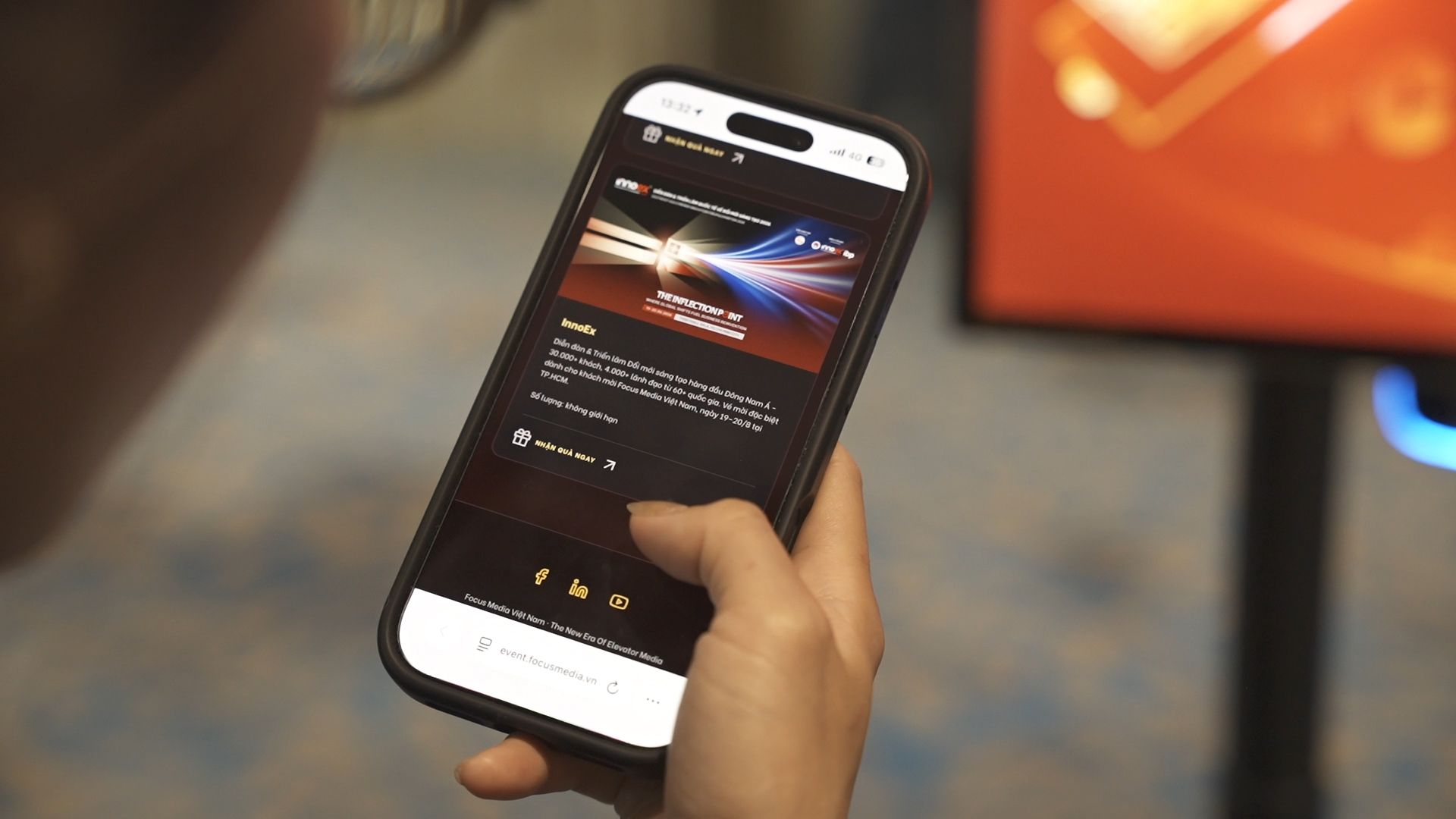
Elevator advertising is one of the channels that can effectively deliver brand recognition right where customers live, work, and shop every day.
However, "awareness" is only the starting point. Metrics such as attention span or recall only show the viewer's initial impression of the advertisement, not any subsequent conversion actions. This is a common concern for budget reviewers when considering investing in a branding campaign.
Driven by this need, Focus Media Vietnam has developed the O2O2A model, seamlessly connecting three layers of touchpoints: Offline, Online, and AI (artificial intelligence). This ensures that whether customers are new to the brand, researching it, or already considering a purchase, they have the opportunity to encounter the brand again at the right time and touchpoint, aligning with their journey. This consistent presence helps the brand become more deeply ingrained in the user's memory, increasing the likelihood of being chosen when a real purchase arises.
What does O2O2A mean in elevator advertising?
O2O2A in elevator advertising is a model developed by Focus Media Vietnam , allowing brands to continuously appear across three touchpoint layers: elevator advertising screens (offline), digital assets (online), and artificial intelligence (AI) environments. These three layers are interconnected, giving businesses more opportunities to reach customers immediately after they see the advertisement.
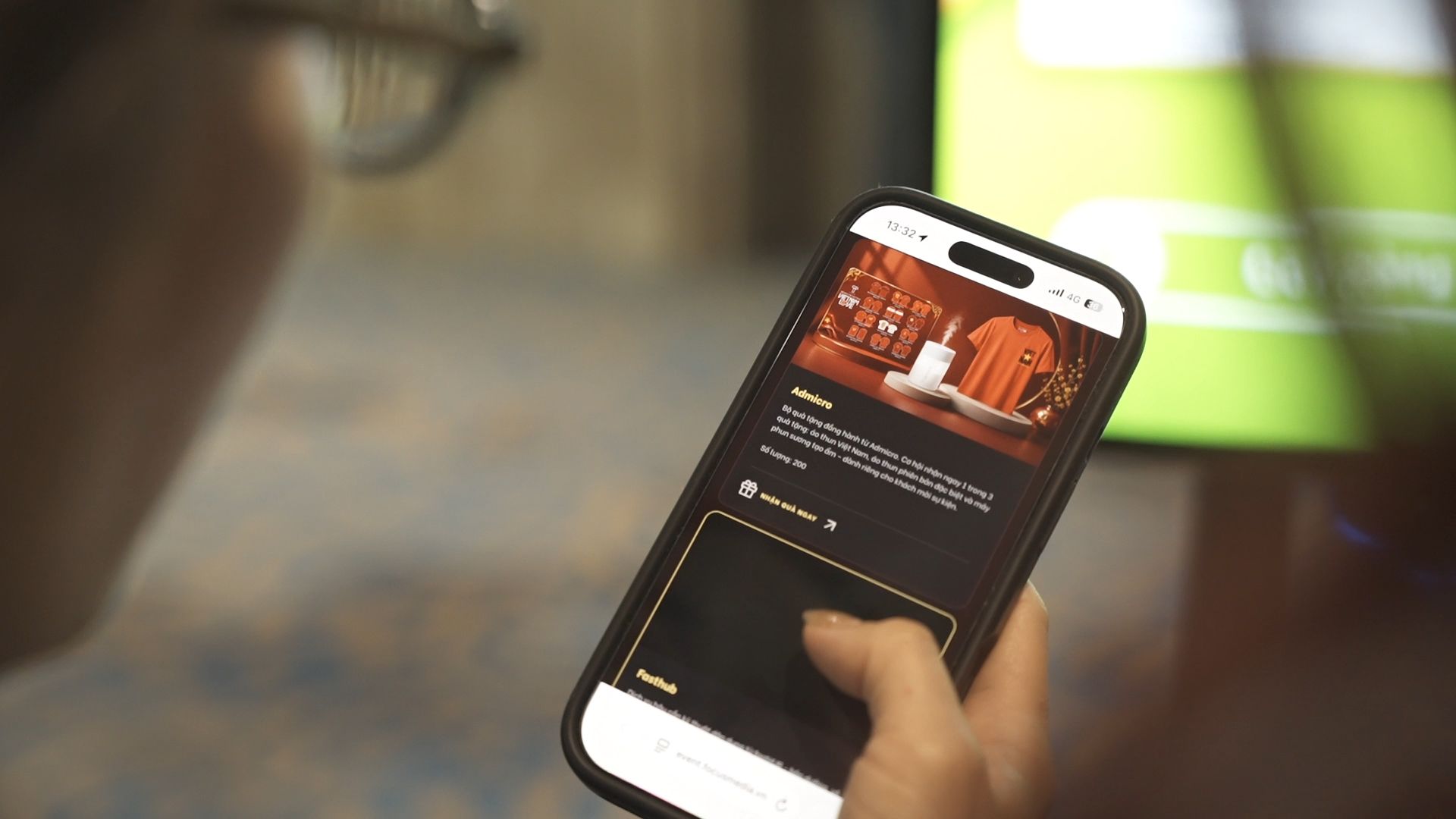
- The first two layers of O2O stand for "Offline to Online," taking viewers from elevator advertising screens to the brand's digital assets. For example, someone sees a credit card advertisement on an elevator screen, then scans the QR code or uses NFC to open the introductory page and register for a consultation. This allows customers to access the brand's digital assets immediately upon seeing the advertisement, shortening the time spent on manual searching. This also provides a basis for businesses to measure actions or conversions after advertising.
- The third layer : AI, continuing the journey in a new search and decision-making space, where customers use AI tools to ask questions, research, or compare brands. For example, someone who sees the credit card advertisement above might ask the AI for advice on choosing a card after several days of consideration. At this point, the AI layer in the O2O2A model will suggest brands in the response, helping businesses be present at the moment the customer makes a decision.
Because each layer generates measurable data, O2O2A also opens up a way to assess elevator advertising market share based on the value of each screen rather than the total number of screens. Some screens only generate impressions, while others direct viewers to the brand's digital assets. Therefore, these two types of screens do not provide the same equivalent value. However, if only counting the network size, they are still considered equal, and the difference in value between the two screens is not reflected in the market share figures.
Why is AI the third layer?
Because AI is gradually becoming a part of Vietnamese people's information consumption and purchasing decision habits.
Based on the e-Conomy SEA 2025 report by Google , Temasek , and Bain & Company, Vietnam ranks first in Southeast Asia in terms of engagement with and trust in AI, with 81% of surveyed users reporting using AI in their daily lives.
Globally, research by the IBM Institute for Business Value and the National Retail Federation , conducted on over 18,000 people in 23 countries, shows that 45% of participants used AI in their purchasing journey; 41% used it to research products, and 33% used it to read reviews. This indicates that AI is gradually becoming a reliable and influential "assistant" in the purchasing decision-making process of each individual.
That's also why Focus Media is incorporating AI into the final touchpoint of its O2O2A model. With this touchpoint, brands can maintain a timely presence when customers are considering and making decisions, helping to improve conversion rates.
O2O2A is not a linear journey.
O2O2A doesn't mean everyone viewing the ad will sequentially see the ad, scan the QR code/tap NFC, access the landing page, and then continue their research using AI. Depending on their needs and level of interest, each person can start or continue their journey at a different touchpoint:
- Those interested in the product can scan the QR code or use NFC to open the landing page immediately after seeing the advertisement.
- People who don't yet have a need for the product or service can memorize the brand name and then manually search for it when they do.
- Those considering their options can access the website, use the search tool, or ask questions to the AI assistant to check and compare information.
Therefore, O2O2A doesn't guide all customers through a fixed path. This model helps businesses prepare a ready point of contact for multiple responses: elevator advertising creates awareness, digital assets provide information, and AI assists customers in researching or comparing information as they enter the consideration phase.
How does Focus Media Vietnam connect offline, online, and AI?
Focus Media Vietnam connects Offline, Online, and AI by creating touchpoints on elevator screens, directing viewers to digital assets via QR or NFC, and then standardizing information sources so that brands can continue to be found when customers use AI tools to compare and consider.
Offline: Bringing your brand to the right places where customers are.
Focus Media Vietnam currently operates over 18,000 screens in more than 2,000 buildings , ranging from high-end apartments and offices to shopping malls in major cities. This large network allows the company to reach a large segment of potential customers with strong economic potential, helping to ensure their products are considered and chosen.
However, businesses don't need to buy the entire network to reach the right people. Focus Media has the ability to intelligently target based on demographic characteristics and the flow of residents and office workers in each building, helping you identify areas where your target customers are concentrated. This is similar to audience targeting when running social media ads: instead of spreading your reach across thousands of screens, businesses only need to appear in buildings where the customers they want to reach actually reside. Combo packages based on the number of impressions and buildings allow businesses to choose the right scale, control costs, or run a small test campaign before expanding.
To ensure the campaign is deployed uniformly across selected screens, Focus Media Utilizing 5G infrastructure for remote content delivery shortens the time it takes to display ads on screens and reduces reliance on manual updates at each building. This allows businesses to distribute content according to a unified schedule, monitor deployment progress, and compare data after each campaign. This centralized management capability minimizes delays in updates, incorrect content distribution, or missed impressions, while also reducing the risk of wasted budget due to operational errors.
Online: Shift attention to action with just one tap.
99% of elevator advertising screens at Focus Media are equipped with NFC. Therefore, with just one tap, customers can access the landing page, download the app, receive offers, or fill out registration forms, shortening the manual search process. For businesses, each tap represents a recorded act of interest, providing specific data on the percentage of clicks on your brand's digital assets.
AI: Expanding brand presence in AI
Elevator advertising helps businesses bring their products and services into consumers' memories. However, the purchase decision doesn't happen immediately in the elevator. It might come a few days or weeks later, when customers open their phones and ask AI for product recommendations. At this point, the AI's response might remind them of the brand they saw in the elevator or subtly replace it with a different name. In other words, elevator advertising sparks interest, while the AI acts as the final advisor.
That's why the effectiveness of an elevator advertising campaign doesn't usually end as soon as the ad stops airing. To observe the consumer's research phase after seeing the ad, Focus Media can track brand presence in the AI environment before, during, and after the campaign. Pre-campaign measurements serve as a benchmark for comparison. During-campaign and post-campaign measurements show whether the brand is mentioned more frequently by AI as customers begin their research.
More importantly, the measurement results also reveal why the brand hasn't been mentioned by the AI: what information the AI is missing, what sources it's relying on, or where it's misunderstanding. From there, Focus Media can work with businesses to supplement and adjust information so that the brand is present at the customer's decision-making point.
Conclusion
O2O2A is a three-tiered model proposed and developed by Focus Media Vietnam . Offline creates brand awareness in elevators, online opens avenues for action via QR codes and NFC touchpoints, and AI maintains brand presence when customers inquire and compare. This model ensures continuous and consistent brand presence throughout the customer journey: from elevator screens to mobile phones, and then to conversations between customers and AI, thereby improving consideration and conversion rates.


Comment (0)
Related News


 Contact
Let Focus Media Vietnam
Bring your brand into urban life
Share your campaign objectives. Focus Media Vietnam will advise on how your brand can appear at relevant touchpoints within the building and connect viewers to landing pages, e-commerce platforms, apps, or digital content.

No comments yet. Be the first to share your thoughts.