
 Tiếng Việt
 English
 中文
OOH/DOOH Industry Perspective
OOH Static vs. DOOH: Comparing 10 Criteria, Which One Should You Choose?
Last updated: 15 Nov 2026Comparing OOH and DOOH isn't simply a matter of choosing between traditional billboards and digital screens. Each format has its own advantages and limitations in terms of visibility, content, cost, and operation. This article will analyze 10 key differences between static OOH and DOOH, helping businesses choose the solution that best suits their communication goals and budget.
1. What is the difference between OOH (Out-of-Home) and DOOH (Out-of-Home) photography?
OOH (Out-of-Home) advertising refers to advertising that reaches consumers outside their private living spaces, encompassing both traditional and digital advertising. Static OOH uses printed boards, billboards, posters, or fixed materials to display messages. DOOH ( Digital Out-of-Home) uses digital screens such as LED, LCD, or Digital Frames to display images, animations, and videos.
Essentially, DOOH is a part of OOH, not two opposing fields. However, in media practice, the term OOH is often used narrowly to refer to traditional forms of advertising that do not utilize digital screens. Therefore, this article will use the terms static OOH and DOOH to differentiate between the two display methods.
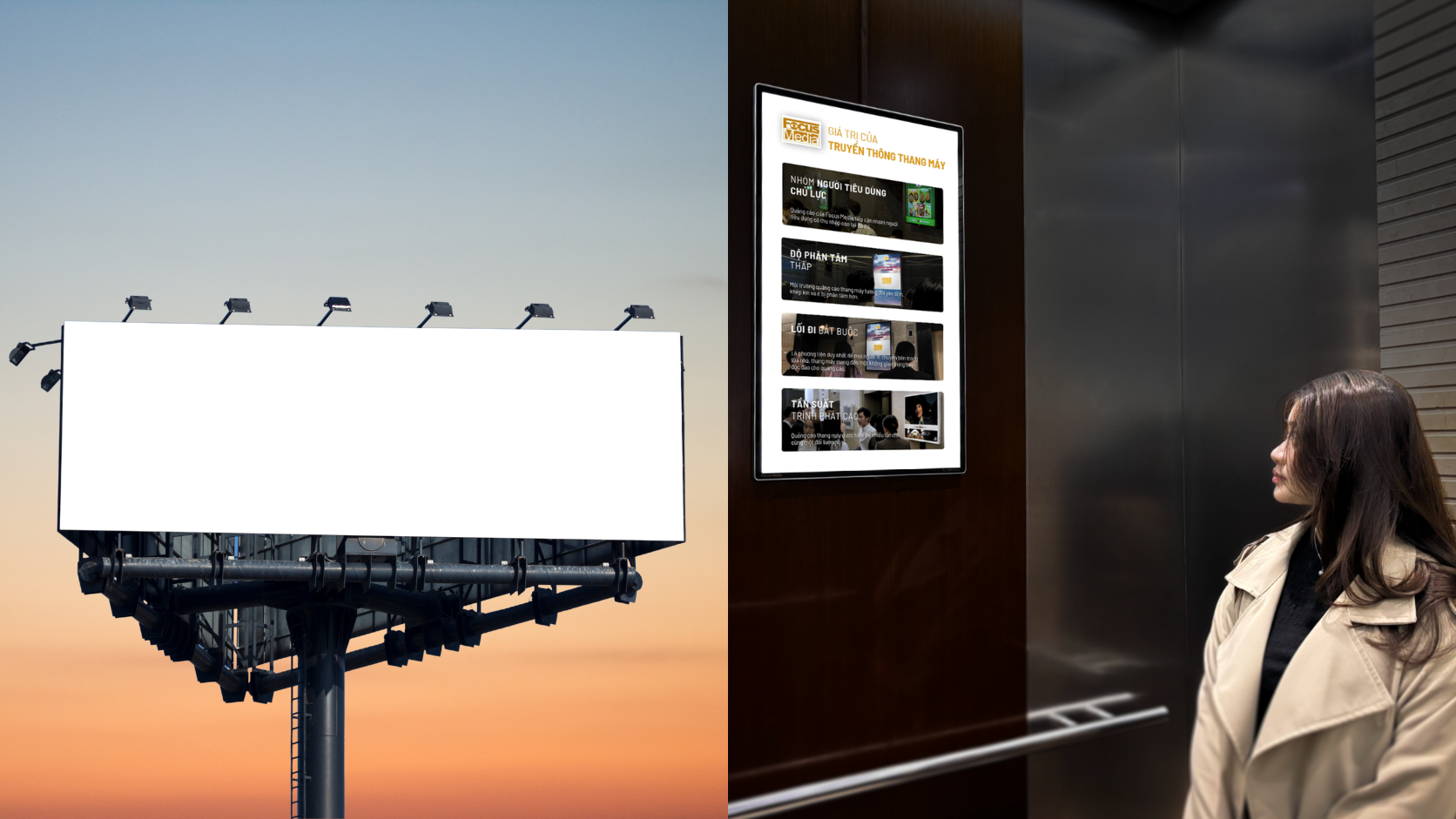
2. Comparing OOH and DOOH based on 10 criteria
The difference between OOH and DOOH lies not only in the display medium but also in the way the message is conveyed, the duration of appearance, the ability to update content, and the measurement methods. These factors directly influence the choice of advertising format for each campaign.
Below is a comparison table of 10 key criteria between static OOH and DOOH:
| Criteria | OOH static | DOOH |
| 1. Display media | Use printed boards, banners, posters, or other mounting materials. | Use LED, LCD, or other digital display devices. |
| 2. Content presentation capabilities | Conveying the message through a static image, suitable for a design with a clear focal point. | It is possible to display still images, animated images, or videos with multiple frames in sequence. |
| 3. Change the content | Advertising materials often need to be manufactured and replaced at the installation site. | Content can be updated remotely, depending on the display management system. |
| 4. Display time | The image will be continuously present at the leased location for the duration of the contract. | Content can be played on a rotating schedule or exclusively, depending on the advertising package. |
| 5. Lighting and visibility | Depending on natural light or a dedicated lighting system. | The screen is self-illuminating and its brightness can be adjusted to suit the environment. |
| 6. Size and design | Flexible in terms of size, shape, and material surface, depending on construction conditions. | It depends on the screen size, aspect ratio, and resolution. |
| 7. Sound and Interaction | Standard printed boards do not emit sound, but they can integrate QR codes or other supporting devices. | Some displays support audio, touch, QR codes, or NFC depending on the configuration and location. |
| 8. Operation and maintenance | There may be discoloration, peeling, or damage to the material, requiring inspection and replacement. | Equipment, power supply, connection, or transmission failures may occur, requiring a technical monitoring system. |
| 9. Measuring effectiveness | Traffic data, exposure opportunity estimates, surveys, and appropriate research methods can be used. | Broadcast data, reach estimates, surveys, and interactions can be combined depending on the system. |
| 10. Implementation costs | This typically includes site rental, material production, construction, and related operating expenses. | It usually depends on location, duration, broadcast schedule, screen size, and content production costs. |
Overall, static OOH advertising has the advantage of maintaining a stable image at the advertising location. Meanwhile, DOOH advertising is more flexible in terms of content presentation and updates, but is more dependent on technical systems and broadcast schedules.
See also: Measuring DOOH advertising: Metrics and evaluation methods
2.1. Advantages and disadvantages of static OOH advertising
A key advantage of static OOH is the ability to maintain the image in a fixed position throughout the rental period. People moving through the area have the opportunity to be exposed to the same message at multiple times, regardless of the broadcast loop.
In addition, static OOH can be produced on a variety of sizes and surfaces. This is suitable for communication ideas that use striking visuals, concise messages, or designs that exploit the shape of the advertising location.
Limit:
- Content without movement: It's difficult to portray actions, events, or stories that require multiple frames.
- Changing the message requires additional steps: This often involves producing and replacing materials at the deployment site.
- Display quality may be affected: Advertising surfaces may fade, peel, or be damaged due to environmental conditions.
Static OOH advertising is suitable for campaigns that need to maintain a presence in one location for an extended period. However, reach effectiveness still depends on visibility, direction of movement, speed of passersby, and the visibility of the advertising content.
2.2. Advantages and disadvantages of DOOH
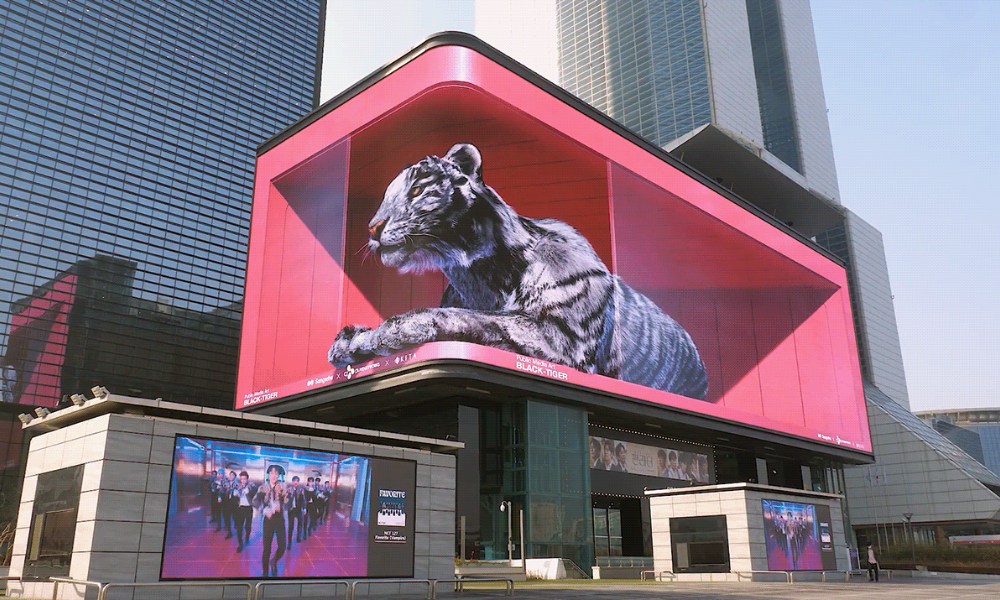
DOOH expands the possibilities for message delivery through animation, video, and multiple frames in sequence. Brands can illustrate product usage, showcase features, or display different versions of content on the same screen.
With remote content management systems, businesses can also change ads, adjust broadcast schedules, and monitor device status without having to replace materials at each location.
However, DOOH also has limitations that need to be considered:
- Dependent on technical infrastructure: The display requires a stable power supply, equipment, and operating system.
- Display time may be limited: With the rotating display format, ads only appear during the time slots that have been purchased.
- Content must meet specifications: Videos and images must conform to the specified duration, resolution, and aspect ratio.
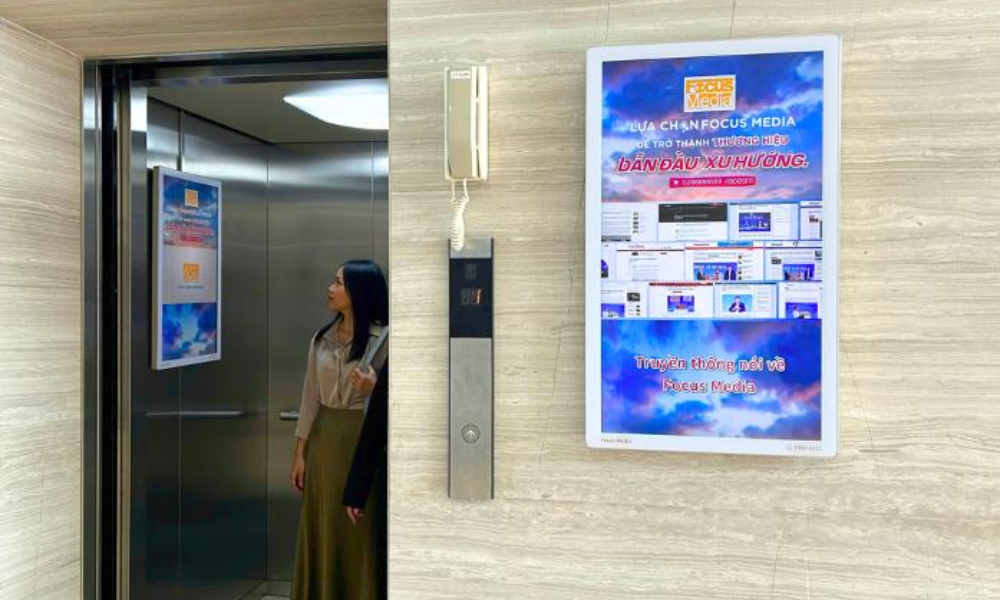
Additionally, some DOOH systems can integrate QR or NFC to connect advertisements with online content. For example, NFC technology on elevator screens at Focus Media allows viewers to bring their phones close to the NFC point to access landing pages, the Focus Mini App to receive offers, or take the next action. The system can record the triggered touches for interaction tracking.
However, NFC taps or QR code scans do not represent the total number of people who have seen the advertisement . These are specific user actions and should be distinguished from audience reach data.
See also: Elevator Advertising 2026: Formats, Costs & Implementation Methods
3. Should you choose static OOH or DOOH for your advertising campaign?
Static OOH (Out-of-Home) advertising is suitable for campaigns that need to maintain a stable brand image in one location for an extended period. Conversely, DOOH ( Double Out-of-Home) advertising is a worthwhile option when businesses want to use video, change their messaging flexibly, or deploy content according to a schedule. Businesses can also combine the two formats to expand their media touchpoints.
In terms of cost, static OOH typically includes site rental, printing, and installation; DOOH depends on location, duration, frequency of broadcast, and number of screens. Both can have their reach estimated using appropriate measurement methods. DOOH, in particular, can supplement broadcast data for acceptance testing, but the number of broadcasts does not equate to the number of people who actually saw the advertisement .
Therefore, businesses should choose based on their target customer characteristics, overall budget, and measurement requirements , rather than assuming which method is more effective.
4. 7 questions to consider before choosing between OOH and DOOH
To choose between static OOH and DOOH, businesses need to consider their communication goals, customer characteristics, and implementation budget. Below are seven questions to help assess which format is right for each campaign.
- Where are your target customers typically found? Prioritize advertising locations that are likely to reach the right audience, such as streets, apartment buildings, offices, or shopping malls.
- Does the campaign need continuous or scheduled display? Static OOH is suitable when a stable image needs to be maintained; DOOH is suitable when content needs to be distributed on a schedule.
- Does the advertising message need movement? If a static image is sufficient to convey the content, static OOH is a worthwhile option. If video or multiple frames are needed, DOOH has the advantage.
- Which option is more cost-effective? There's no single standard price to draw a conclusion about. Businesses need to compare total costs across the same scope and timeframe.
- Is frequent content change necessary? DOOH content can be updated remotely if the system supports it, while static OOH advertising often requires frequent changes to the advertising materials.
- How is advertising effectiveness measured? Both can estimate reach. DOOH can supplement broadcast data, but broadcasts don't equate to actual views.
- How will the supplier conduct acceptance testing and handle the issues? The acceptance testing method, rectification timeframe, and compensation terms need to be confirmed in the contract.
Answering these questions helps businesses compare OOH and DOOH based on actual needs , rather than simply choosing based on cost or display technology.
Both OOH (Out-of-Home) and DOOH (Double Out-of-Home) advertising have their own advantages, suitable for different communication goals and budgets. With a network of digital screens in apartment buildings, office buildings, and shopping malls, Focus Media Vietnam provides elevator advertising solutions to help brands reach urban consumers during their daily activities. Contact Focus Media or call 1900 5111 for advice on the right solution for your campaign.
See more:


Comment (0)
Related News




 CONTACT
CONNECT WITH FOCUS MEDIA VIETNAM
Share your campaign goals. Focus Media Vietnam will advise on how your brand can appear at the right touchpoints within the building and connect viewers to your landing page, e-commerce platform, app, or digital content.

No comments yet. Be the first to share your thoughts.