
 Tiếng Việt
 English
 中文
中文

Programmatic DOOH & Elevator Media Advertising in Vietnam
Last updated: 17 Sep 2026When an Elevator Media Screen No Longer Simply “Plays Advertising”
In the traditional Elevator Media Advertising model, the logic is relatively straightforward: the brand selects media placement points, the creative is uploaded to the screens, and the content runs according to a predefined schedule. But when screens are connected to content management systems, data, and external signals, a different possibility begins to emerge:
Not every screen necessarily has to display the same content at the same time.
Content can be organized by location, building cluster, time, or context. Going further, when Inventory, data, Ad Serving, Measurement, and the transaction layer are connected, DOOH can move toward deeper forms of automation and Programmatic.
This is not entirely a story of the future. Within Focus Media’s ecosystem in China, this digitalization process began many years ago.
The Ele.me Case: When Context Becomes Part of the Creative
One notable example is how Ele.me (饿了么) leveraged Focus Media China’s media network for contextual advertising initiatives.
Instead of using one fixed creative in every situation, the campaign logic was to incorporate real-world context into the way content was delivered.
When external conditions changed — such as hot weather or rain — the advertising message could change accordingly to reflect consumers’ food-ordering and delivery needs.
The important point was not simply that “one advertisement was replaced with another.”
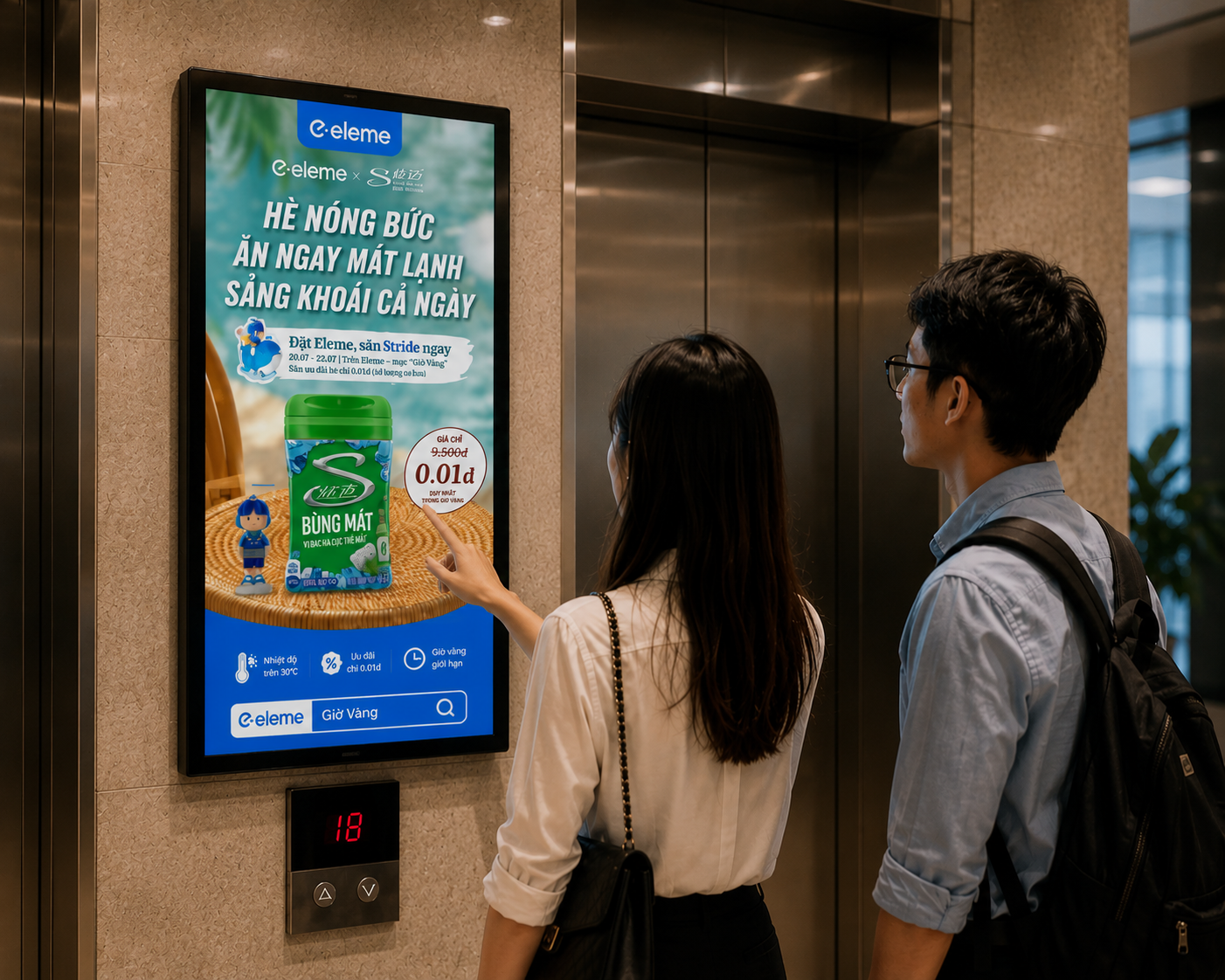
The real significance lies in the logic behind it:
Context/Data → content selection → delivery to the appropriate screen → creation of a next action.
This represents one of the important shifts from Digital OOH toward a DOOH system that is increasingly data-driven and context-aware.
Source note: For the specific Ele.me case, the previously confirmed case source from Focus Media Group/the Focus Media team should continue to be used. The public sources reviewed here clearly confirm the U Focus architecture and Focus Media’s broader digitalization process, but are not sufficient on their own to classify the Ele.me campaign specifically as “Programmatic DOOH” under the transaction-based definition of programmatic.
U Focus: A Foundation Focus Media Began Building in 2018
The Ele.me case should not be viewed as an isolated experiment.
In 2018, Focus Media launched the U众计划 – U Focus Project as part of the digitalization of its Elevator Media network.
In early 2019, Alibaba and Focus Media announced the continued development of U Focus around two major directions: connecting the online–offline journey and moving marketing toward a state that could be observed, quantified, and optimized.
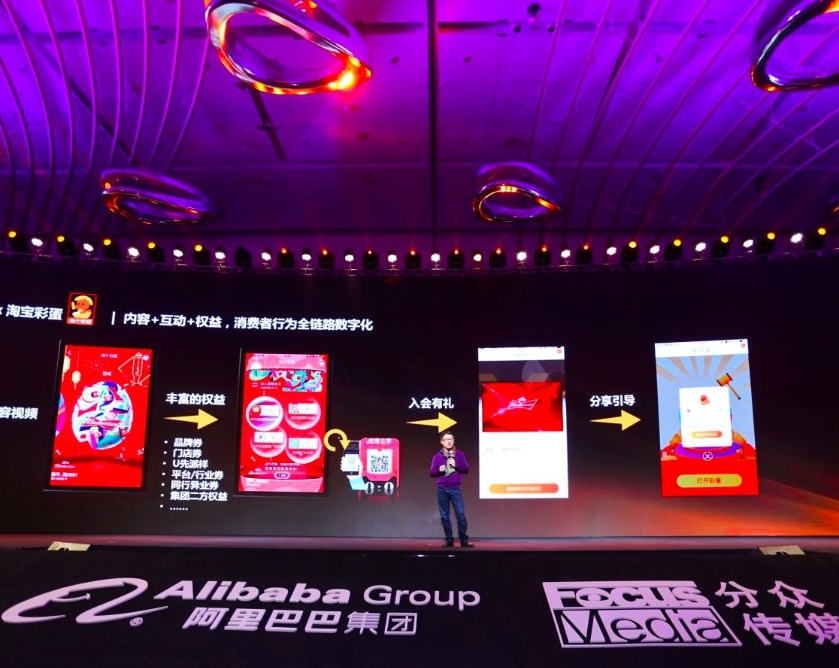
At the time, the system was described as combining several notable capability layers:
Alibaba Cloud → supporting cloud-based content distribution
Alimama → supporting more precise delivery
Taobao/Tmall → connecting Interaction
Uni Marketing → evaluating effectiveness and coordinating Brand–Performance activities
Amap/Gaode → analyzing customer sources and Store Visit effectiveness
Data Bank → matching brand Audience Profiles against building Audiences.
By April 2019, a report on U Focus project progress stated that the project had essentially connected online and offline data and was moving toward more complete tracking of the advertising effectiveness journey.
Viewed from 2026, what is notable is that Focus Media began building these capability layers nearly a decade ago.
But Does Data-Driven DOOH Automatically Mean Programmatic DOOH?
Not necessarily. This distinction is extremely important.
A screen can:
- be remotely connected;
- schedule content;
- switch creatives;
- use data to select content;
- activate according to context;
but it is not necessarily Programmatic Inventory. Programmatic DOOH typically requires an additional infrastructure layer that enables the transaction and activation of Inventory to be automated according to defined rules.
In other words: Digital Screen ≠ Programmatic DOOH.
And: Contextual DOOH ≠ automatically Programmatic DOOH.
However, capabilities such as Connected Screens, Remote Content Management, Structured Inventory, Contextual Activation, Data Integration, and Measurement are precisely the building blocks required for DOOH to move further toward Programmatic.
Why Does Focus Media Hold a Notable Position in This Evolution?
Focus Media’s advantage does not come from technology alone.
It comes from the combination of Network + Physical Context + Technology + Data.
Since its establishment in 2003, Focus Media has developed a media model embedded in urban living environments, particularly buildings and elevators. A 2019 report showed that its self-operated Elevator TV network alone had already reached approximately 709,000 devices, alongside approximately 1.78 million Elevator Poster placements in China.
Today, Focus Media China’s website continues to present its 智能屏 – Smart Screen with multi-dimensional targeting capabilities and the ability to combine video and imagery according to creative requirements. The Group’s product ecosystem also includes 分众智投 (Focus Smart Investment) alongside Elevator TV, Elevator Poster, and Cinema Media.
This creates an important distinction:
Programmatic does not only require software. It requires sufficiently large real-world Inventory that has been digitalized and can be managed in a structured way.
This is where Focus Media’s more than two decades of experience building an Elevator Media Network becomes a notable foundation for the next stage of DOOH development.
How Far Is Programmatic DOOH in Elevator Media from Becoming a Reality in Vietnam?
In Vietnam, the most relevant question today should not yet be:
“Will it be possible tomorrow to buy all Elevator Media Advertising programmatically?”
A more appropriate question is:
“How far have the necessary conditions for such an ecosystem already developed?”
Focus Media Vietnam has currently developed several foundational layers: a digital screen network within buildings, Remote Content Management and distribution, planning by geography/building type/cluster, Interaction formats such as NFC/QR, and a Measurement framework organized by different levels.
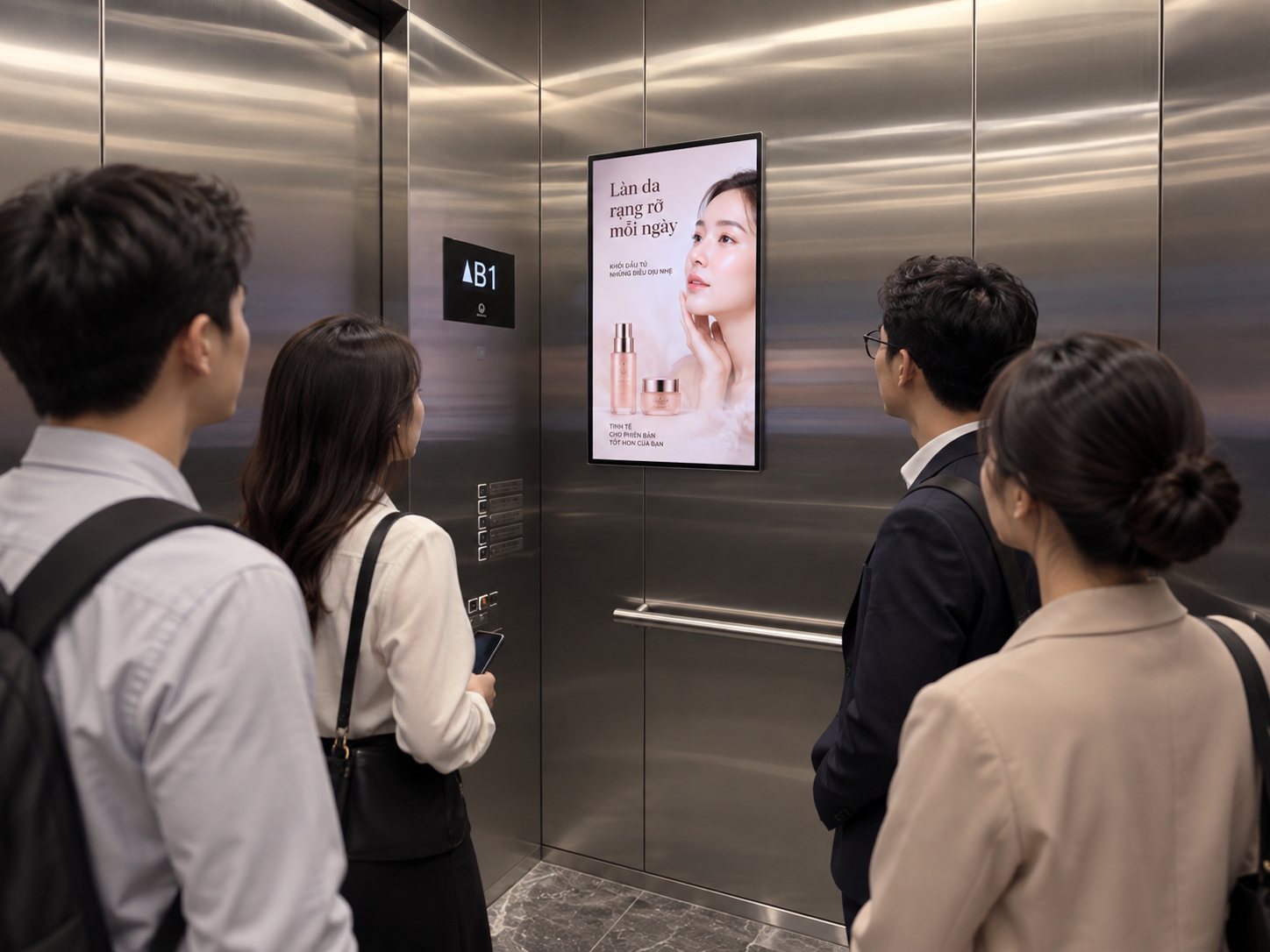
That is not sufficient grounds to claim that all Focus Media Vietnam Inventory is Programmatic DOOH.
However, looking at the path already taken by Focus Media China — from the Elevator Media Network to Connected Screens, U Focus, Contextual Activation, and Data Integration — the direction of system evolution is relatively clear.
From “Buying Screens” to “Buying the Right Context”
The Ele.me case therefore represents something larger than a weather-responsive creative campaign.
It demonstrates how Elevator Media can move from the question “How many screens does the advertisement appear on?” to “Which message should appear, where, at what time, and in what context?”
And that is precisely the logic behind the development of data-driven DOOH and Programmatic DOOH.
Focus Media has spent more than two decades building its physical network and many years digitalizing its system in the Chinese market. In Vietnam, the continued localization and expansion of these capabilities is therefore not an unsupported prospect.
The key question to watch is no longer simply whether screens will become more “digital,” but when the layers of Inventory, data, Activation, Measurement, and transaction infrastructure can become deeply connected enough for Elevator Media to move into a more complete Programmatic stage.
FAQ
What is Programmatic DOOH?
Programmatic DOOH is the use of platforms and data to automate part of the process of transacting, selecting, or activating Digital Out-of-Home advertising Inventory.
Does a digital screen operated by Focus Media automatically mean Programmatic DOOH?
No. A Connected Digital Screen is an important technical foundation, but it is not sufficient on its own for the Inventory to be classified as Programmatic.
Is the Ele.me case an example of Programmatic DOOH?
It is more appropriate to describe this case as contextual/data-driven Elevator Media.


Comment (0)
Related News

Do Elevator Media Bother Residents?
26/09/2026

 Contact
Let Focus Media Vietnam
Bring your brand into urban life
Share your campaign objectives. Focus Media Vietnam will advise on how your brand can appear at relevant touchpoints within the building and connect viewers to landing pages, e-commerce platforms, apps, or digital content.

No comments yet. Be the first to share your thoughts.