
 Tiếng Việt
 English
 中文
Media Handbook
QR Codes on Elevator Advertising: How to Design, Test, and Measure
Last updated: 20 Nov 2026QR codes on elevator advertisements allow viewers to transition from on-screen content to product pages, special offers, or registration forms directly on their phones. For this to be effective, businesses need to pay attention to code size, scanning distance, display time, and post-access experience.
1. When should QR codes be placed on elevator advertisements?
QR codes are suitable when businesses want viewers to take a further action, such as learning about products, receiving offers, signing up for consultations, or visiting a website. Conversely, if the main goal is to increase brand awareness and recall, a QR code is not necessarily required. Before incorporating the code into the design, it's crucial to clearly define what value viewers will receive after scanning and whether the call to action (CTA) is sufficiently clear.
2. How to design QR codes for easy scanning
2.1. Select size based on scan distance
The size of the QR code should correspond to the distance from which viewers are expected to scan it using their phones. A reference point in outdoor advertising is a 10:1 ratio between the scanning distance and the code width. For example, a distance of 1 meter could start with a code approximately 10 cm wide.
This is not a fixed size. Scanning capability also depends on the data density in the code, screen resolution, and camera device. Therefore, it is necessary to test directly on the advertising screen at a real viewing distance before release.
2.2. Ensure adequate white space and contrast.
A QR code needs a quiet zone around it for accurate camera recognition. According to DENSO WAVE guidelines, a standard QR code requires a minimum of four modules of quiet space on all four sides.
Additionally, use dark codes on a light background, avoid overlapping text or images with the code, and do not stretch or distort the squares. These errors can make it difficult for the phone to recognize or scan the code.
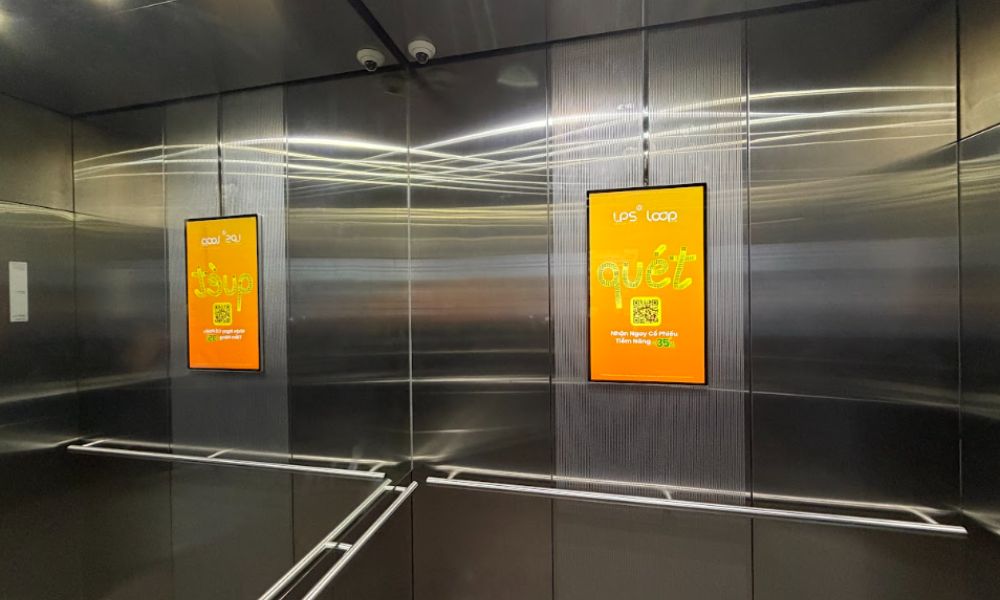
2.3. Arrange appearance times appropriately.
For video ads, the QR code needs to appear long enough for viewers to recognize it, open their cameras, and scan it. It shouldn't be included only in the final seconds of the TV commercial. The code can be displayed throughout the video or in a separate scene, and a call to action (CTA) should be placed near the code so viewers know what action to take.
3. Where should a QR code lead viewers?
The destination of the QR code should correspond to the call to action (CTA) on the screen. If the goal is to register for a consultation, the code should lead to a form; if it's to introduce a product, it should open directly to the product information page instead of the homepage.
Some commonly used destinations include:
- Mini App
- Product page or landing page.
- Special offers and vouchers.
- Registration or consultation form.
- Website, fan page, or branded content.
Businesses can also use dynamic QR codes to change the destination link without having to modify the code in the design. Depending on the platform, dynamic codes may also support recording scan data for measurement purposes.
If a business needs to compare performance between areas or groups of buildings, it can create separate paths or use UTM parameters to differentiate traffic sources. However, it's not necessary to create separate codes for each location if the expected interaction volume is too low to produce meaningful comparison results.
See also: How to Design an O2O Journey from Screen to Landing Page
4. What checks are needed before the advertisement is broadcast?
Before displaying ads on screens, businesses should test the entire journey from QR code scanning to the completion of the desired action:
- Scanning capability: Tested using multiple phones and at actual viewing distances.
- Display quality: Check size, contrast, white space, and code placement.
- Destination path: Ensure the URL is working, the page loads well on mobile devices, and the content matches the CTA.
- Post-scan action: Try submitting a form, claiming an offer, or signing up.
- Measurement data: Verify that the UTM code and tracking events have been set up correctly.
The testing needs to be done on the actual advertisement and screen, not just by scanning the QR code on a computer.
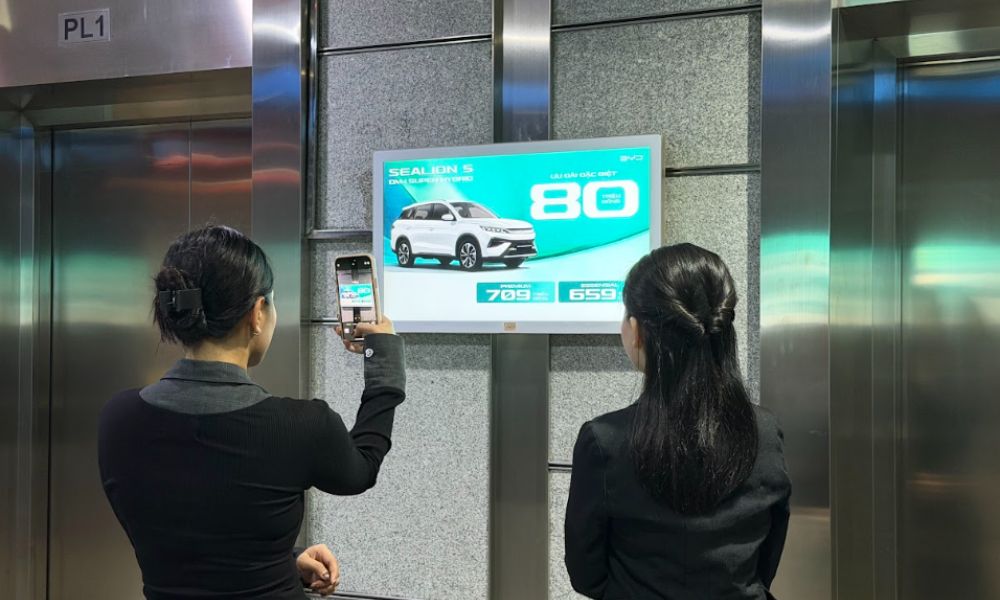
5. Measuring the effectiveness of QR codes in elevator advertising.
QR code scans indicate that viewers have actively interacted with the advertisement, but this is not enough to conclude that they have become customers. Businesses should also monitor the following metrics:
| Index group | Data to be monitored | Purpose |
| Scans | Total scans, unique scans if any | Initial interaction assessment |
| Access | Session, traffic source, landing page behavior | Assess the level of interest |
| Conversion | Sign up, receive offers, submit forms, or make a purchase. | Evaluating post-interaction results |
To differentiate traffic sources, businesses can assign unique UTMs to each campaign or group of QR codes and track them in Google Analytics 4 (GA4). For a more comprehensive assessment, QR data should be placed alongside broadcast reports, reach, and other media performance metrics.
See more: DOOH - Decoding the measurement metrics for ad formats
QR codes help elevator advertising expand touchpoints from the screen to the online environment, creating opportunities for viewers to further learn about the product, receive offers, or sign up for consultations. To effectively utilize this format, businesses need to focus on designing easily scannable codes, selecting appropriate landing pages, and measuring post-access actions.
With our elevator advertising solution combining NFC touch technology and NFC Mini App , Focus Media Vietnam helps brands connect offline advertising experiences with digital interaction. Contact Focus Media today for advice on solutions tailored to your communication goals and target audience.


Comment (0)
Related News



 CONTACT
CONNECT WITH FOCUS MEDIA VIETNAM
Share your campaign goals. Focus Media Vietnam will advise on how your brand can appear at the right touchpoints within the building and connect viewers to your landing page, e-commerce platform, app, or digital content.

No comments yet. Be the first to share your thoughts.