
 Tiếng Việt
 English
 中文
So Sánh OOH Và DOOH: Nên Chọn Hình Thức Nào Cho Chiến Dịch Truyền Thông?
Last updated: 15 Nov 2026Comparing OOH and DOOH isn't simply a matter of choosing between traditional billboards and digital screens. Each format has its own advantages and limitations in terms of visibility, content, cost, and operation. This article will analyze 10 key differences between static OOH and DOOH, helping businesses choose the solution that best suits their communication goals and budget.
1. What is the difference between OOH (Out-of-Home) and DOOH (Out-of-Home) photography?
OOH (Out-of-Home) advertising refers to advertising that reaches consumers outside their private living spaces, encompassing both traditional and digital advertising. Static OOH uses printed boards, billboards, posters, or fixed materials to display messages. DOOH (Digital Out-of-Home) uses digital screens such as LED, LCD, or Digital Frames to display images, animations, and videos.
Essentially, DOOH is a part of OOH, not two opposing fields. However, in media practice, the term OOH is often used narrowly to refer to traditional forms of advertising that do not utilize digital screens. Therefore, this article will use the terms static OOH and DOOH to differentiate between the two display methods.
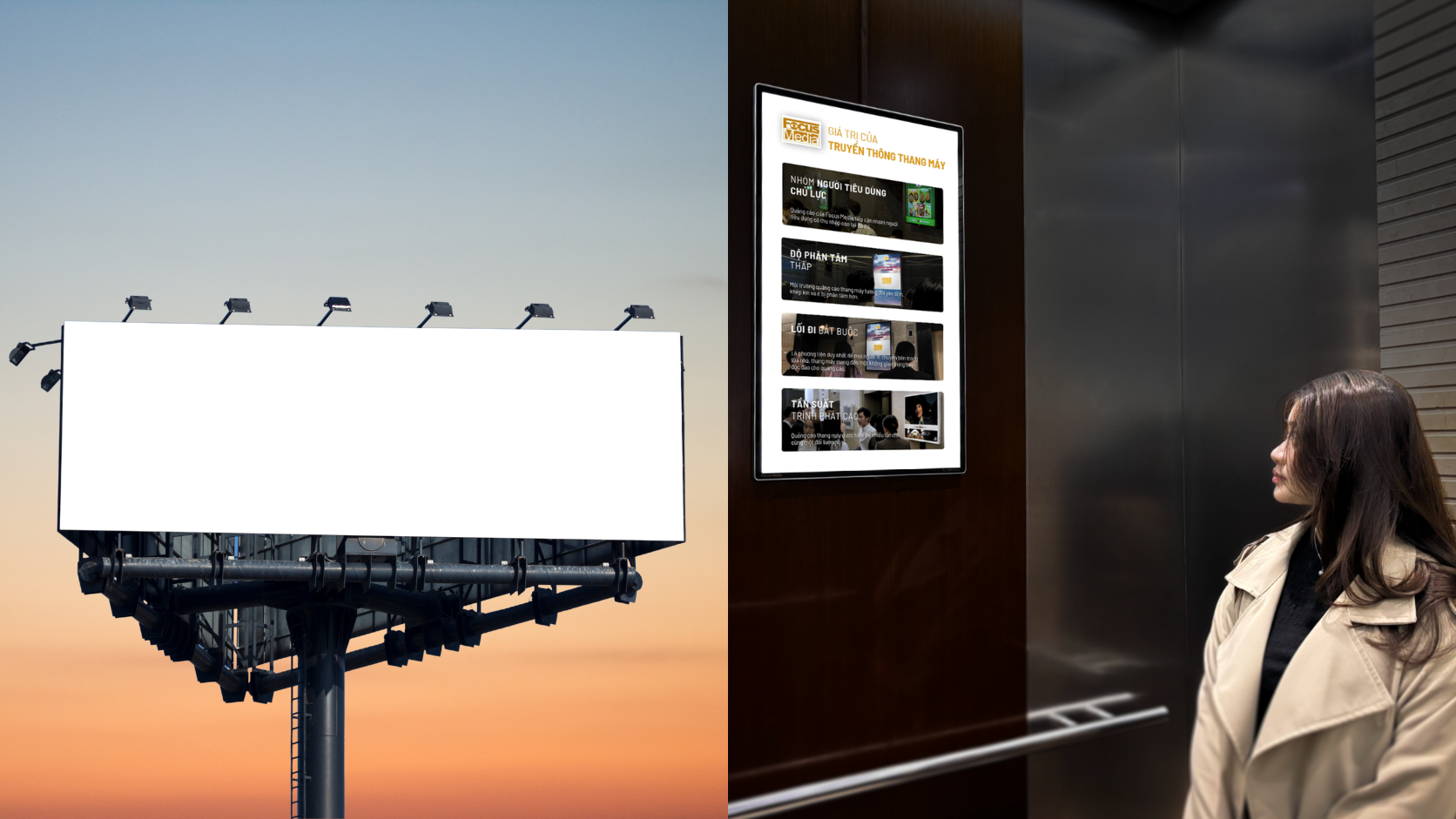
2. Comparing OOH and DOOH based on 10 criteria
The difference between OOH and DOOH lies not only in the display medium but also in the way the message is conveyed, the duration of appearance, the ability to update content, and the measurement methods. These factors directly influence the choice of advertising format for each campaign.
Below is a comparison table of 10 key criteria between static OOH and DOOH:
| Criteria | OOH static | DOOH |
| 1. Display media | Use printed boards, banners, posters, or other mounting materials. | Use LED, LCD, or other digital display devices. |
| 2. Content presentation capabilities | Conveying the message through a static image, suitable for a design with a clear focal point. | It is possible to display still images, animated images, or videos with multiple frames in sequence. |
| 3. Change the content | Advertising materials often need to be manufactured and replaced at the installation site. | Content can be updated remotely, depending on the display management system. |
| 4. Display time | The image will be continuously present at the leased location for the duration of the contract. | Content can be played on a rotating schedule or exclusively, depending on the advertising package. |
| 5. Lighting and visibility | Depending on natural light or a dedicated lighting system. | The screen is self-illuminating and its brightness can be adjusted to suit the environment. |
| 6. Size and design | Flexible in terms of size, shape, and material surface, depending on construction conditions. | It depends on the screen size, aspect ratio, and resolution. |
| 7. Sound and Interaction | Standard printed boards do not emit sound, but they can integrate QR codes or other supporting devices. | Some displays support audio, touch, QR codes, or NFC depending on the configuration and location. |
| 8. Operation and maintenance | There may be discoloration, peeling, or damage to the material, requiring inspection and replacement. | Equipment, power supply, connection, or transmission failures may occur, requiring a technical monitoring system. |
| 9. Measuring effectiveness | Traffic data, exposure opportunity estimates, surveys, and appropriate research methods can be used. | Broadcast data, reach estimates, surveys, and interactions can be combined depending on the system. |
| 10. Implementation costs | This typically includes site rental, material production, construction, and related operating expenses. | It usually depends on location, duration, broadcast schedule, screen size, and content production costs. |
Overall, static OOH advertising has the advantage of maintaining a stable image at the advertising location. Meanwhile, DOOH advertising is more flexible in terms of content presentation and updates, but is more dependent on technical systems and broadcast schedules.
2.1. Advantages and disadvantages of static OOH advertising
A key advantage of static OOH is the ability to maintain the image in a fixed position throughout the rental period. People moving through the area have the opportunity to be exposed to the same message at multiple times, regardless of the broadcast loop.
In addition, static OOH can be produced on a variety of sizes and surfaces. This is suitable for communication ideas that use striking visuals, concise messages, or designs that exploit the shape of the advertising location.
Limit:
- Content without movement: It's difficult to portray actions, events, or stories that require multiple frames.
- Changing the message requires additional steps: This often involves producing and replacing materials at the deployment site.
- Display quality may be affected: Advertising surfaces may fade, peel, or be damaged due to environmental conditions.
Static OOH advertising is suitable for campaigns that need to maintain a presence in one location for an extended period. However, reach effectiveness still depends on visibility, direction of movement, speed of passersby, and the visibility of the advertising content.
2.2. Advantages and disadvantages of DOOH
DOOH expands the possibilities for message delivery through animation, video, and multiple frames in sequence. Brands can illustrate product usage, showcase features, or display different versions of content on the same screen.
With remote content management systems, businesses can also change ads, adjust broadcast schedules, and monitor device status without having to replace materials at each location.
However, DOOH also has limitations that need to be considered:
- Dependent on technical infrastructure: The display requires a stable power supply, equipment, and operating system.
- Display time may be limited: With the rotating display format, ads only appear during the time slots that have been purchased.
- Content must meet specifications: Videos and images must conform to the specified duration, resolution, and aspect ratio.
Additionally, some DOOH systems can integrate QR or NFC to connect advertisements with online content. For example, NFC technology on elevator screens at Focus Media allows viewers to bring their phones close to the NFC point to access landing pages, the Focus Mini App to receive offers, or take the next action. The system can record the triggered touches for interaction tracking.
However, NFC taps or QR code scans do not represent the total number of people who have seen the advertisement . These are specific user actions and should be distinguished from audience reach data.
3. Consider the options based on campaign requirements.
To compare OOH and DOOH based on practical needs, businesses must also consider how the brand wants to appear, the content to be conveyed, and the available budget. The table below helps businesses compare each requirement with the advantages and disadvantages of the two formats.
Comparison criteria | OOH static | DOOH |
| How the brand appears | The advertising images will be continuously displayed at the leased location for the duration of the contract. | Advertisements appear on a schedule and often alternate with content from other brands. |
| Content display capability | Conveying a message through a static image. | It is possible to display animated images or videos with multiple frames in sequence. |
| Production requirements | We need to design, print, and install advertising signage. | Animated images or videos need to be produced to meet the exact size, duration, and technical requirements of the screen. |
| Implementation costs | The costs typically include venue rental, printing, and installation. | Costs can vary depending on location, duration of each broadcast, number of broadcasts, and content production costs. |
| How to check ads | Acceptance testing can be done through photographic evidence or on-site inspection. | The system can record the content broadcast, the time of broadcast, and the projection device, depending on the capabilities of the operating unit. |
| When is appropriate? | It is necessary to maintain a consistent image and message throughout the campaign. | The idea needs movement, sound, or multiple frames to be fully conveyed. |
Questions to answer before making a choice.
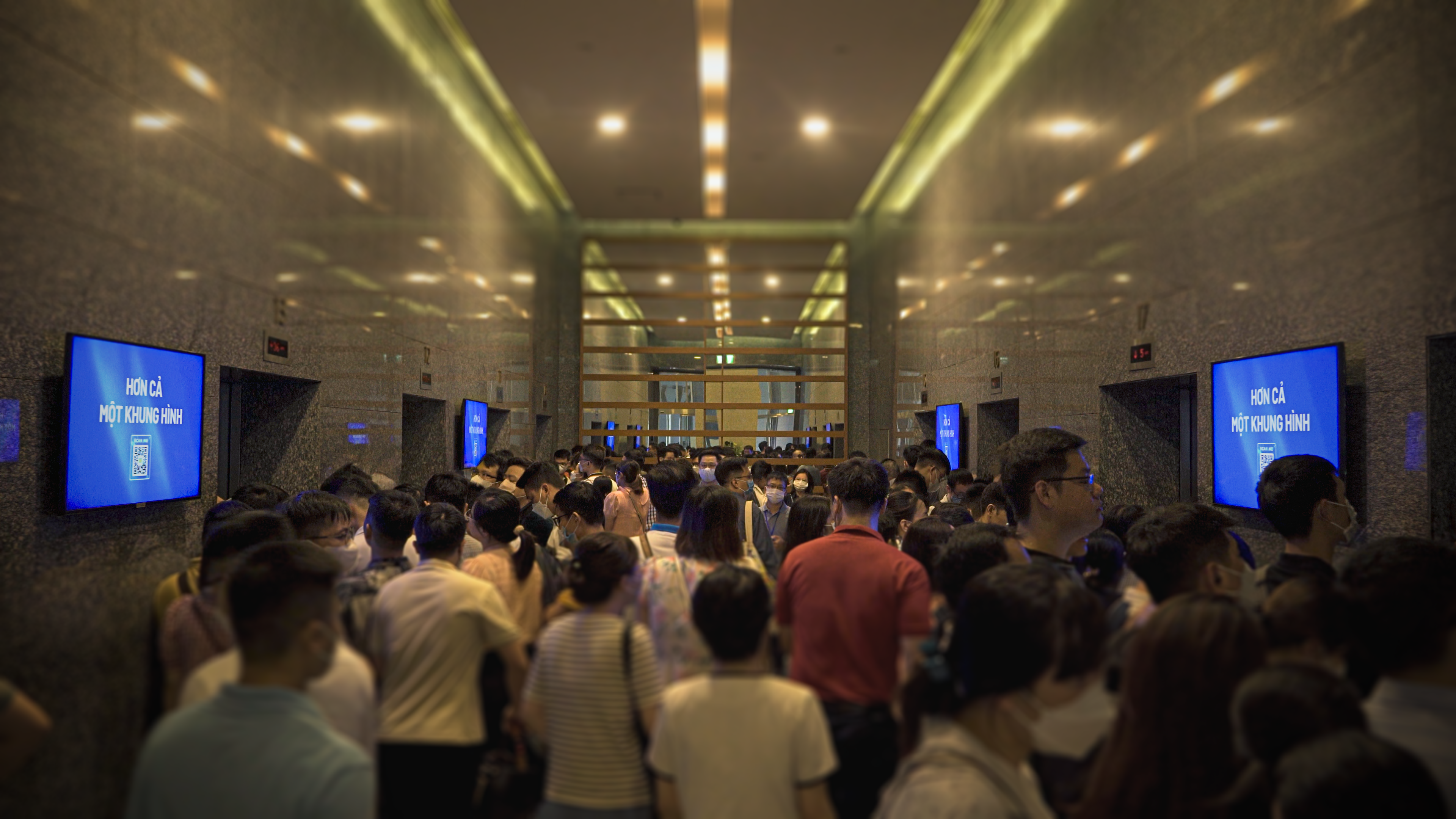
Before comparing OOH and DOOH based on pricing, businesses need to clarify who they want their ads to reach, how they will appear, and what role they will play in the campaign. Some questions that can help narrow down the options include:
- Where do target customers typically appear, and under what circumstances do they come into contact with advertising?
- Does the campaign need a continuously present image that passersby can see at any time, or does it need animated images and videos to illustrate the product more vividly, even though the ad only appears for a limited time?
- Can the message be fully conveyed with a static image, or does it require an animated image or video?
- Does the business already have images or videos suitable for the chosen advertising format, or is additional time and cost needed to produce the content?
- What does the total budget include besides venue rental, such as printing, installation, or video production costs?
- Does the business only need on-site inspection images, or do they need recorded data for each broadcast to compare with the purchased advertising schedule?
- How will the operating unit handle situations where ads are played incorrectly, missed, or the screen malfunctions?
By answering these questions, businesses can compare OOH and DOOH formats within the same objectives and budget, instead of simply placing printed billboards next to digital screens based on price or display location. This will help them determine whether static OOH, DOOH, or a combination of both is more suitable for their campaign needs.
Conclusion
Static OOH creates a stable presence with a fixed image, while DOOH expands how brands convey their message through animation and video. Therefore, comparing OOH and DOOH only truly makes sense when each form is considered within the specific goals of a campaign. By understanding what they want viewers to remember and how the brand needs to appear, businesses will have a basis for choosing the option that best suits their investment.


Comment (0)
Related News



 Contact
Let Focus Media Vietnam
Bring your brand into urban life
Share your campaign objectives. Focus Media Vietnam will advise on how your brand can appear at relevant touchpoints within the building and connect viewers to landing pages, e-commerce platforms, apps, or digital content.

No comments yet. Be the first to share your thoughts.