
 Tiếng Việt
 English
 中文
Thị Phần Quảng Cáo Thang Máy Là Gì? Đơn Vị Nào Đang Dẫn Đầu Tại Việt Nam?
Last updated: 28 Sep 2026
When selecting a service provider, most businesses consider market share as one of the key factors in deciding on a partnership. A provider with a large market share is often perceived as having a large scale of operation and a high reputation. This allows businesses to narrow down the number of providers to investigate before delving into implementation capabilities, service quality, and costs.
However, for elevator advertising, this shortcut doesn't provide a clear answer for those inquiring about the market share of this industry in Vietnam. This is because the market still lacks a publicly available dataset or a comprehensive ranking verified by an independent entity. Even on Google , searchers primarily encounter individual claims, service descriptions, and price quotes, rather than a verifiable answer based on original data.
So what is elevator advertising market share, how is it measured, and who is the leading company in Vietnam?
What is the market share of elevator advertising?
Elevator advertising market share is the ratio of a business's advertising revenue or service volume to the total revenue or total service volume of the relevant market during the same period. This figure indicates what percentage of the measured market a business holds.
For this ratio to be meaningful, the unit performing the measurement must consistently apply four factors: service scope, geographical scope, calculation period, and data recording method.
According to the 2018 Competition Law , market share must be calculated within a “relevant market,” comprising goods or services that are interchangeable in terms of characteristics, purpose of use, and price in a region with similar competitive conditions. The Competition Law also allows entities to determine market share by revenue or the number of units of goods or services sold, but all calculations must be based on the same relevant market and the same monthly, quarterly, or annual period.
With elevator advertising, revenue, number of screens, number of people reached, and duration are all metrics that can be used to describe the scale of operations. However, each number reflects a different aspect, and not every percentage can be called market share.
Therefore, the number of screens can indicate the scale of the elevator advertising network, but it cannot alone prove the market share of the business.
How is elevator advertising market share measured?
Elevator advertising market share is measured by dividing a business's revenue or advertising service volume by the corresponding total of the entire relevant market during the same period. However, before performing the calculation, the measuring entity must clearly define the market scope, how to record data sources, and create a set of rules that apply uniformly to all businesses.
Clearly define the market scope.
Before collecting data, the report needs to clearly define five elements:
- Advertising formats include: screens in elevators, screens in lobbies and waiting areas, static advertising frames, or a combination of all of the above.
- Type of location: apartment buildings, office buildings, shopping malls, or other locations with elevators.
- Geographic scope: individual cities, a group of provinces, or the entire country.
- Period: monthly, quarterly, or annually.
- Business scope: does this include all providers in the market or only those entities involved in providing data?
For example, a statistical report on digital screens in apartment buildings and offices in Hanoi may only reflect the proportion within that area and does not represent the market share of the entire elevator advertising industry in Vietnam.
Standardize data recording methods.
The same metric can yield different results if each business uses its own recording rules:
Index | The rules need to be standardized. |
Revenue | Revenue based on list price or actual amount recorded; how discounts, taxes, and additional advertising time are handled. |
Network | Is this for all the installed screens or just those that are active and capable of displaying advertisements? |
Placement | A building is counted as a point, or each screen within the building is counted as a separate point. |
The number of people who have the opportunity to come into contact | Different numbers of people or total number of views; how to handle the case where a person sees the screen multiple times. |
Playback duration | Total sellable time, sold time, or actual advertising time played. |
Therefore, a screen that is installed but not yet active cannot be counted the same as a screen that is playing an advertisement. Similarly, the total number of screen views cannot be called the number of different people if the data has not removed repeated appearances.
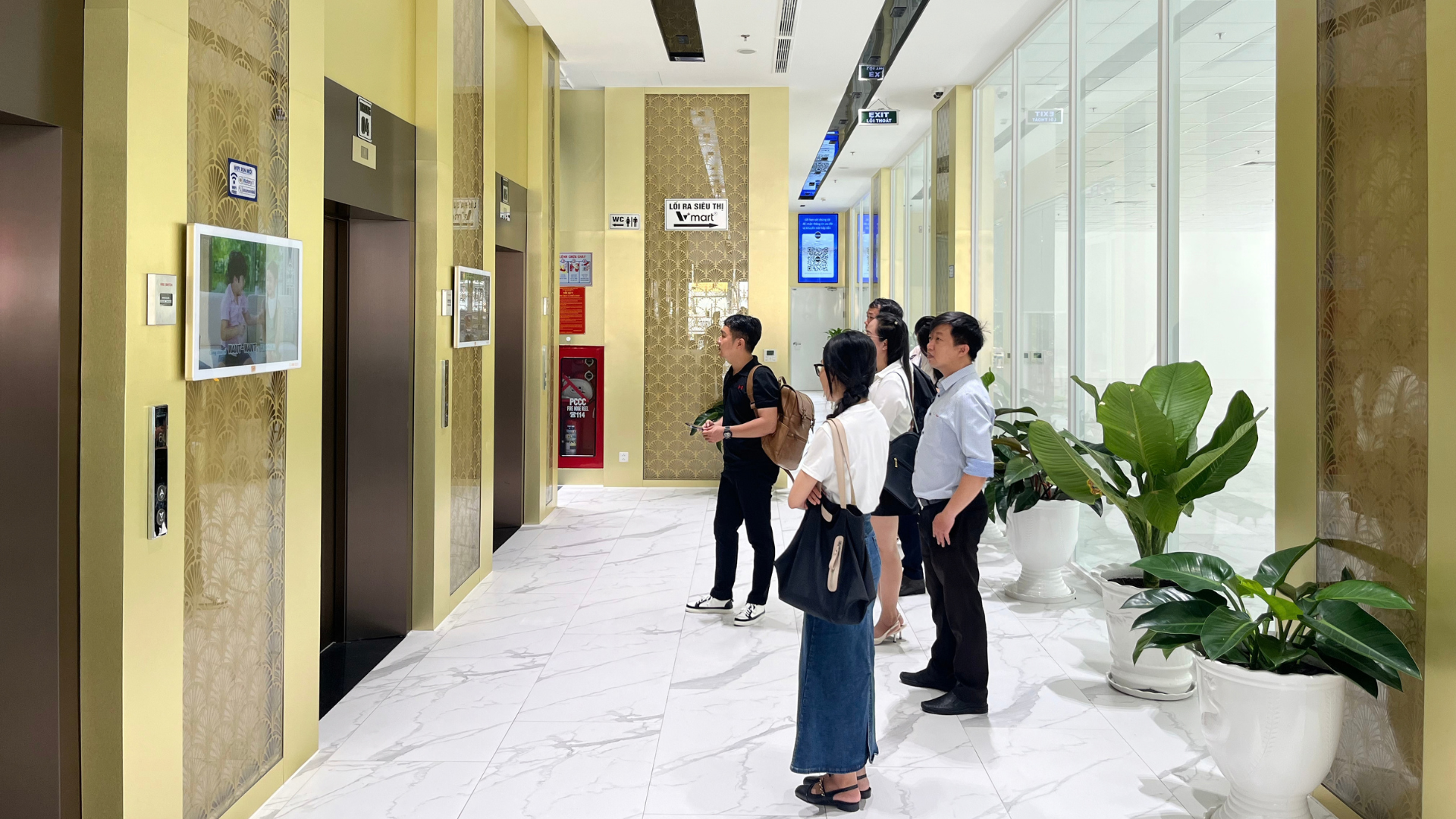
The data needs to be compiled and verified independently.
After agreeing on the calculation method, participating businesses need to declare data using the same form. The data aggregation unit must remove duplicate data, check the operational status of the screens, compare the broadcast schedule when measuring actual duration, and clearly announce the update time, coverage level, and any missing data.
These are also requirements that have appeared in international measurement guidelines. For example, the 2026 DOOH automated sales study by the World Outdoor Advertising Organization (WOO) requires 12 seller-side platforms to submit data directly to the auditing firm PwC for independent aggregation. The report specifies the scope of over 40 markets, the full-year data period of 2025, and the estimated nature of the results. In markets where complete data is unavailable, the research team uses adjustment factors and discloses this approach in the methods section.
What does publicly available data say about the elevator advertising market in Vietnam?
Currently, there is insufficient publicly available data to determine which company is leading the elevator advertising market share in Vietnam using a consistent methodology.
In the process of writing this article, Focus Media Vietnam reviewed publicly accessible documents on the websites of elevator advertising companies, press agencies, and research organizations regarding the elevator advertising market share in Vietnam up to September 2026. Within these sources, most data only describe the network size, scope of operations, or the results of a single study; no dataset was found that simultaneously provided a comprehensive overview:
- A general definition of the elevator advertising market.
- Advertising formats, building types, and locations are all taken into account in the calculation.
- List or coverage of participating vendors.
- Total revenue or total volume of services provided to the entire market.
- General rules for calculating screen size, building size, broadcast duration, and audience reach.
- This method removes duplicate data and processes missing data.
- The results of a check from an independent unit or information detailed enough for an external party to perform the calculations again.
Therefore, currently available data can help businesses compare network size, deployment scope, and the type of evidence each provider offers. However, this amount of information is not enough to determine which company is leading the elevator advertising market share in Vietnam.
The figures being released mainly reflect individual ranges.
For example, Focus Media Vietnam announced a network of over 18,000 screens in more than 2,000 buildings. These two numbers only indicate the scale in terms of the number of devices and locations that the company manages. To convert the number of screens into a proportion, the reader needs to know the total number of screens included in the calculation according to the same criteria: device type, location, area, operating status, and measurement period. Screens that are outside the scope or are duplicates are counted as invalid screens and must be excluded from the denominator.
Network share = (Number of eligible screens of Focus Media) / (Total number of eligible screens in the measured market) * 100%
The table below shows the meaning of each publicly available statistic in the elevator advertising industry:
The data has been released. | These figures actually indicate... |
Number of screens | How many devices is the supplier managing or operating? |
Number of buildings | How many buildings is the supplier operating the screens in? |
The proportion of equipment in the surveyed building sample. | The number of devices from a vendor compared to the total number of devices from all vendors recorded in the same building group. This figure can only be inferred as market share across Vietnam if the survey sample covers the entire market or if the building selection method and screen counting rules are published. |
Number of people exposed to the advertisement | Estimated number of people who entered the area where the screen was visible during the measurement period. |
Results of the recognition and memorization survey. | Did the survey participants recognize or remember the advertisement, message, or brand? |
Revenue of a business | How much revenue did the business record during the period? This figure can only be used to determine market share if the total revenue of all businesses in the same market and during the same period is known. |
Publicly available data still lacks a basis for calculating market share across the entire industry.
Limitations of Conclusion: This review does not prove that all circulating figures are incorrect, nor does it rule out the possibility of internal reports or unpublished research. The results only indicate that currently available public documents do not provide sufficient methodology and data for readers to independently verify an industry-wide market share figure.
Which company is leading the elevator advertising market share in Vietnam?
Based on the available public documents, there is insufficient basis to determine a market leader in elevator advertising in Vietnam using a unified measurement method.
The published data may indicate network size, number of locations, or accessibility as reported by each provider. However, the market lacks a common benchmark for comparing all businesses within the same scope, accounting period, and recording rules. Therefore, a large network may demonstrate deployment capabilities, but it is not sufficient to establish a ranking of market share across the entire industry.
Even without clear, verified ranking results, businesses can still evaluate suppliers based on other factors such as operational experience, network management capabilities, technological infrastructure, and reporting data. For Focus Media Vietnam , these factors are demonstrated through the group's platform and the systems currently operating in the domestic market.
Focus Media Vietnam's operating platform
Founded in 2003, Focus Media is a pioneer in developing large-scale elevator advertising models. The company was listed on the NASDAQ in 2005, expanded its operations internationally in 2017, and currently operates a network in many countries, including Vietnam.
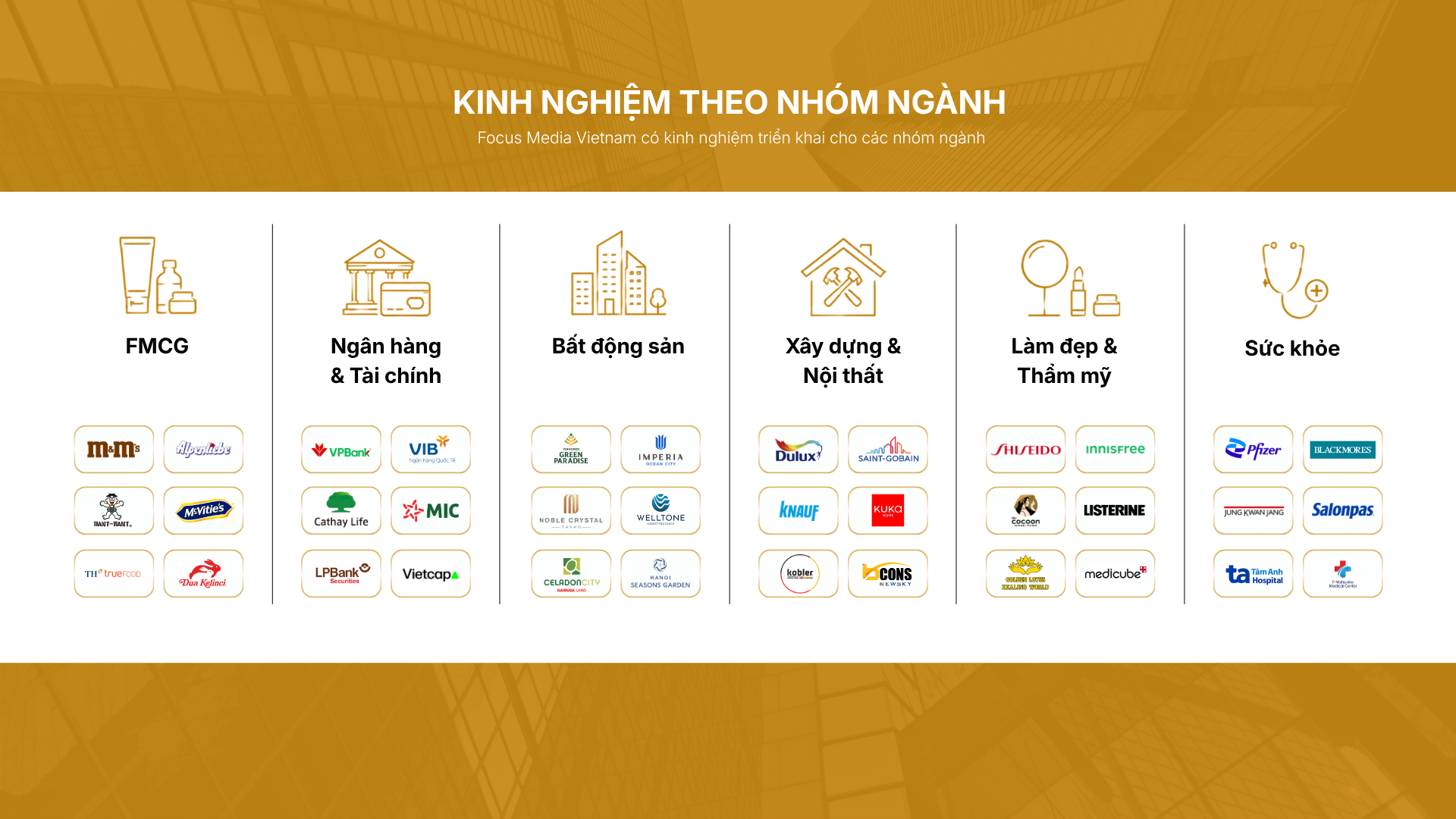
In Vietnam, Focus Media currently operates over 18,000 screens in more than 2,000 buildings . The company also inherits the technology platform, management processes, and operational experience accumulated by the group in many international markets. This demonstrates that Focus Media Vietnam has the capacity to organize and manage large-scale elevator advertising campaigns for both domestic businesses and international brands operating in Vietnam .
Conclude
Until a dataset meeting the above conditions is available, each “leadership” claim needs to clearly state the index, scope, and time of measurement. With the currently available public data, the market lacks sufficient grounds to determine a leader according to a common standard. A reliable conclusion must begin with a clear measurement scope, a complete sample size, and a verifiable methodology.


Comment (0)
Related News





 Contact
Let Focus Media Vietnam
Bring your brand into urban life
Share your campaign objectives. Focus Media Vietnam will advise on how your brand can appear at relevant touchpoints within the building and connect viewers to landing pages, e-commerce platforms, apps, or digital content.

No comments yet. Be the first to share your thoughts.