
 Tiếng Việt
 English
 中文
中文

Media guide
Criteria for Selecting a DOOH Advertising Platform – Technology, Operations & Data Security
Last updated: 29 Apr 2026As the Out-of-Home media industry undergoes rapid transformation, manually installing printed maquettes inside buildings has become increasingly outdated. The era of DOOH (Digital Out-of-Home) requires a far more sophisticated infrastructure, where advertising screens are no longer passive video playback devices but intelligent digital touchpoints.
When B2B enterprises and major brands evaluate the capabilities of Elevator Media Advertising providers, three core factors consistently come under scrutiny: hardware technology, software operating systems, and privacy compliance standards.
This article takes a detailed look at these dimensions, helping strategic planners assess potential display-network partners with greater precision.
What Makes Next-Generation DOOH Advertising Screens Different?
The first element viewers encounter is the display hardware itself. After decades of development, the hardware behind in-building media networks has advanced significantly beyond traditional equipment.
Breakthrough Upgrades in Resolution and Bezel Design
Older generations of LCD screens, such as LCD 2.5 or 3.0, typically featured thick bezels, lower brightness, and resolutions that were not optimized for high-quality TVCs.
In the new era, leading providers have upgraded to the latest DF 5.0 screen generation. These devices feature refined near-edge-to-edge designs combined with 1080p FULL HD resolution, delivering sharp visual quality down to the finest detail.
Beyond visual performance, the screens have also been improved for greater energy efficiency, aligning with the sustainable operating standards of Grade A buildings.
Instant Interaction Through NFC Touch Technology
One of the key developments reshaping the entire Elevator Media Advertising industry is the ability to transform a one-way display device into an interactive sales touchpoint.
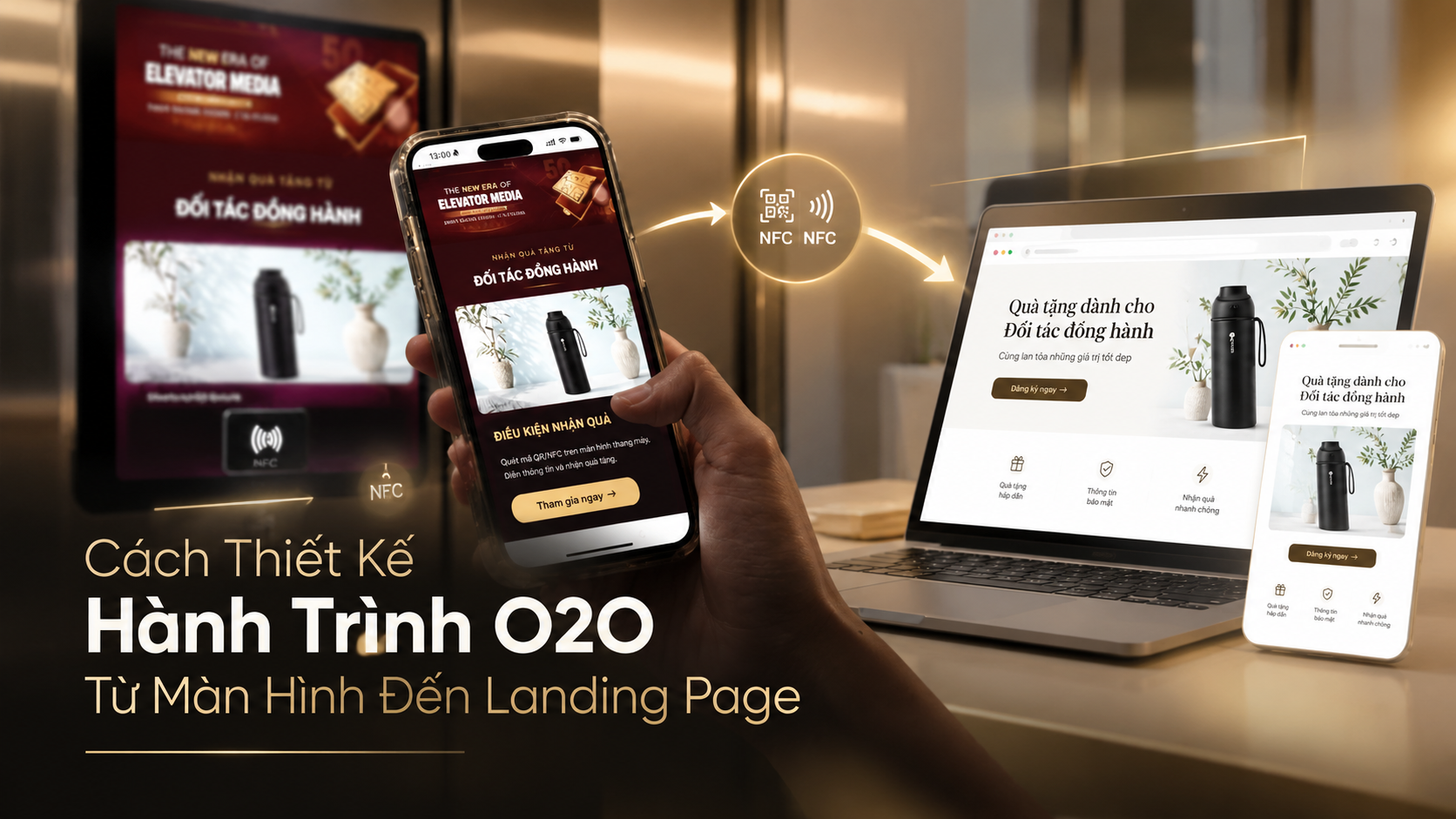
The most advanced screens currently available in Vietnam are equipped with NFC (Near Field Communication) technology directly beneath the display frame.
With a simple phone tap, viewers can instantly connect to a brand’s landing page in less than 0.1 seconds.
This “Tap-and-Go” method offers a more seamless experience than scanning a QR code, allowing users to receive vouchers, view detailed information, or make a purchase immediately within the fast-moving elevator environment.
Instead of simply looking at a static maquette, users enter an actual digital experience journey.
Optimizing Data and Operations Through Cloud Technology
Behind thousands of advertising screens distributed across cities is a centralized operating system powered by cloud technology.
The ability to synchronize and remotely manage the network is one of the clearest indicators of a DOOH provider’s operational capability.
Cloud 5G System for Near-Real-Time Scheduling Adjustments
The practice of using USB devices to manually update videos screen by screen has been completely eliminated in large-scale systems.
By combining cloud-computing solutions with 5G networks and Viettel data SIMs, providers can connect and synchronize the entire media network.
Through the KUMA Remote Advertising Publishing System, changing content, adjusting playback schedules, or replacing an entire campaign can be initiated with a single action, with advertisements going live almost immediately — within approximately 5 minutes.
This real-time connectivity capability also supports contextualized content, enabling messages to change automatically according to Morning/Afternoon/Evening dayparts and better align with residents’ daily routines.
Partnering with Major Technology Platforms to Optimize the Conversion Funnel
To optimize audience data and improve sales effectiveness, partnering with major technology platforms is a strategic move.
Modern DOOH systems in Vietnam have been directly integrated with e-commerce platforms such as TikTok Shop and Shopee.
In addition, technology collaboration with Alipay to implement a “One Tap” feature demonstrates the ability to convert offline traffic into online engagement seamlessly.
When users interact, these data flows help brands assess actual levels of interest, optimize digital remarketing campaigns, and create a more integrated marketing funnel with fewer blind spots.
Leveraging Deployment Capabilities from an International Network
Deploying an Elevator Media Advertising system across tens of thousands of touchpoints is not something that can be achieved overnight. It requires an operating model refined over many years across multiple markets.
Globally Standardized Operating Processes
Leading partners bring into Vietnam an ecosystem validated at a global scale.
Focus Media, for example, operates a global media network with more than 3 million screen devices across over 95 major cities worldwide, reaching 700 million customer visits per day.
This infrastructure serves demanding billion-dollar brands across FMCG, Finance, and Technology, including P&G, Unilever, Samsung, and Toyota.
Experience accumulated from thousands of international campaigns has enabled the Group to package advanced management systems such as:
ARK: Big Data-based intelligent placement selection
AMS: Automated advertising monitoring and delivery verification
These systems help ensure campaigns in Vietnam operate smoothly according to high standards.
(Note: In international markets, the platform has worked with thousands of brands. However, the specific claim of more than 3,000 brands in Vietnam requires verification according to each stage of market development.)
Privacy Compliance and Personal Data Protection
As personal-data protection regulations become increasingly stringent, legal compliance and respect for residents’ privacy are essential requirements for any DOOH network.
No building owner or brand wants to become involved in issues relating to the violation of personal space or privacy.
Information Security and Data Encryption
Unlike a printed outdoor maquette, which stores no digital data, digital systems transmit large volumes of information every day.
To reduce the risk of data leakage, advanced platforms use the KUMA publishing system, incorporating multiple layers of information security.
All campaign data, playback schedules, and customer administration information are protected through data encryption, helping defend against cyberattacks and ensuring a secure and accurate playback environment.
No-Camera Commitment and Respect for Privacy
In enclosed environments such as elevators, residents’ sense of security must remain a top priority.
Although technologies such as facial recognition may provide demographic information, reputable Elevator Media Advertising providers in Vietnam place ethical and legal boundaries first.
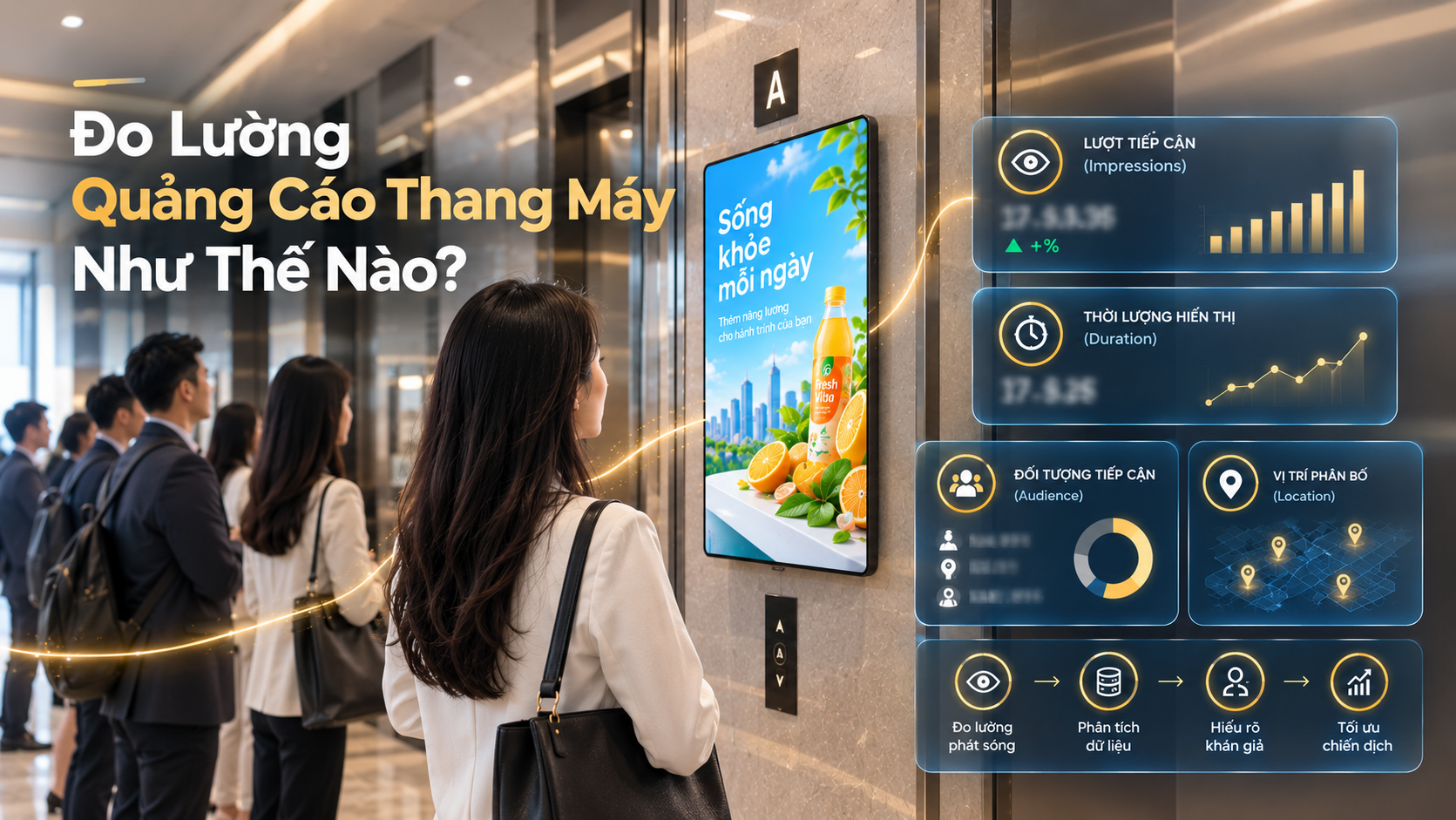
Instead of using direct camera-based monitoring, the system optimizes advertising distribution based on Big Data from surrounding areas (Location Selection) and analyzes macro-level consumer behavior by residential cluster through the ARK system.
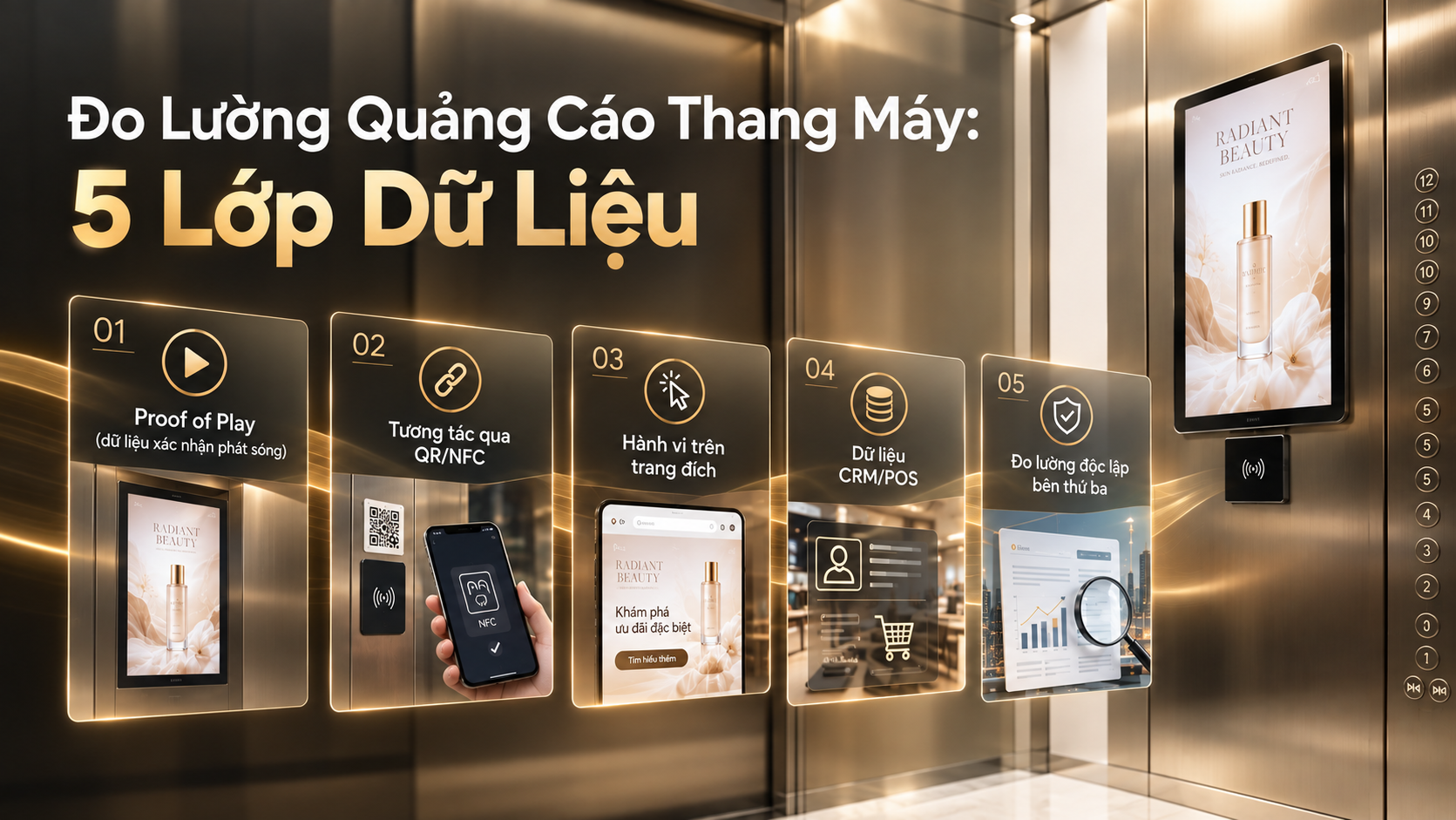
(Note: Reputable providers commit not to use hidden recording cameras in order to avoid infringing residents’ privacy, instead focusing on campaign measurement through NFC interaction touchpoints and third-party data providers such as NielsenIQ.)
Conclusion
The transition from traditional OOH to DOOH is an irreversible development.
When investing in a network of advertising screens inside buildings, businesses need to look beyond the visible hardware and conduct a deeper assessment of the underlying technology.
An ideal provider should meet all three core requirements:
intelligent and interactive hardware;
flexible cloud-based operating software;
stringent data-security and privacy compliance standards.
Making the right choice not only helps advertising messages travel further, but also protects brand reputation in the digital era.


Comment (0)
Related News

 Contact
Let Focus Media Vietnam
Bring your brand into urban life
Share your campaign objectives. Focus Media Vietnam will advise on how your brand can appear at relevant touchpoints within the building and connect viewers to landing pages, e-commerce platforms, apps, or digital content.

No comments yet. Be the first to share your thoughts.