
 Tiếng Việt
 English
 中文
Media Handbook
What are the advantages of DOOH compared to OOH? Understanding the true potential of DOOH in communication campaigns.
Last updated: 16 Sep 2026What are OOH and DOOH?
OOH: "Outdoor advertising" is a form of advertising that reaches viewers outside their homes, through billboards, posters, or signs in locations such as streets, shops, and service establishments.
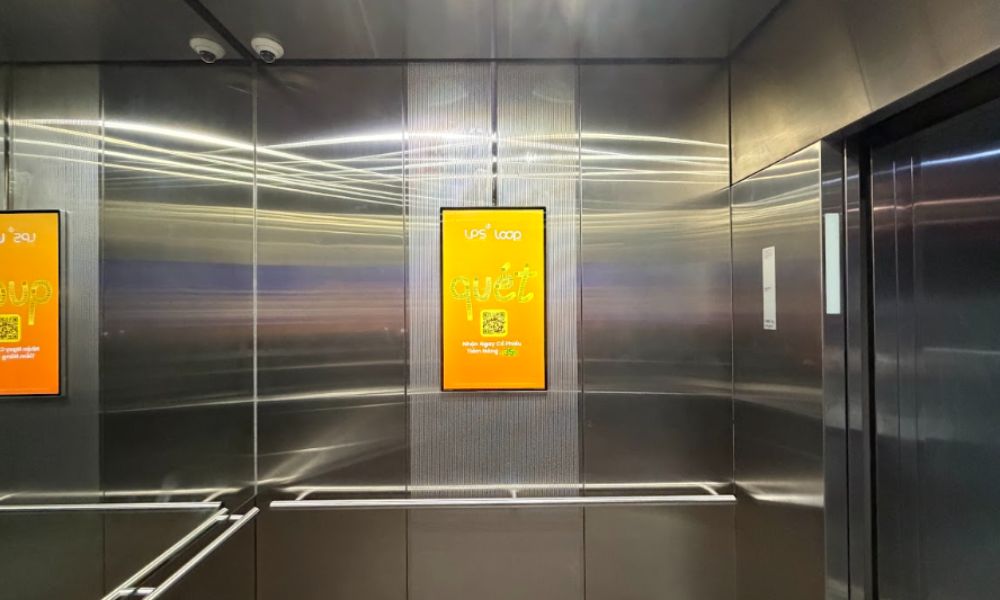
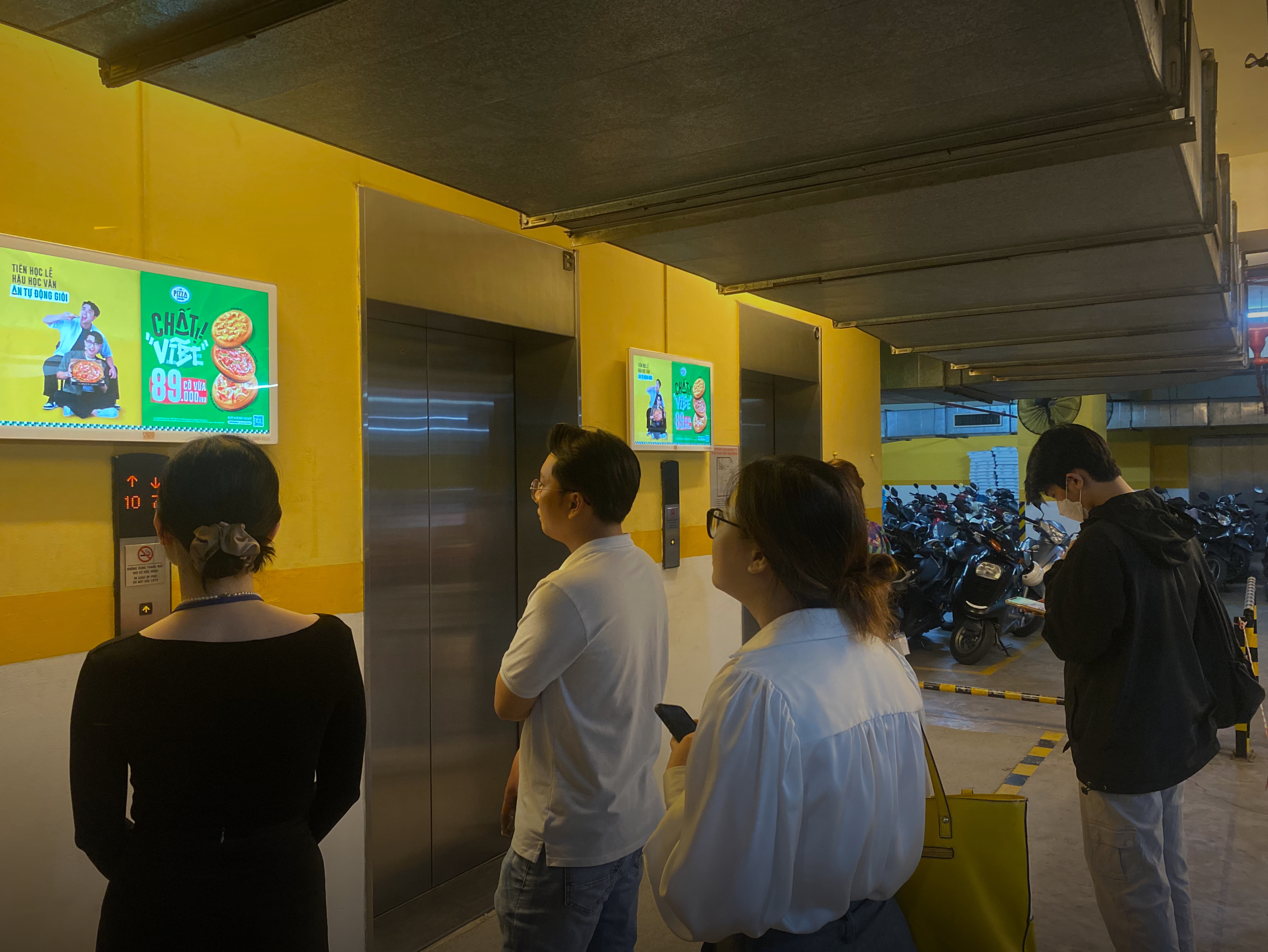
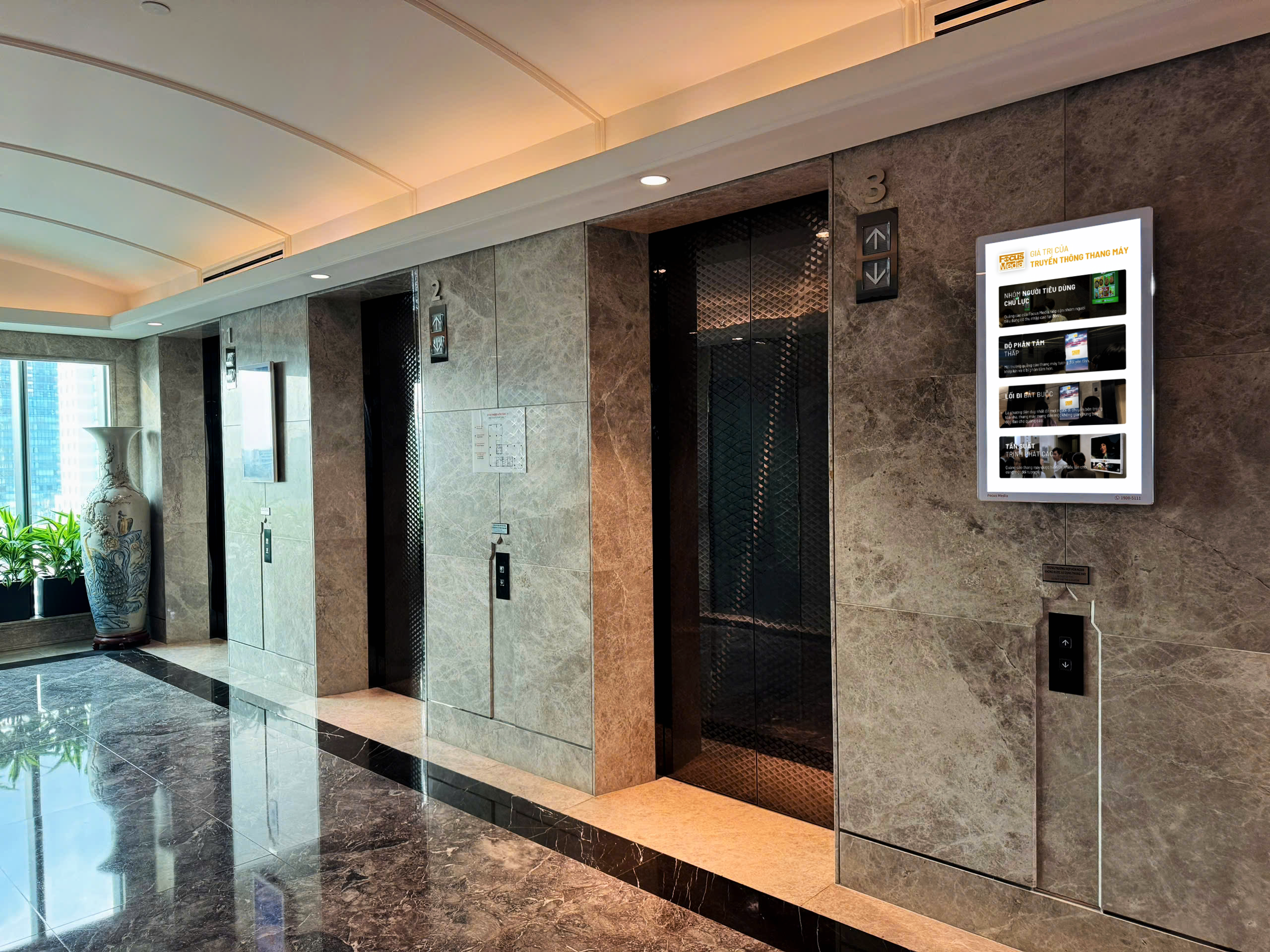
DOOH: “Outdoor digital advertising” is a branch of OOH that uses digital screens to deliver content. Typically, DOOH is placed in train stations, shops, lobbies, and building elevators.
For marketing professionals, choosing between print-on-the-spot (OOH) or digital-on-the-spot (DOOH) advertising directly impacts the process of ideation, tracking, and measuring post-campaign results. This also forms the basis for businesses to evaluate the value of each option.
Digitalization opens up new ways of delivering content for outdoor advertising.
Even in the same location, the frequency of reappearance varies.
With OOH, a company's image and message typically appear permanently in the ad placement location, without having to give way to content from other brands between impressions.
Meanwhile, a digital screen can display advertisements from multiple brands in a cyclical loop. For screens operating in this way, a one-month contract means the advertising deployment period, while the number of times a brand appears within that month depends on the broadcast schedule. Therefore, businesses need to agree with the operator on the broadcast dates and times, the length of each broadcast, the number of broadcasts, and the intervals between appearances.
The message may change depending on the time and place.
DOOH allows businesses to flexibly change advertising content without having to reprint and reinstall from scratch. With a remote network connection, the operator can send new content to the screens, giving businesses the flexibility to change content weekly, daily, or even hourly.
However, continuously streaming data and updates across thousands of large-scale screens is not easy, and not all operators can provide this feature. Advertisements need to go through rigorous approval processes to be broadcast, and therefore, most operators limit content editing after approval.
Digital screens not only change the content, they also change the way stories are told.
Unlike static OOH (Out-of-Home) advertising, DOOH (Do-Oh!) can incorporate movement, sound, and interaction into the advertising experience. This movement makes it easier for businesses to illustrate things that are difficult to show in a single frame, such as the process of using a product, before-and-after changes, or multiple steps in a story.
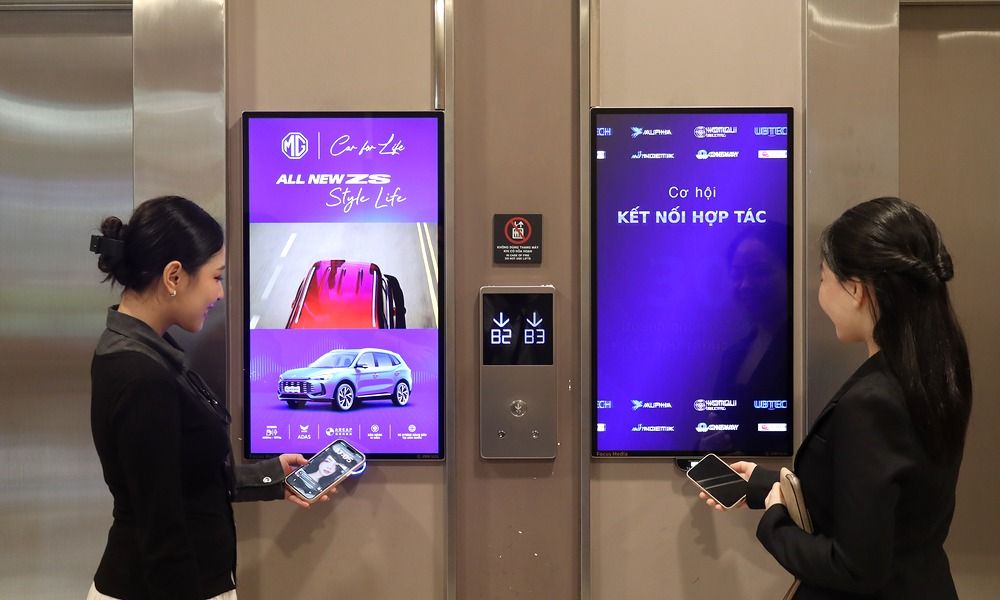
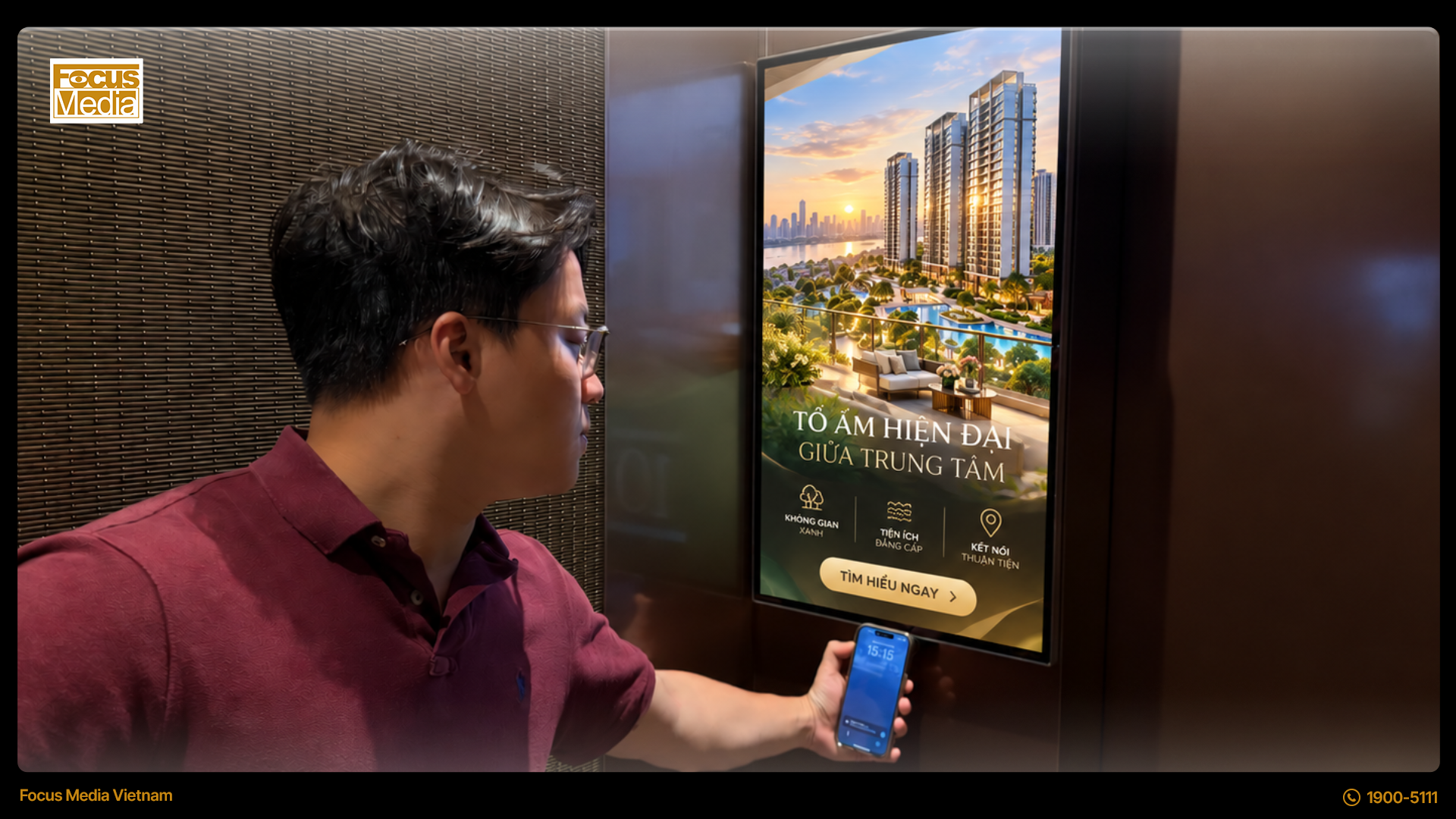
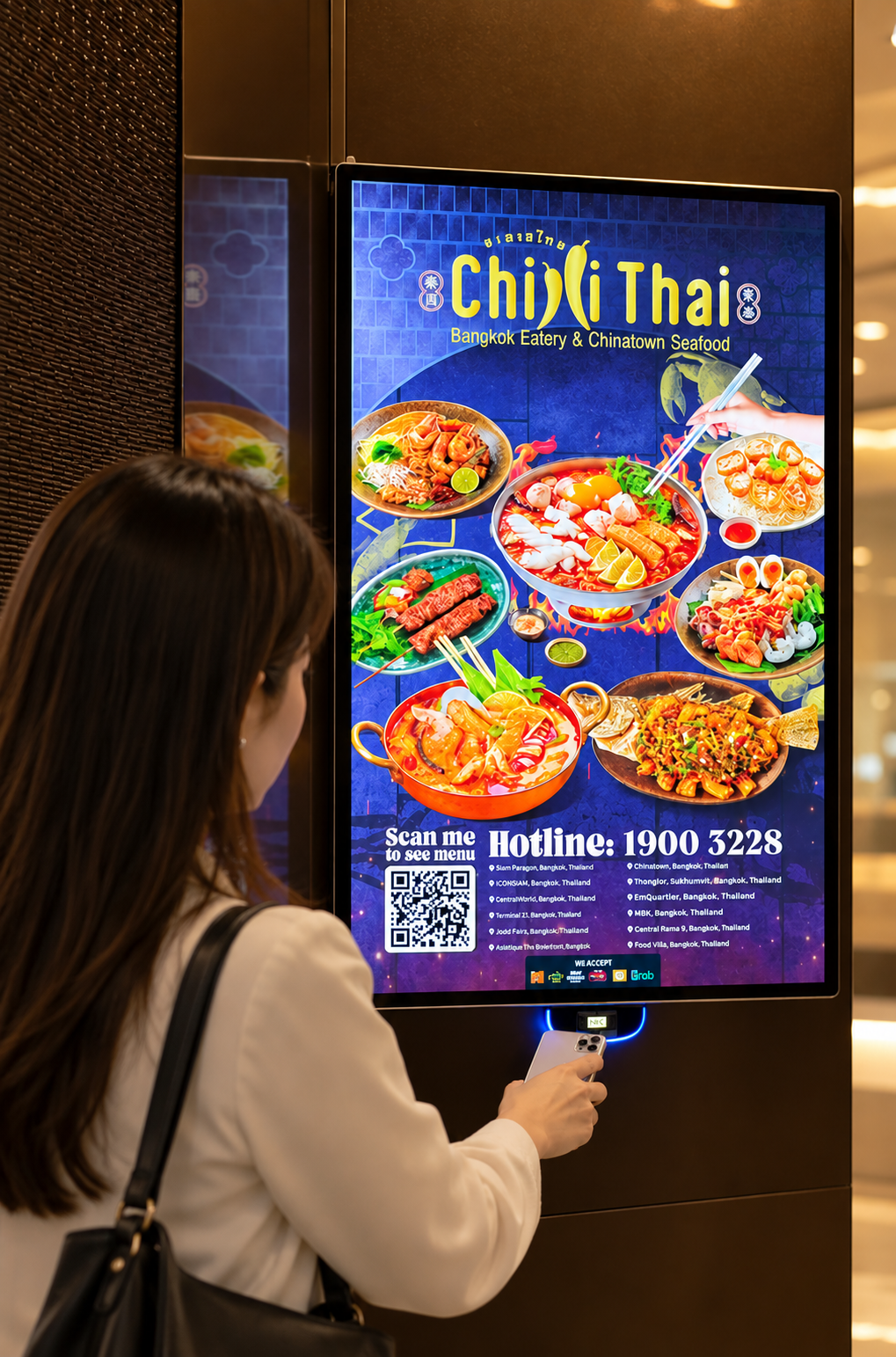
With interactive displays, viewers can even use NFC touch to access websites, receive gifts/vouchers, or sign up for consultations. In this case, the advertisement is not only viewed but also becomes a point of contact with user feedback.
In some indoor spaces, DOOH can combine visuals with sound, including dialogue, music, and effects. However, this capability depends on the equipment, venue regulations, and the experience of those around. Currently, Vietnamese advertising law does not permit the playback of sound from outdoor advertising screens.
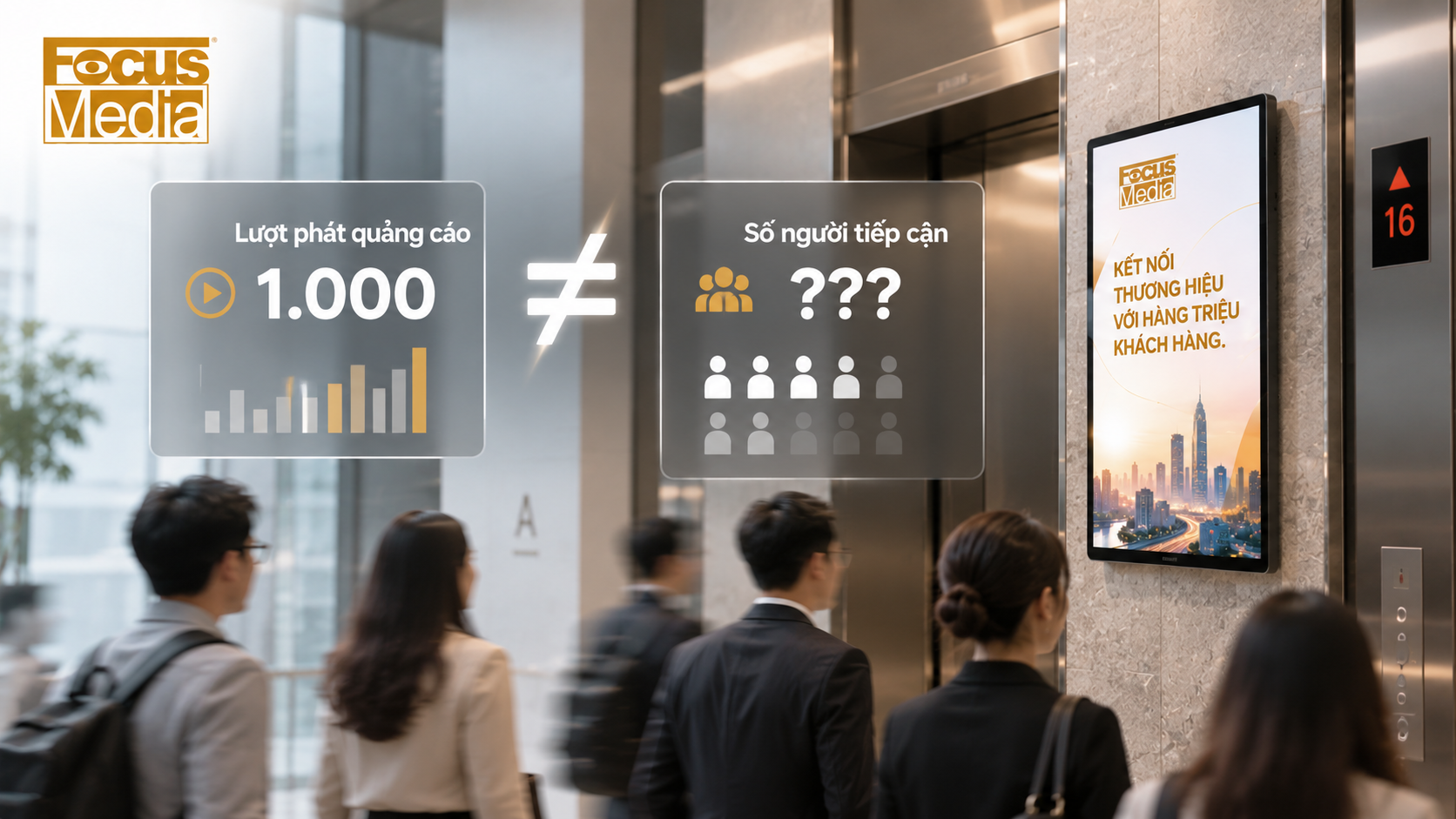
The number of plays doesn't measure the number of people reached.
Although DOOH (Do-Oh!) is measurable, unlike plays on digital advertising platforms (YouTube, Facebook, TikTok), outdoor advertising doesn't equate this metric with the number of viewers. Therefore, when evaluating a DOOH campaign, businesses need to separate at least three questions: was the ad played as planned, how many people had the opportunity to see the ad, and did the campaign generate any changes after the ad appeared?
Proof of Play (PoP) is a platform that helps businesses track which ads have run, on which devices, when, and for how long. Businesses can compare this information with the broadcast schedule agreed upon with the ad operator.
The number of times an advertisement is shown does not correspond to the number of people who see it. An advertisement shown once on a screen in a building lobby may be seen by many people at the same time. Therefore, the number of people who have the opportunity to see the advertisement needs to be estimated based on data about pedestrian traffic in that area and the corresponding measurement method. However, this number is not highly accurate because a person may be standing too far away, unable to see the screen, or have their view obstructed.
To determine if an advertisement is having a business impact, businesses need to choose an evaluation method based on the campaign's objectives. If they want more brand awareness, they can conduct surveys before and after the advertising campaign to compare the percentage of people who recognize the brand. If they want to increase sales, they can compare stores with similar conditions, where one group runs ads and the other does not.
Understanding the true capabilities of DOOH
Compared to OOH, DOOH offers businesses more presentation options. However, DOOH is only advantageous if it helps businesses achieve their goals. Understanding each characteristic of DOOH in its specific context helps businesses make informed choices.
DOOH does not require the display of moving images.
DOOH uses digital screens, but the displayed content doesn't necessarily have to be moving. Businesses can advertise a static image with a short, clear message that viewers will remember for longer.
Door-to-door advertising isn't necessarily more cost-effective than open-air advertising.
With static OOH advertising, in addition to space rental fees, businesses also pay for printing and installing the advertising banner. If they want to change the message between campaigns, they may have to produce and install a new print. DOOH eliminates this step because the content is displayed on the screen as a digital file. However, this is not enough to conclude that DOOH is more cost-effective. The cost of DOOH advertising also depends on the quality of the location, the broadcast time slot, the length of each broadcast, and the number of times the advertisement appears.
Just because an advertisement has aired doesn't mean it has generated revenue.
DOOH advertising systems can record which ads ran, when they ran, and for how long. However, increased sales during the same period are not enough to conclude that DOOH was the cause, as business results can also be influenced by pricing, promotions, seasonality, and other marketing activities.
Choose a format that suits your communication needs.
Businesses can choose static OOH to keep ads appearing consistently or opt for DOOH if they need more flexible content changes. The appropriate format is one that helps businesses achieve their campaign goals without spending extra on unused features.
A clear objective helps businesses decide where and how their advertisements should appear and how the results will be evaluated. From there, businesses can choose between OOH and DOOH based on the actual value each option brings to the campaign.
However, with current advertising trends, DOOH has a clear advantage in incorporating motion, sound, and interaction into the advertising experience, supporting measurement and increasing user engagement. This is also why more and more businesses are choosing DOOH advertising.


Comment (0)
Related News

 CONTACT
CONNECT WITH FOCUS MEDIA VIETNAM
Share your campaign goals. Focus Media Vietnam will advise on how your brand can appear at the right touchpoints within the building and connect viewers to your landing page, e-commerce platform, app, or digital content.

No comments yet. Be the first to share your thoughts.