
 Tiếng Việt
 English
 中文
中文

Which “Algorithm” Matters More: The Platform Algorithm or the Algorithm in the Customer’s Mind?
Last updated: 18 Jun 2026Many businesses today spend a great deal of time studying platform algorithms. But by focusing solely on them, businesses can easily overlook another “algorithm” that matters even more: how customers remember and choose brands.
This is the difference between a business that achieves short-term success and a brand that remains sustainable over the long term.
Dependence on Platform Algorithms
An Unstable Foundation
Platform algorithms are constantly changing. Traffic costs can rise, distribution rules can be adjusted, and formulas that work today may become ineffective tomorrow.
If all growth depends on buying traffic or optimizing according to the platform’s rules, the business is effectively building a house on land that it does not fully own.

Rising Costs, Declining Effectiveness
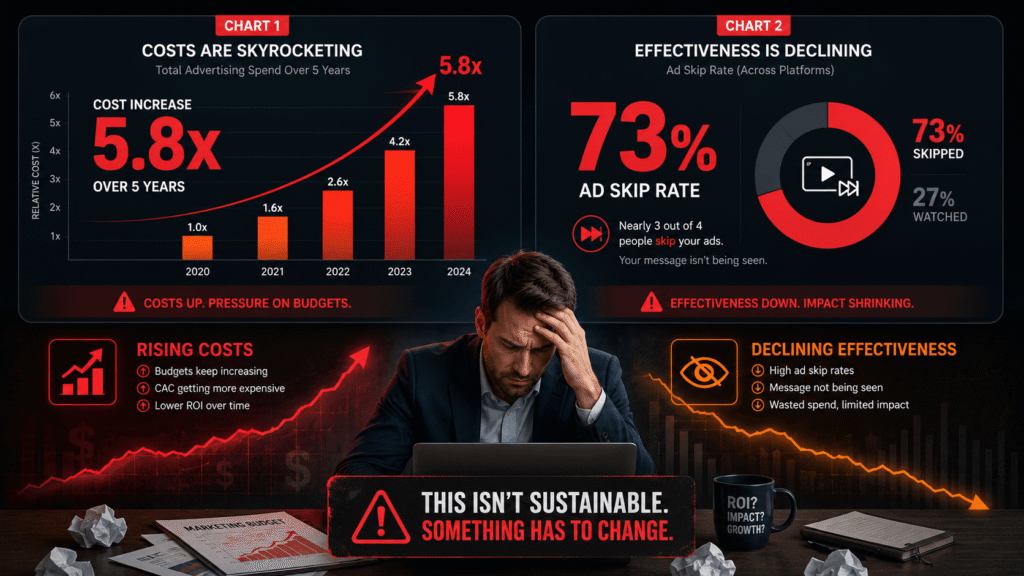
Data from Focus Media Group
Traffic costs increased 5.8 times over five years across multiple product categories
The percentage of users skipping ads reached as high as 73% — most Digital Ads are ignored
This demonstrates that platform optimization is necessary, but it cannot constitute the entire foundation of brand growth.
If you need to spend 5.8 times more than five years ago to achieve the same result, the current strategy is clearly not sustainable.
Mental Availability vs. Operating on Rented Traffic
Operating on rented traffic: The business depends on every fluctuation of the platform. When the algorithm changes, traffic declines. When costs rise, more money must be spent. Growth is not sustainable.
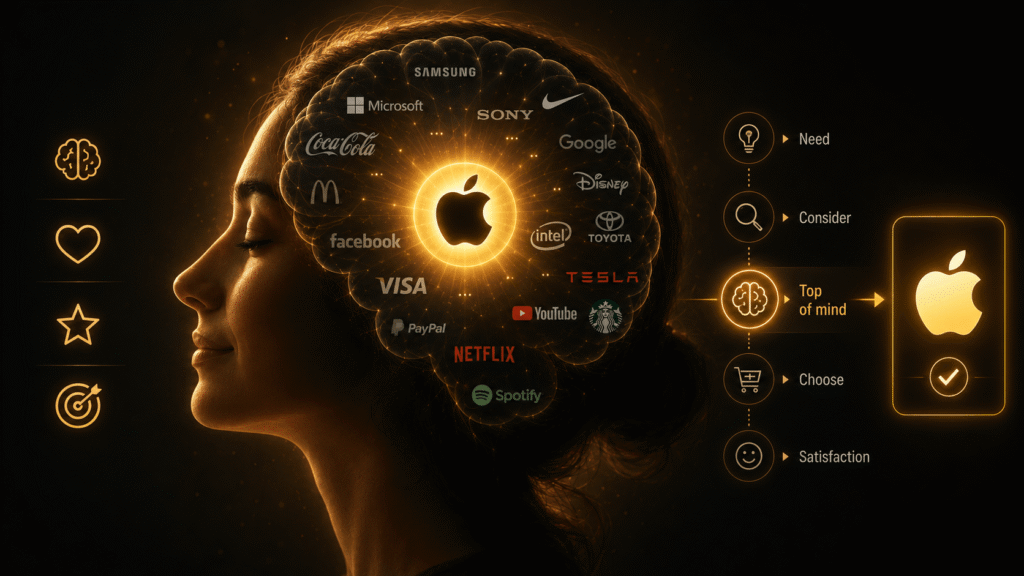
Mental availability: The brand occupies a clear position in the customer’s mind. Consumers actively search for it, recall it by name, and prioritize it even when competitors offer the same price. Growth becomes more independent.
“Once a brand has secured a clear position in the customer’s mind, its growth becomes less dependent on every fluctuation of the platform.”
The Solution: Build a “Mental Territory” in the Customer’s Mind
The Customer’s Mental Territory
According to Chairman Jiang Nanchun, “mental territory” refers to the space in the customer’s mind where a brand becomes a familiar choice even before the customer enters the comparison stage of the purchase journey.
This creates an important distinction:
Brands with mental availability: Customers remember them first, actively search for them, and trust them immediately.
Businesses operating solely on traffic: They must compete every time, repeatedly persuade customers, and often rely on price discounts to generate sales.
Technology Supports — It Does Not Replace
A Misconception That Needs to Be Corrected
This does not mean businesses should ignore Digital, AI, or performance optimization tools.
On the contrary, these tools should continue to be studied and applied.
But fundamentally, technology should help brands get closer to customers — not replace the long-term process of building trust and awareness.
Platform algorithms: Help brands get distributed
The “mental algorithm”: Helps brands get chosen
Focus Media Vietnam and the New Model
Combining Real-World Touchpoints With Technology
For Focus Media Vietnam, this is precisely why next-generation Elevator Media needs to combine the power of real-world touchpoints with technological capabilities.
When content can be delivered more flexibly, precisely, and proactively across urban contexts, brands have an opportunity to establish a presence not only on screens, but also within consumers’ patterns of perception and recall.
That is the difference:
Instead of simply “displaying advertising,” Focus Media helps brands “build a position in the customer’s mind.”
Strong Brands Understand People
Redefining a “Strong Brand”
In the future, a strong brand will not simply be one that understands platform algorithms.
It will be a brand that understands how people remember, trust, and choose.
In other words:
Understand that people make choices based on emotion, not logic alone
Understand that trust is built over time and cannot simply be bought with money
Understand that long-term memory comes from consistent presence at important moments in everyday life
Understand that technology is a tool for creating those moments, not replacing them
Conclusion
The debate between the “platform algorithm” and the “mental algorithm” is not about abandoning one in favor of the other.
It is about understanding which one provides the long-term foundation.
Short-term sales can be generated through performance optimization tools. But sustainable growth comes from building a brand that is liked, remembered, and naturally chosen.
The final question is:
Are you building a business that rents traffic, or are you building a brand that owns a position in the customer’s mind?


Comment (0)
Related News

Do Elevator Media Bother Residents?
26/09/2026
 Contact
Let Focus Media Vietnam
Bring your brand into urban life
Share your campaign objectives. Focus Media Vietnam will advise on how your brand can appear at relevant touchpoints within the building and connect viewers to landing pages, e-commerce platforms, apps, or digital content.

No comments yet. Be the first to share your thoughts.