
 Tiếng Việt
 English
 中文
中文
NIQ - 5 “xu hướng mua” của người tiêu dùng trong năm 2027
Last updated: 06 Oct 2026
NIQ will publish its report at the end of September 2026. Consumer Outlook: Guide to 2027 , based on surveys of over 21,000 people in 31 countries and real-world shopping data tracked by NIQ across multiple markets, notes that after years of pandemics, inflation, and instability, consumers have stopped waiting for things to return to normal. Instead, they accept volatility as a part of life and proactively rearrange their spending habits, product choices, and research strategies before each purchase.
Although Vietnam was not included in the survey, the three Southeast Asian markets featured in the report—Thailand, Indonesia, and Singapore—all showed quite similar trends, especially in AI usage habits when shopping. Therefore, if you are planning your marketing for 2027, the following signals are well worth reading carefully.
Spending more cautiously due to rising living costs.
A survey by NIQ shows that 34% of global consumers report their family's financial situation is worse than a year ago, nearly 2 percentage points higher than the level projected for 2025. Even more noteworthy, among those experiencing financial difficulties, 77% identified rising living costs as the primary cause, far exceeding factors such as economic downturn (42%) or job loss risk (33%).
Ironically, while inflation has long since cooled, prices haven't returned to their previous levels. A basket of fast-moving consumer goods that cost $100 in 2024 now costs around $105. Therefore, consumer concerns have shifted from "price increases" to "price levels remaining too high relative to real income." Instead of waiting for the economy to improve, many families are choosing to tighten their spending now and carefully consider every expense, big or small.
For businesses, this means customers will think more carefully before spending money on any product, even those they used to buy habitually.

The shift in cash flow towards both low-cost and high-end options.
Based on NIQ's data across 26 markets, over $23 billion worth of fast-moving consumer goods (FMCG) sales have shifted away from the mid-range segment. You can imagine this situation as a rope being pulled taut in both directions: money is gradually flowing toward low-priced goods at one end and high-end goods at the other, while the middle section is thinning out.
This trend divides consumer spending habits into two groups. The first group prioritizes saving money, with 67% stating they are willing to choose a cheaper option if a product isn't clearly superior. Conversely, the second group (56%) says they are still willing to spend more, but only on a premium product or service that offers superior quality, performance, or experience.
Interestingly, each generation has its own definition of "value for money." Compared to previous generations, young people, including Gen Z and Millennials, are willing to pay more for products that offer experiences and enjoyment.
Therefore, businesses should clearly define their target customer profile when planning their communication strategies. A brand positioned in the affordable price segment needs to reach those who are carefully considering their spending, while a premium brand needs to reach those willing to pay extra for superior quality.
Accumulate discounts to buy premium products at great prices.
To reduce the actual amount paid per purchase, consumers are now proactively combining multiple methods at once, from promotions and reward points to cashback. According to NIQ, 32% of respondents are willing to buy any brand that has a promotion, 31% take advantage of stockpiling whenever familiar brands offer discounts, and 29% prioritize shopping at places with reward point programs. The latter two figures both increased by 3 percentage points compared to the previous year.
Notably, NIQ found that consumers hunt for deals not necessarily to buy cheaper products, but to get better value for the same amount of money. For example, with an amount only enough for a regular bottle of shampoo, they might wait for a sale, add their reward points, and then get a bottle from a premium line. Therefore, brands can view deals as leverage to persuade customers to try higher-end products, rather than just using them to retain price-sensitive buyers.
Health is just as important as price.
For today's consumers, a worthwhile purchase isn't necessarily a cheap product, but one that's good for their health. According to the NIQ report, when asked what's most important in their purchasing decisions, 15.1% of respondents chose health and natural ingredients, nearly matching the 15.3% who chose price.
Beyond simply wanting it, 45-63% of those surveyed were willing to pay more for fresh products with transparent ingredients and origins, recommended by experts or reputable organizations as being good for their health.
For businesses in the food, beverage, or personal care industries, transparency regarding ingredients and origin will help their products be considered more favorably than competitors in the same industry.
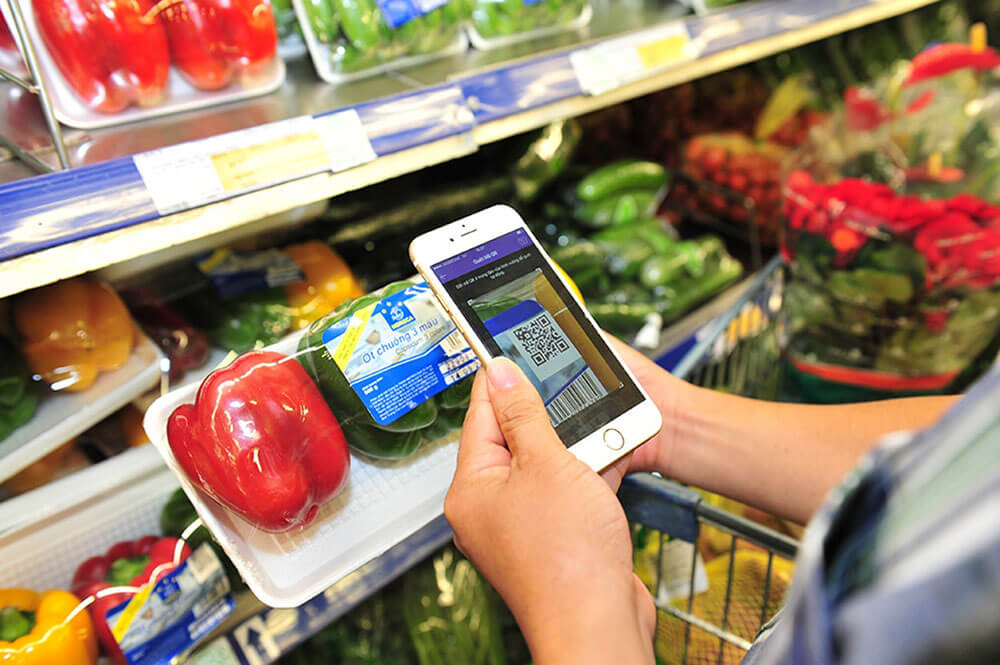
The role of AI in purchasing decisions
The involvement of AI in purchasing decisions is no longer a futuristic scenario. According to NIQ, 27% of global consumers have used AI tools to research or decide what to buy, while 55% said that AI recommendations have more or less influenced their choices of fast-moving consumer goods.
It's noteworthy that AI is narrowing down the buyer's selection list like a funnel. In a store, shoppers might see dozens of products; on an e-commerce platform, they seem to only browse through 10-15 "top-page" products; and with an AI assistant, the list is reduced to just a few suggestions. Therefore, NIQ suggests that the likelihood of appearing in AI system suggestions could become as important as shelf presence.
Fortunately, shopping habits remain a strong, unshakeable pillar. As many as 79% of consumers report returning to familiar brands after a few rounds of research. This means that a name already established in customers' minds still holds a significant advantage, even with AI entering the purchasing process.
Things brands need to prepare for the new customer journey.
These five changes lead to a paradox: buyers are more thoughtful before making any spending decisions, yet they are delegating the product filtering process to search engines and AI, significantly narrowing their final choices. Therefore, if your brand isn't already in the customer's mind or mentioned by AI, your product is very likely to be eliminated from the market before it even gets a chance to be compared.
To avoid falling into that situation, there are three things your brand should prioritize.
To be seen and remembered before customers search for it.
Because the majority of consumers still gravitate towards familiar names, building brand awareness needs to begin before the need to buy arises, so that when they do need to buy, they already have an option in mind. To achieve this, the brand needs to be present regularly in the daily lives of its target customers, rather than just appearing a few times and then disappearing.
Furthermore, in today's highly polarized market, choosing the right location is equally crucial. A brand that competes on price and a brand that competes on quality need to target specific customer groups with distinct lifestyles and geographical locations. Therefore, a strategy of "spreading everywhere" or "nationwide coverage" is unlikely to yield the desired results.
Reasons for customers to take action now.
With a new product, what often influences a customer's decision to try it isn't the most appealing advertisement, but rather a compelling reason that makes them feel they shouldn't miss out. This could be a discount voucher for their first purchase, along with information about the ingredients and origin to give them more peace of mind. If they receive an offer immediately after seeing the advertisement, buyers are more likely to act before their interest in the product fades.
Accurately understood and recommended by AI.
Products now need to be found by customers not only, but also correctly understood by AI systems as they search and make decisions on behalf of buyers. Essentially, AI is like a personal advisor who only has access to information published on websites, product pages, or articles. Therefore, if the information is incomplete, contradictory, or lacks a clear source, AI can easily misinterpret the product and remove it from the list of recommendations for buyers.
Elevator advertising in the new customer journey.
To accomplish all three of these tasks simultaneously in a single communication campaign, businesses need a seamless presence from the real world to the digital environment. With the O2O2A model connecting three layers of touchpoints—elevator advertising screens, brand digital assets, and the AI environment—Focus Media Vietnam can accompany brands throughout this entire journey.

In the first layer, elevator advertising screens help your brand reach your target customers every day, right where they live and work , at a time when they are least distracted. With a network of over 18,000 elevator advertising screens in more than 2,000 buildings, Focus Media can help businesses intelligently target the demographics of their target customer base, optimizing brand presence locations from luxury to affordable apartments, office buildings, or shopping malls.
In the second layer, the integrated NFC display allows viewers to tap their phones to open product information pages , receive offers, or sign up for samples, depending on the campaign's settings. Not only does this shorten the time between viewing an ad and taking action, but each tap also lets businesses know how many people actively sought more information after seeing the ad. Based on this data, brands can adjust the content for subsequent campaigns, ensuring the message is more relevant to what customers truly care about.
At the third level, Focus Media Vietnam can help businesses track their AI presence before, during, and after elevator advertising campaigns . Businesses can see how the AI is mentioning them and monitor whether the ads are prompting more user inquiries about the product during the campaign.
As consumers become more cautious and discerning in their spending, and as AI becomes more deeply involved in their purchasing decisions, brands need a platform that ensures daily brand awareness, drives immediate action, and allows for measurable results in the digital environment. Elevator advertising, with its ability to connect customers' living and working spaces with the AI environment, is therefore a suitable choice for businesses to capitalize on the changing consumer landscape in 2027.


Comment (0)
Related News



TỪ "GIÁ TRỊ ĐỒNG TIỀN" ĐẾN "GIÁ TRỊ CẢM XÚC"
09/03/2026
 Contact
Let Focus Media Vietnam
Bring your brand into urban life
Share your campaign objectives. Focus Media Vietnam will advise on how your brand can appear at relevant touchpoints within the building and connect viewers to landing pages, e-commerce platforms, apps, or digital content.

No comments yet. Be the first to share your thoughts.