
 Tiếng Việt
 English
 中文
Media guide
Should Elevator Advertising Run Continuously or in Bursts?
Last updated: 29 Sep 2026Elevator advertising should run continuously when a brand needs to maintain a consistent presence; it should run in bursts when the message is tied to a limited timeframe. A combined approach might also work: maintain a core group of contact points, then intensify advertising during periods requiring action. The decision shouldn't be based solely on the total number of days the ad is displayed, but rather on the demand for the ad and the business's ability to serve it.
1. What is the difference between continuous running and running in bursts?
Continuous advertising involves maintaining a presence for a period of time, with a predetermined scope and intensity. Phased advertising focuses activity on specific periods, with pauses or reductions between phases. The core difference lies in how exposure opportunities are distributed over time, not in which form of elevator advertising automatically has more screens.
A long but scattered calendar across irrelevant points can still lack focus. Conversely, a well-prepared, short calendar might address the right launch or event announcement needs, but shouldn't be expected to replace the year-round task of maintaining awareness. Therefore, before comparing the two calendars, it's necessary to determine whether they serve the same goal or two different goals.
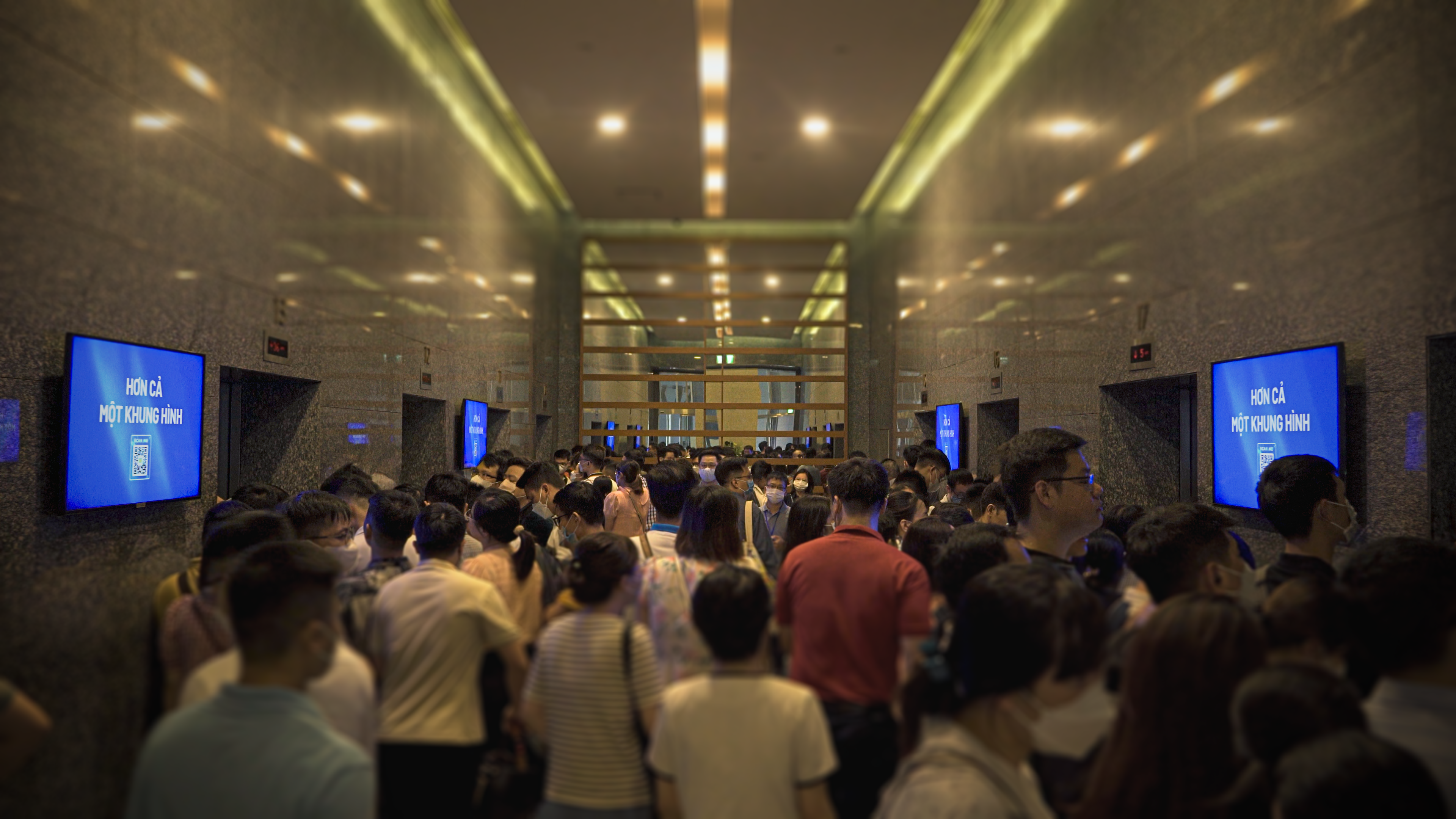
2. When should consistent presence be prioritized?
Continuous advertising might be a viable option when the product is in stable demand, the sales point operates regularly, and the message doesn't lose its value after a specific date. For example, a service catering to local residents might want to maintain a familiar image rather than only appearing during a promotional week. This is planning logic, not a conclusion that every service industry needs to run continuously.
The condition is that the brand must be able to maintain accurate content and a positive post-advertising experience. If customers see the same promise but the product is frequently out of stock or the link is no longer working, longer ad impressions won't solve the problem. A continuous schedule needs check-ins; it doesn't mean approving something once and leaving it as is.
3. When would a concentrated training session be more appropriate?
A suitable campaign is one where the message's value has a clear timeframe: opening a new location, launching registration for a trial experience, introducing a new collection, or announcing an event. In this case, the timing of when viewers can take action is just as important as the number of advertising days. The campaign must start early enough for interested individuals to plan ahead, and be able to stop or change content as conditions change.
For example, imagine a showroom organizing a product experience weekend. The initial phase could introduce the reasons to visit; the phase closer to the event could provide registration information and directions. After the event, the message should shift to a regular appointment, not continue inviting customers to an activity that has already ended. This example illustrates how content tasks are divided, not a default sales schedule used by Focus Media Vietnam.
4. Is it possible to combine both methods?
A sustained presence layer can be built in priority building groups, then additional playpoints or content versions can be added during periods of increased focus. This combination separates two questions: where should the brand be present regularly, and when should a specific message gain more weight? The actual scope still depends on the playpoint status and the plan finalized with the operating unit.
Option | The question to be answered. | Things to avoid |
Continuous | Where is it necessary to maintain a presence? | Keep the expired offer unchanged. |
In batches | When is a need or action time-sensitive? | The broadcast was too late compared to the decision-making timeframe. |
Combine | Which aspects are maintained, and which stages are strengthened? | Combine all stages into a single KPI. |
This table is a selection framework. It does not prescribe a minimum budget ratio or duration that applies to all businesses.
5. Is it necessary to change the mock-up after each batch?
It's not necessary to completely change the visuals just to move to a new phase. Brands can maintain their brand identity, core products, and overarching ideas, then adjust the information periodically. In its analysis of advertising lifespan, Kantar notes that a longer runtime doesn't automatically equate to decreased creative effectiveness.
A practical approach is to create a table of what remains and what needs updating. The logo, color scheme, and product imagery can be fixed; event timing, promotional terms, and CTAs are variable. Once defined in advance, communication campaigns maintain brand continuity without carrying outdated information.
6. What data should be used to evaluate the schedule?
First, check if the actual schedule and reach are aligned with the plan. Then, analyze the signals that align with the goals: visits from private links, registrations, consultation requests, or pre-designed brand research. Don't compare a campaign with strong vouchers to one focused solely on total brand awareness and conclude which is better.
When comparing phases, it's important to account for changes in points of sale, content, number of play points, and activity across different channels. Additional engagement after a boost doesn't necessarily prove that the schedule alone generated the overall results. The difference between recognition and attribution is explained in the article Measurement and Attribution in DOOH .
7. What preparations are needed before scheduling an appointment with Focus Media Vietnam?
Businesses should create a business schedule beforehand, then assign communication tasks to each milestone. Communication materials should clearly show priority markets, target customer groups, when viewers are likely to act, when information will expire, and resources for content updates. This provides a clear basis for selecting distribution points and formats.
With seasons featuring a high volume of consecutive activities, scheduling elevator advertising during the peak Q4 season provides additional insights into booking preparation. To choose the optimal display timeframe, request separate plans for maintenance and enhancement. The goal is to understand which tasks the budget is supporting at each stage, not just extending the number of days of exposure.
8. Frequently Asked Questions
Does running continuously mean I have to buy the entire network?
No. Businesses can discuss maintaining coverage at a suitable group of distribution points. The scope and conditions of the booking must be confirmed on a campaign-by-campaign basis.
Is running a shorter distance necessarily more economical?
It's impossible to draw conclusions based solely on the number of days. We need to compare the reach of distribution points, formats, deployment configurations, and content preparation costs all aligned with the same objective.
Is there a standard budget allocation between maintenance and enhancement?
There is no single ratio used within this framework. The weighting should be based on the business needs and operational capabilities of each brand.
Discuss your plan with Focus Media Vietnam : send your business schedule, priority areas, and phase-by-stage goals via hotline 1900 5111 or email info@focusmedia.vn to clarify the most suitable distribution point options.


Comment (0)
Related News



 Contact
Let Focus Media Vietnam
Bring your brand into urban life
Share your campaign objectives. Focus Media Vietnam will advise on how your brand can appear at relevant touchpoints within the building and connect viewers to landing pages, e-commerce platforms, apps, or digital content.

No comments yet. Be the first to share your thoughts.