
 Tiếng Việt
 English
 中文
中文
How is the elevator advertising market share measured in international markets?
Last updated: 15 Oct 2026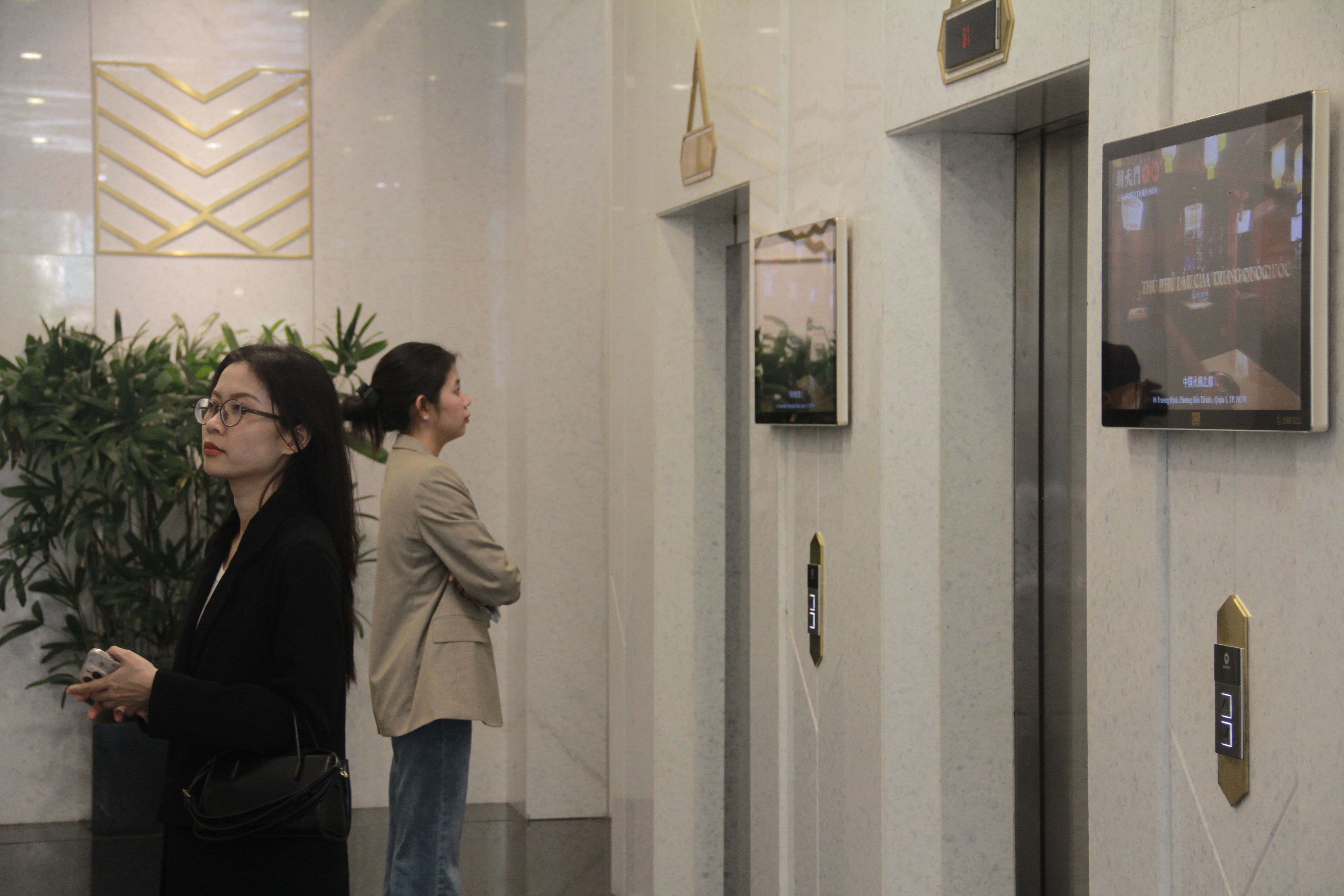
China is where the offline media group Focus Media laid the groundwork for elevator advertising in the early 2000s. The country also has its own research unit dedicated to tracking this type of advertising. Yet, to this day, publicly available data in China is still insufficient to determine which company is leading the market share. The question remains unanswered in the US, Canada, and Australia, even though these are all developed advertising markets with industry organizations that regularly publish outdoor advertising revenue figures.
Vietnam faces a similar situation because there is currently no publicly available document identifying the market leader in elevator advertising in Vietnam using a unified measurement method. However, the claim of "market share leader" frequently appears in the profiles of many companies. This raises considerable concerns for those considering choosing an elevator advertising provider. To properly evaluate these claims, you need to understand the conditions for calculating elevator advertising market share and how international markets apply these conditions in their measurement.
Conditions for calculating elevator advertising market share.
In principle, a supplier's elevator advertising market share is calculated by dividing that supplier's revenue by the total market revenue, provided both figures are measured within the same scope, period, and using the same measurement method. However, finding the denominator for "total market size" is a very difficult requirement to meet. This is because it is not easy to determine:
- What does elevator advertising include? Just screens inside the elevator cabin, or also screens in the lobby and poster frames?
- How is revenue recorded? Is it the revenue the supplier actually receives after discounts, or the price printed on the advertising price list (listed price)?
How China tracks elevator advertising.
In China, elevator advertising is tracked independently, separate from other forms of outdoor advertising. The tracking entity is CTR Media Intelligence , a Chinese media market research company that records advertising spending across the entire market through its advertising tracking database. CTR measures both formats: LCD screens in elevators and printed posters placed in frames within elevators. However, this figure is calculated based on the list price, the price published on advertising price lists, before deducting any discounts actually paid by advertisers. Therefore, this data does not represent actual revenue for market share analysis.
How the US, Canada, and Australia classify elevator advertising.
Unlike China, the US, Canada, and Australia do not separate elevator advertising into a distinct channel, but instead group it with other types of advertising in the out-of-home advertising revenue figures published by industry organizations. Out-of-home advertising here refers to any form of advertising that reaches viewers after they have left their homes, whether the advertisement is placed on the street or inside another building.
Elevator advertising is typically categorized as place-based advertising . This category includes advertisements placed inside places where viewers visit and stay for a short time, such as office buildings or gyms, unlike roadside billboards or bus advertising, where viewers usually just glance at the advertisement. Each organization decides how many categories and what types of advertising are included in each category, so the names and scope may vary between countries. The common point is that publicly available data only covers the revenue of the entire category, so you don't know how much revenue elevator advertising alone generates.
Market | Elevator advertising is categorized as | Public data indicates |
America | Location-based advertising category | Revenue and share of the entire category |
Canada | The venue environment is divided into traditional and digital forms. | Revenue per business model in a given location |
Australia | Retail, lifestyle, and other categories | Revenue for the entire category |
America
The Outdoor Advertising Association of America ( OAAA ) announced that total outdoor advertising revenue will reach $9.46 billion in 2025, broken down into four groups:
- billboard;
- street amenities;
- traffic;
- On-site advertising.
Of this, "on-site advertising" accounted for $557.9 million, or 5.9% of total revenue. However, this group includes advertising in movie theaters, gyms, retail stores, and many other locations, so the 5.9% figure cannot be considered the market share of elevator advertising.
Canada
Canada is following a similar approach. The Canadian Outdoor Advertising Measurement and Marketing Agency ( COMMB ) publishes aggregate revenue across three environments: roadside, transport, and location, each further divided into traditional and digital formats. This classification helps the market track growth in each segment. However, elevator advertising has not been separated into a distinct category, so COMMB 's data cannot be used to determine the market leader in this type of advertising.
Australia
In Australia, even the Outdoor Media Association of Australia ( OMA ) , the organization representing outdoor advertising companies, only publishes the overall revenue of its member companies: including advertising in shopping malls, cafes, and clinics. Therefore, no one knows how much elevator advertising alone generates, and thus, there is no basis to say which provider is leading the market.
As can be seen, when elevator advertising falls within a broader category, even the most comprehensive revenue reports do not necessarily create a distinct market share for this type of advertising. Therefore, a company that leads the advertising group in a specific location does not necessarily lead elevator advertising.
Lessons for the Vietnamese elevator advertising market.
Comparing these four markets side-by-side, it becomes clear that elevator advertising market share figures are only reliable if they answer the two questions raised at the beginning of the article: what formats are included in elevator advertising, and is revenue calculated based on actual sales or listed prices? Although China tracks this type of advertising separately, it is based on listed prices, while the US, Canada, and Australia have systematic revenue data but group elevator advertising together with many other types of advertising. Therefore, no market has fully answered all three questions.
In Vietnam, since no independent report meets these criteria, developing a common measurement standard will require time and the involvement of many industry stakeholders. Before such a standard is established, whenever you encounter a claim of "market share leadership," you can ask the provider three things: what formats are the figures calculated on, what revenue streams are they based on, and who is responsible for the measurement? Having answers to these three questions will allow your budget allocation decisions to be based on verifiable evidence rather than solely on the words "leadership."


Comment (0)
Related News

Do Elevator Media Bother Residents?
26/09/2026
 Contact
Let Focus Media Vietnam
Bring your brand into urban life
Share your campaign objectives. Focus Media Vietnam will advise on how your brand can appear at relevant touchpoints within the building and connect viewers to landing pages, e-commerce platforms, apps, or digital content.

No comments yet. Be the first to share your thoughts.