
 Tiếng Việt
 English
 中文
OOH/DOOH Industry Perspective
Elevator advertising or online advertising: Which is the best choice for businesses?
Last updated: 25 Nov 2026Should you invest in elevator advertising or continue focusing your budget on Facebook, TikTok, and Zalo Ads? Each channel offers different value, from building brand presence to driving engagement and conversions. This article will compare elevator advertising and online advertising in terms of cost, reach, and return on investment, helping businesses choose the channel that best suits their communication goals.
1. What is the difference between elevator advertising and online advertising?
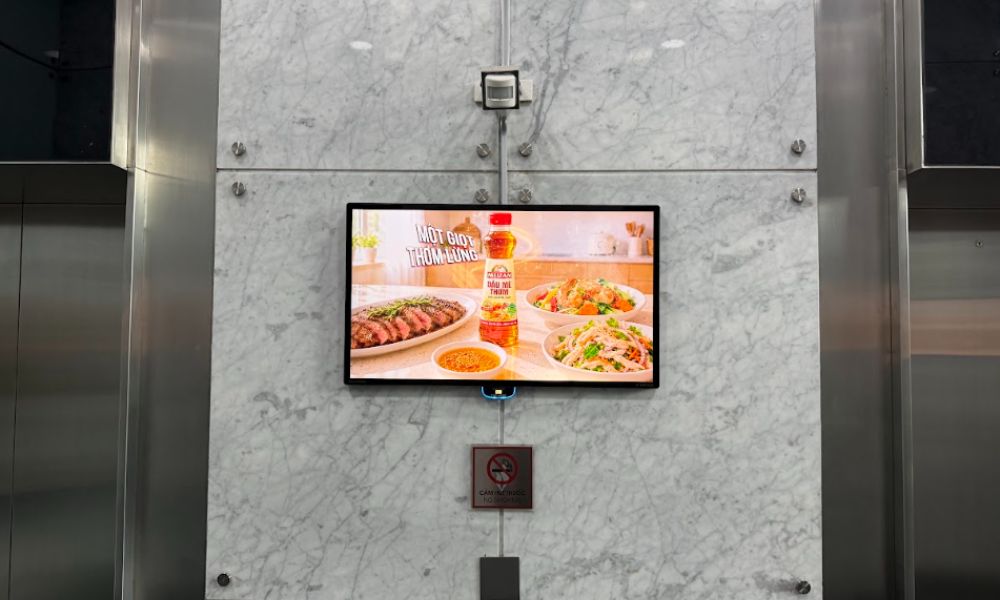
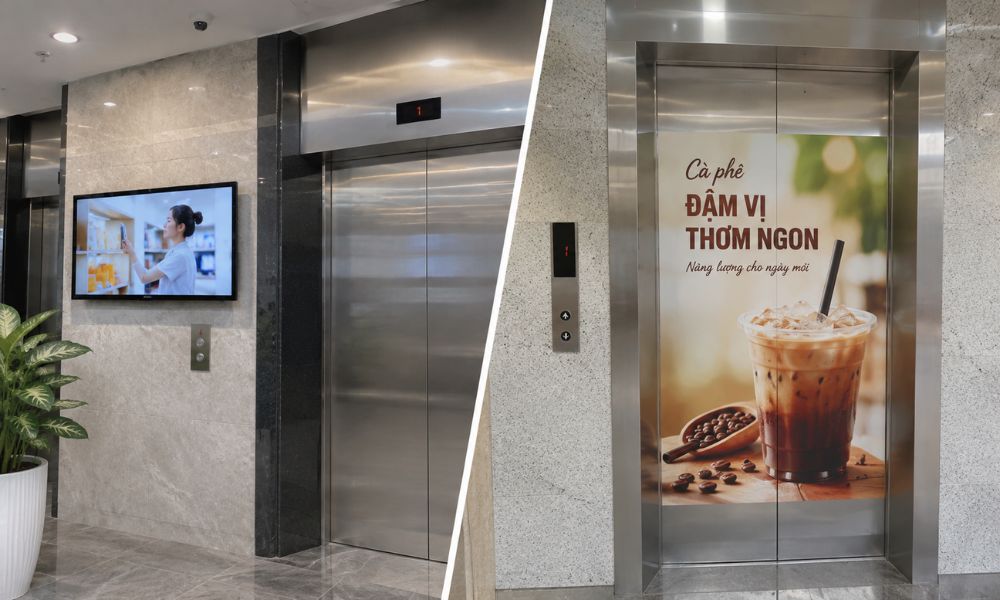
Elevator advertising reaches customers in a physical environment, at locations closely associated with daily life such as apartment buildings, office buildings, and shopping malls. Businesses can choose the area, type of building, and broadcast schedule that suits their target customer group, thereby building brand presence through repeated touchpoints.
Meanwhile, online advertising on Facebook, TikTok, and Zalo reaches customers based on user data and the distribution mechanisms of each platform. This method allows businesses to target specific audiences, test content, adjust budgets, and track interactions and conversions.
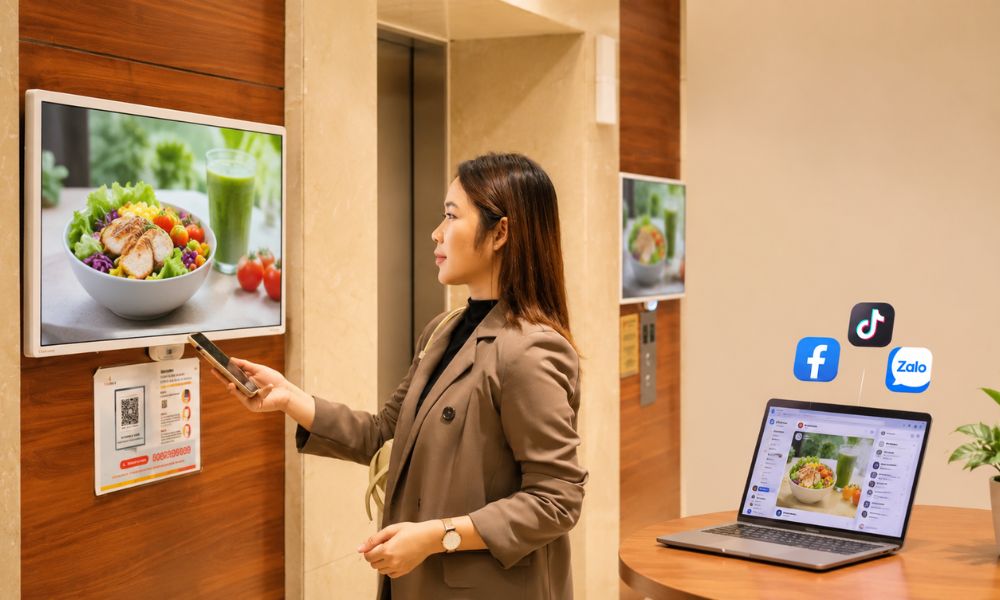
The core difference lies in how brands approach customers: elevator advertising is linked to real-life travel, while online advertising is linked to behavior on online platforms. The two forms can complement each other to expand reach and maintain brand presence across multiple touchpoints.
2. Comparing elevator advertising with Facebook, TikTok, and Zalo Ads
Although both aim to reach customers, each media channel has its own operating mechanism and advantages. The table below analyzes the differences based on criteria that businesses need to consider when choosing an advertising channel.
| Criteria | Elevator advertising | Facebook Ads | TikTok Ads | Zalo Ads |
| Accessible environment | Apartments, offices, shopping malls | Facebook social network | Video and entertainment platform | Zalo ecosystem |
| Targeting customers | Area, building type, characteristics of the resident group. | Demographics, interests, audience data | Interests, behaviors, and object data | Region, user characteristics, and platform preferences |
| Content formatting | Images, videos | Images, videos, carousel | Video and creative formats | Images, videos, articles |
| Frequency of access | The schedule incorporates travel habits. | Advertising distribution mechanism | Advertising distribution mechanism | Advertising distribution mechanism |
| Competing for attention | Elements in physical space | Content on the bulletin board | Entertainment content, video streams | Content within the Zalo ecosystem |
| Interoperability | NFC and QR Code, if integrated. | Comment, share, message, visit website | Video interaction, access, purchases | Messages, forms, and OA interests |
| Cost mechanism | Location, number of screens, duration, and deployment time. | Budget, advertising auction | Budget, advertising auction | According to the format and distribution mechanism |
| Measurement index | Reach, Frequency, Impressions, Brand Lift | CPM, CTR, CPA, ROAS | CPM, CPV, CTR, CPA, ROAS | CPM, CPC, CPL |
| Strengths | Location-based brand presence and recall. | Reach, engage, convert | Discover products, deliver creative content. | Connecting with, advising, and caring for customers. |
References: Meta for Business , TikTok for Business , and Zalo Ads
In terms of communication, elevator advertising provides repeated exposure to customers at predetermined locations . Online advertising, on the other hand, allows businesses to target specific audiences, test messaging, and optimize campaigns flexibly. This difference provides a basis for businesses to combine channels, building brand awareness in real life while simultaneously driving interaction and conversions online.
3. With the same budget, is elevator advertising or online advertising more effective?
To evaluate the investment effectiveness of elevator advertising versus online advertising, businesses need to consider three main factors: the cost of reaching customers, the quality of message exposure, and the potential contribution to business results.
3.1. Costs and customer accessibility
Advertising costs on Facebook, TikTok, and Zalo are influenced by the level of competition, target audience, content quality, and distribution mechanisms of each platform. Businesses can flexibly adjust their budgets, but the cost of reaching customers can also fluctuate depending on the time and market demand.
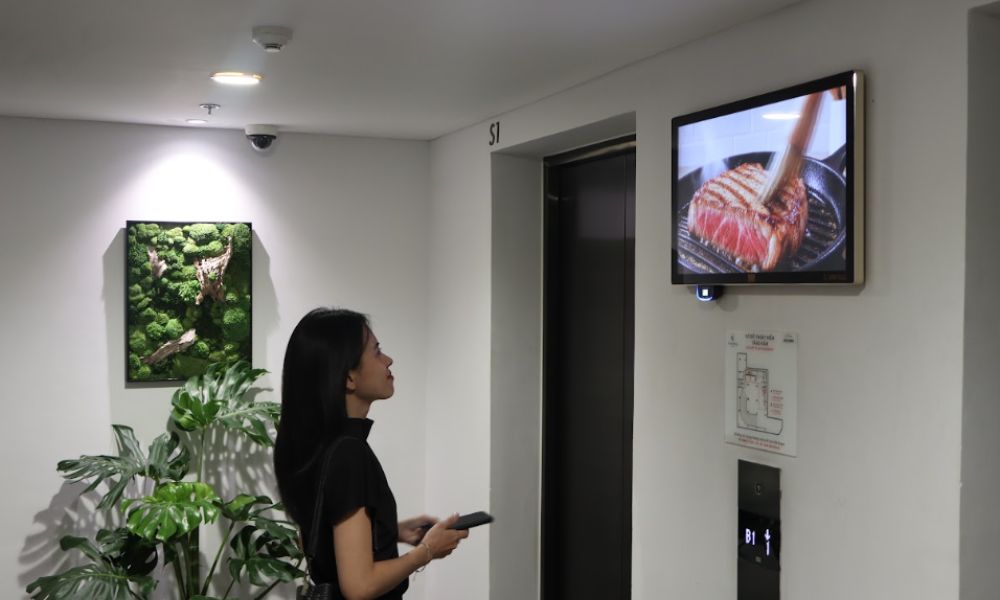
Meanwhile, elevator advertising costs are typically determined based on building location, number of screens, content duration, and deployment time. Businesses can proactively choose their communication scope and build a budget plan for each target area.
When making comparisons, businesses need to consider the total implementation cost rather than relying solely on CPM (cost per 1,000 impressions). A low CPM may not necessarily deliver high value if the target audience is unsuitable or the methods for determining impressions differ across channels.
See also: Elevator Advertising Price List 2026: LCD & Digital Frame
3.2. Brand exposure quality and memorability
Online advertising has advantages in campaigns that require quick market responses, such as product launches, promotional programs, or sales boosts. Based on recorded data, businesses can adjust their messaging and budget at each stage to meet business objectives.
Elevator advertising, on the other hand, creates opportunities to build brand awareness through a consistent presence in customers' lives. The value of this format lies not only in reaching people who are currently in need of a purchase, but also in its ability to build familiarity before the need arises. This is a crucial factor for businesses aiming for long-term growth, rather than focusing solely on immediate conversion results.
3.3. Ability to measure conversion and business performance
Online advertising has the advantage of recording actions such as clicks, registrations, messages, or purchases when businesses set up a suitable tracking system. This data helps marketing teams evaluate and optimize campaigns based on metrics such as CPA (cost per action) and ROAS (revenue-to-advertisement ratio).
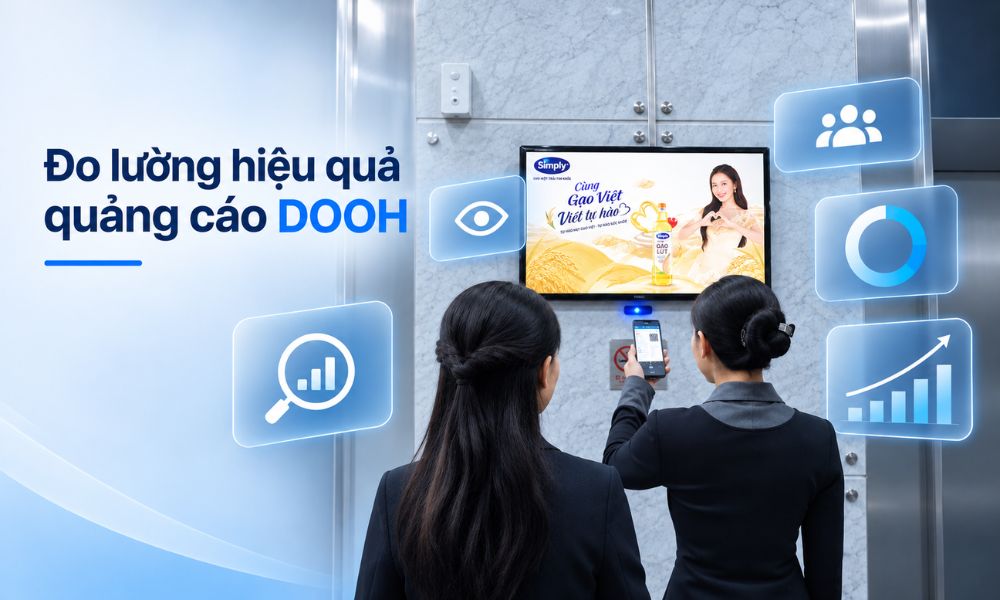
Elevator advertising can be evaluated through coverage, estimated reach, frequency, brand awareness research, and interactions via NFC or QR codes. For business purposes, companies can also incorporate brand search data, regional sales figures, and point-of-sale customer traffic.
To determine the true contribution of each channel, businesses need to differentiate between recorded conversions and incremental conversions generated by advertising. A recorded order from Facebook doesn't necessarily mean Facebook was the only touchpoint influencing the purchase decision.
4. Which advertising channel should businesses choose?
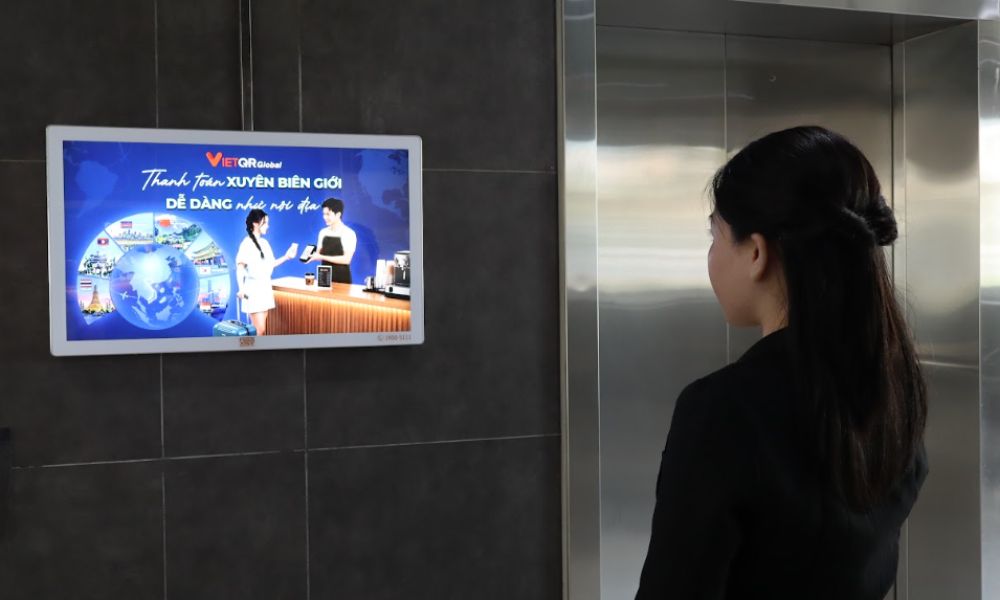
The choice of advertising in elevators, on Facebook, TikTok, or Zalo should stem from communication goals, product characteristics, and customer behavior, rather than solely from the popularity of each platform.
| Communication objectives | Channels that should be prioritized | Role |
| Building brand identity in the target area. | Elevator advertising | Increase your presence in locations where customers congregate. |
| New product launch | Elevator advertising combined with Facebook and TikTok. | Create awareness and expand the product experience. |
| Introducing the product's features and uses. | Facebook, TikTok | Develop video content, tutorials, and reviews. |
| Attracting potential customers | Facebook, Zalo, TikTok | Gathering information, registration, and consultation requests. |
| Boost sales at the point of sale. | Elevator advertising combined with local online advertising. | Connecting communications with the store and service area. |
| Maintaining long-term brand recognition. | Elevator advertising combined with Digital Ads | Maintain a presence at multiple touchpoints. |
| Boosting online sales | Facebook, TikTok, Zalo (depending on the industry) | Navigation and conversion optimization |
For example, a food and beverage brand preparing to open a store in a residential area could implement elevator advertising in nearby apartment buildings to introduce the location and promotional offers. Simultaneously, Facebook or Zalo Ads can help reach customers online, receive orders, and provide detailed information.
For industries with long consideration cycles, such as finance, insurance, and real estate, elevator advertising can help build brand familiarity. Online platforms continue to play a role in providing information, answering questions, and receiving requests for advice.
See more:
- Elevator Advertising for the Real Estate Industry
- Elevator Advertising for the Finance, Banking, and Insurance Industries
5. Budget allocation when combining elevator advertising and digital marketing.
There is no single budget allocation ratio that works for every business. Brands launching new products may need to prioritize reach and awareness, while businesses already with high awareness can focus more on conversion-driving activities.
Businesses can consider the following three options:
| Campaign phase | Budget focus | Implementation plan |
| Building brand identity | Coverage and frequency | Elevator advertising in key areas combined with digital ads aims for brand recognition. |
| Promoting growth | Identification and conversion | Combine elevator marketing with Facebook, TikTok, or Zalo Ads. |
| Sales optimization | Conversion and customer acquisition costs | Prioritize high-performing conversion channels and maintain brand presence in strategic locations. |
For businesses implementing digital marketing, they can start by adding elevator advertising in key business locations, while maintaining an online budget to assess the increased effectiveness.
Results regarding brand search volume, consultation needs, and sales by region will serve as the basis for adjusting investment allocation across channels. This approach helps to avoid arbitrary budget allocation and enhances the effectiveness of the overall communication strategy.
6. How does Focus Media Vietnam connect elevator advertising with the online environment?
Instead of limiting elevator advertising to simply displaying messages, Focus Media Vietnam developed an Offline-to-Online ( O2O ) solution using NFC technology and the Focus MiniApp on Zalo. After seeing the advertisement, consumers can proactively touch their phones to the NFC point to explore products, receive vouchers, or participate in brand programs without needing to download a separate application.

According to data published by Focus Media Vietnam , during the first four days of the Focus NFC MiniApp rollout, from November 9th to November 12th, 2026, the system recorded:
- Nearly 5,500 NFC taps.
- 1,582 accounts were accessed via NFC touchpoints.
- 1,875 people successfully received vouchers and gifts.
These data illustrate the potential for shifting from physical advertising exposure to online action. This provides a foundation for businesses to expand the role of elevator marketing in the customer journey, from brand awareness to interaction and access to promotional offers. The results reflect initial engagement levels, not the number of orders or revenue generated.
Here are some case studies of elevator marketing implementation at Focus Media:
- What do elevator advertisements help viewers remember about Nanfu alkaline batteries?
- Want Want Frozen: 78% of those surveyed intend to buy after 8 weeks of elevator advertising.
7. Frequently Asked Questions
7.1. Are elevator advertising more effective than Facebook Ads?
Depending on the campaign objectives, elevator advertising offers advantages in terms of presence and brand recognition in the target area, while Facebook Ads excels in engagement, lead generation, and optimizing online conversions.
7.2. Is elevator advertising cheaper than online advertising?
There is no fixed cost to determine which channel is cheaper. Elevator advertising costs depend on location, number of screens, and display time. Online advertising, on the other hand, is influenced by distribution mechanisms and the level of competition on each platform.
7.3. If I'm already running Facebook and TikTok ads, do I need to run elevator ads as well?
Depending on the communication objectives, elevator advertising is suitable when businesses want to expand their reach beyond the online environment or increase brand awareness in the areas where customers live and work.
7.4. Can elevator advertising help increase online sales?
Elevator advertising can support online sales by increasing brand awareness, boosting product searches, and directing customers to sales channels via NFC or QR code contactless payment. The extent of this contribution needs to be verified across campaigns.
7.5. How can you tell if elevator advertising is effective when you can't measure clicks like with Facebook Ads?
Businesses can assess this through estimated reach, frequency of exposure, brand recall, and NFC interaction data. To determine the impact on sales, a combination of sales data and appropriate benchmarking methods is needed.
Elevator advertising and online advertising don't necessarily replace each other; they can complement each other in an overall communication strategy. The key is to correctly identify the role of each channel, choose the right reach, and establish a consistent measurement methodology. Contact Focus Media Vietnam for advice on communication solutions tailored to your business goals and budget.
See more:


Comment (0)
Related News



 CONTACT
CONNECT WITH FOCUS MEDIA VIETNAM
Share your campaign goals. Focus Media Vietnam will advise on how your brand can appear at the right touchpoints within the building and connect viewers to your landing page, e-commerce platform, app, or digital content.

No comments yet. Be the first to share your thoughts.