
 Tiếng Việt
 English
 中文
OOH/DOOH Industry Perspective
How to Design an O2O Journey from Screen to Landing Page
Last updated: 25 Nov 2026The O2O journey in elevator advertising connects on-screen touchpoints with online actions via QR code or NFC. To effectively leverage this model, businesses need to design consistent messaging, calls to action, landing pages, and measurement systems. This article guides you on how to build an O2O journey from on-screen advertising to conversion.
1. What is the O2O journey in elevator advertising?
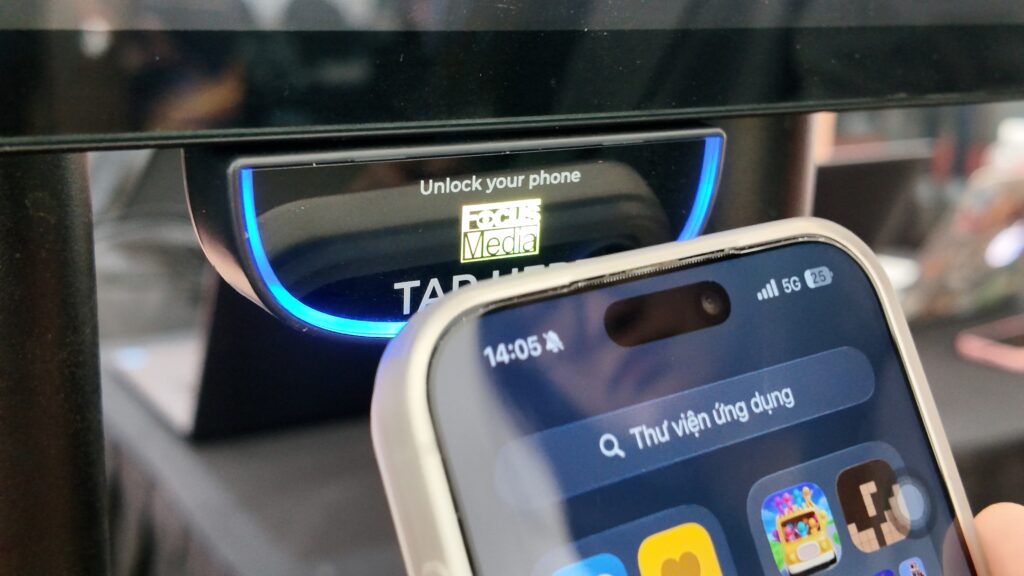
In elevator marketing, O2O (Offline to Online) is a model that connects physical touchpoints with online activities. Through NFC or QR code access, viewers can reach landing pages, websites, e-commerce stores, or mini-apps to learn about products and take further action.
An O2O journey in elevator advertising can be designed in five stages:
| Stage | Role | For example |
| Contact | Conveying the message | Product introduction video |
| Activate interaction | Navigate the viewer | Touch NFC or scan QR code |
| Online experience | Providing information and benefits | Landing page, MiniApp |
| Record the behavior | Track engagement levels | View offers, get vouchers |
| Conversion | Promote targeted action. | Register, get advice, make a purchase. |
Designing a synchronized process across all stages helps businesses expand the role of advertising displays, from a brand touchpoint to the starting point for the interaction and conversion journey.
2. Why are landing pages important?
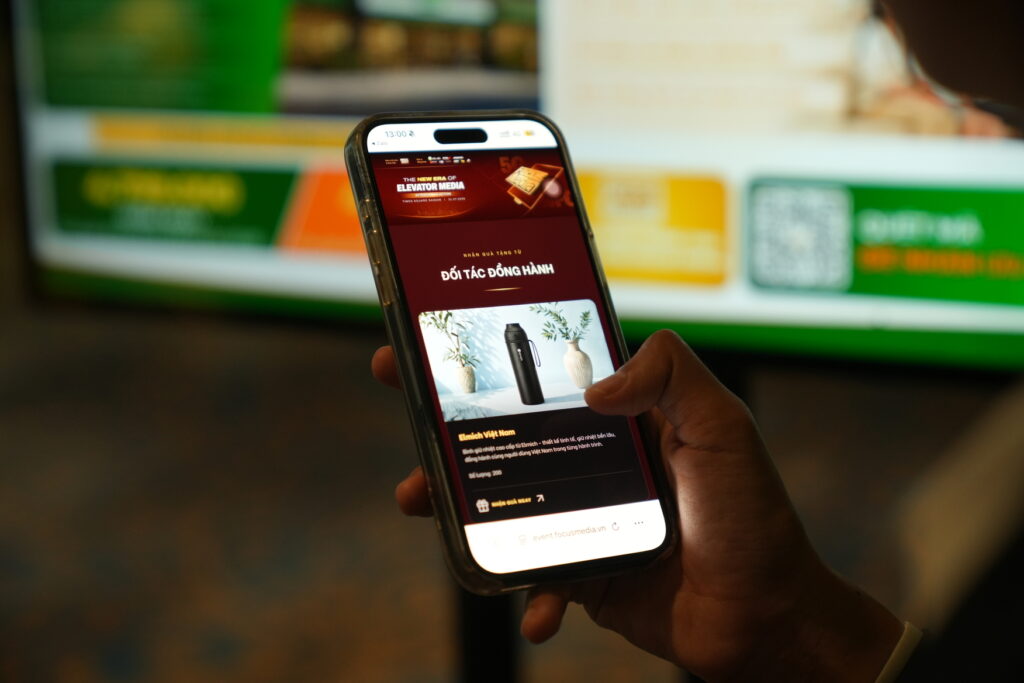
A landing page is the point of entry for customers after they interact with an advertisement. The content on the landing page needs to be consistent with the message, images, and benefits previously presented to maintain user interest.
For example, if an ad screen introduces a voucher program, the landing page needs to immediately display the offer information, terms of use, and how to receive the voucher. Requiring too many steps or unnecessary information can increase bounce rates. Therefore, ad content and landing pages should be designed simultaneously, prioritizing the mobile experience.
3. Should we display multiple CTAs on the screen?
Businesses should prioritize one main call to action (CTA) for each piece of advertising content. Including too many requests at once, such as learning about the product, getting a voucher, signing up for a consultation, or downloading an app, can make it difficult for viewers to determine the appropriate action.
Call-to-action (CTA) should be concise, easy to understand, and clearly demonstrate the benefits customers receive after interacting. For example: "NFC Tap - Just tap to get" or "Scan the code to receive an offer." Follow-up actions can be arranged on the landing page or MiniApp.
4. What should be measured at each step?
Each stage in the O2O journey needs to be evaluated using its own metrics. Data analysis helps businesses identify areas of performance and pinpoint steps that need optimization.
| Stage | Measurement index |
| Display ads | Estimated Plays, Reach, and Impressions |
| NFC/QR interaction | Number of taps or scans of the code |
| Access the landing page | Number of sessions, interaction time |
| Take action | Receive voucher, complete form. |
| Conversion | Lead count, orders, and revenue are recorded if a data connection is available. |
Businesses need to differentiate between touches, interactions, and actual conversions. An NFC tap does not automatically equate to a customer making a purchase. To evaluate business effectiveness, interaction data needs to be integrated with the sales system or CRM, within the technical capabilities.
See also: Measuring DOOH Advertising: Metrics and Evaluation Methods
5. Do all campaigns require O2O (One-to-One) marketing?
Not necessarily. O2O should only be used when the post-contact action truly values the campaign goal, not just because "everyone is using QR codes." A purely branding campaign—aiming for brand recall—may not need to require viewers to scan or touch anything. Conversely, campaigns involving app downloads, conditional offers, or consultation registrations have clearer reasons to invest in building a complete O2O journey.
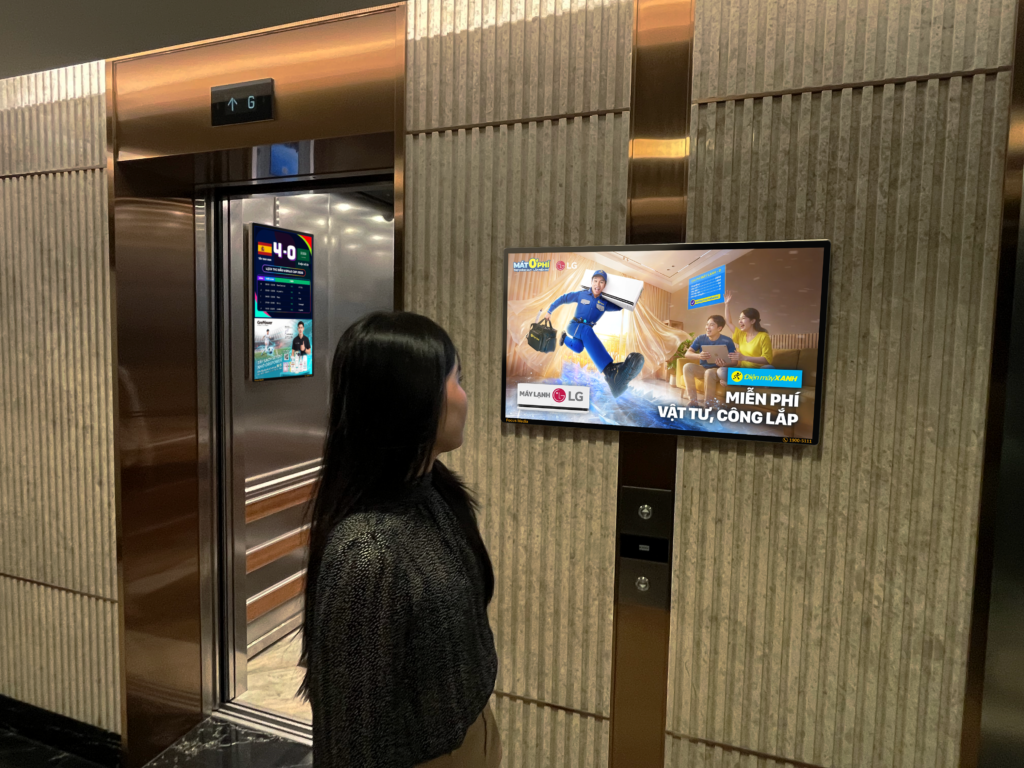
In other words, the O2O journey is a design option that complements the goal, not a mandatory element in every elevator advertising campaign. Before adding QR codes or NFC to any concept, brands should ask themselves: is the next action they want customers to take truly worth them stopping and interacting with?
6. O2O journey application at Focus Media Vietnam
Focus Media Vietnam integrates NFC technology with the Focus MiniApp on Zalo, allowing consumers to interact with advertising content, receive vouchers, gifts, or samples directly on their phones without needing to download a separate app.
According to data released by Focus Media Vietnam , from November 9th to November 12th, 2026, the Focus NFC MiniApp recorded nearly 5,500 NFC touches, 1,582 accessed accounts, and 1,875 successful voucher and gift redemptions.
The preliminary results illustrate the potential for connectivity between elevator communications and the online environment, while also providing interactive data for businesses to evaluate the customer journey. These metrics do not represent sales or conversion rates.
7. Frequently Asked Questions
7.1. Is O2O the same as Performance Marketing?
No. O2O is a model that connects physical and online touchpoints. The potential for conversion optimization depends on the goals, tracking systems, and data of each campaign.
7.2. Should QR codes or NFC be used in elevator advertising?
QR codes allow users to scan a code with their camera, while NFC supports accessing content with a touch on a compatible device. The choice depends on the advertising format and deployment conditions.
7.3. Is it necessary to design a separate landing page for each O2O campaign?
It's not mandatory. However, a separate landing page helps maintain a consistent message, optimizes the user experience, and clearly separates data for each campaign.
7.4. Can O2O journeys be integrated with CRM systems?
This may be possible, depending on the technical integration capabilities, data scope, and user consent as per applicable regulations.
7.5. How do I measure conversions from elevator ads to landing pages?
Businesses can use unique tracking links, NFC interaction data, QR codes, and landing page events to record behavior. Determining sales requires additional relevant sales data.
An effective O2O (One-to-One) marketing campaign requires consistency between advertising content, online experience, and measurement methods. Contact Focus Media Vietnam for advice on connecting elevator marketing with digital platforms to suit your campaign goals.
See also: Elevator Advertising Price List 2026: LCD & Digital Frame


Comment (0)
Related News

 CONTACT
CONNECT WITH FOCUS MEDIA VIETNAM
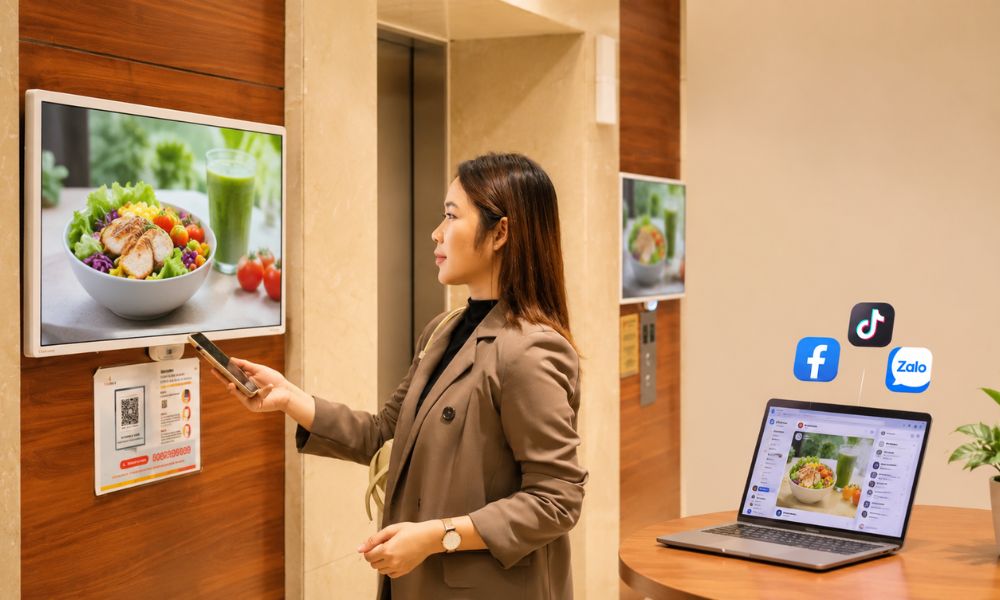
Share your campaign goals. Focus Media Vietnam will advise on how your brand can appear at the right touchpoints within the building and connect viewers to your landing page, e-commerce platform, app, or digital content.

No comments yet. Be the first to share your thoughts.